Support
US-Iran deal talks intensify as Trump looks for an exit from the war
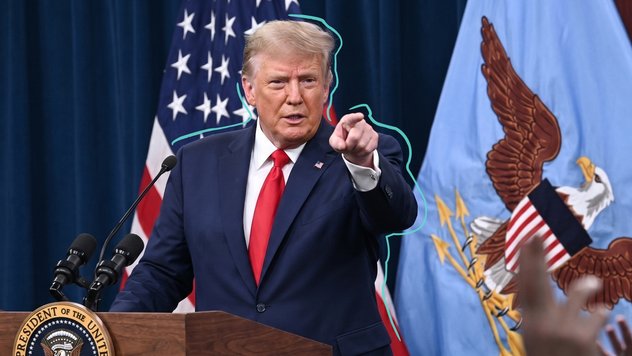
The United States and Iran are weighing a new framework that could begin easing one of the most destabilizing conflicts in the Middle East, as President Donald Trump looks for a way to step back from a war that has driven up energy prices and started to hurt him politically at home. The proposal now on the table would reopen the Strait of Hormuz in stages and ease the US blockade on Iranian ports, while pushing the more difficult nuclear negotiations into a later phase.
The US has offered Iran a one-page memorandum aimed at reopening Hormuz and lifting the blockade on Iranian ports.
Broader talks over Iran’s nuclear program would come later, under a phased approach.
Iran is expected to reply through Pakistan within two days, though state media suggest parts of the offer remain unacceptable.
Trump is under growing pressure to contain the war as fuel prices rise and political costs mount ahead of the midterms.
Washington and Tehran are testing a narrower path to de-escalation
The US and Iran are circling around a new proposal that could open a path toward ending the war, with the White House now appearing more focused on containing the damage than widening the conflict. At the center of the latest effort is a one-page memorandum of understanding presented by Washington, according to a person familiar with the matter, setting out an initial framework to gradually reopen the Strait of Hormuz and remove the American blockade on Iranian ports.
The offer is deliberately limited. Rather than trying to settle every major dispute at once, it focuses first on restoring shipping and lowering the immediate risk to global energy markets. Negotiations over Iran’s nuclear program, the most politically explosive part of any eventual settlement, would come later. Nothing has been agreed yet, but the structure of the proposal makes clear that Washington is now looking for an off-ramp.
Trump is trying to contain a crisis that has started to hit home
The latest proposal comes after a chaotic 48 hours that exposed the bind Trump now faces. The president helped ignite the war by joining in attacking Iran in late February. Since then, the conflict has disrupted oil and gas flows, pushed up fuel costs and added to the political pressure building around his administration.
That pressure is no longer abstract. Polls show public discomfort with the war is growing, and the timing is dangerous for a president heading toward midterm elections in which prices and affordability will be central issues. Gasoline has climbed above $4.50 a gallon for the first time since July 2022, undercutting Trump’s earlier claim that prices at the pump would collapse once the conflict was brought under control.
The White House appears to understand that the war is no longer just a geopolitical problem. It is now a domestic economic problem too.
The new offer follows a rapid retreat from a riskier strategy
The proposal also follows Trump’s decision to suspend a short-lived US operation meant to provide safe passage for commercial vessels through the Strait of Hormuz. That effort had barely started before it was shelved, underlining how quickly the administration has moved away from one military approach and toward a more transactional diplomatic one.
The pivot suggests Washington is trying to cool the energy shock without looking weak. The offer reportedly includes not only a phased reopening of Hormuz and an end to the blockade, but also sanctions relief and a moratorium on Iranian uranium enrichment. At the same time, those terms would remain reversible if the wider nuclear talks fail.
Iran has not rejected the process, but it has not embraced it either
Iran is expected to send its response through Pakistan within the next two days, according to the same person familiar with the proposal. Pakistan has been acting as a mediator between the two sides. Even so, the early signals from Tehran are far from encouraging. Iranian state media have indicated that parts of the US offer remain unrealistic from the perspective of Iran’s leadership.
That fits the broader pattern seen throughout the conflict. Trump has repeatedly said a deal is near, but no agreement has yet materialized. He conceded this week that it may still be too early to think about face-to-face talks to lock in any arrangement, a quieter acknowledgment that the diplomacy remains fragile.
Trump’s public messaging has also retained its familiar mix of optimism and threat. He said the US would end its military campaign and lift the Hormuz blockade if Iran accepts what has already been discussed, though he quickly added that this may be “a big assumption.” Then came the warning: if Iran does not agree, the bombing resumes.
Markets are responding to the possibility of a deal, not the certainty of one
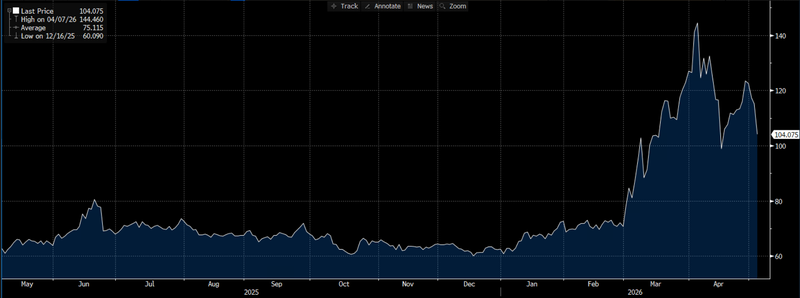
Financial markets reacted as they usually do when war gives way, however briefly, to negotiation. Japanese equities rallied after markets reopened, helping lift Asian shares to fresh highs. Oil steadied after a nearly 8% plunge in the previous session, with Dated Brent holding above $100 a barrel.
Source: Bloomberg
That response says something important. Investors are not pricing a clean resolution yet. They are pricing the possibility that the worst-case scenario may be delayed or avoided. In a market this sensitive to war headlines, even a narrow diplomatic opening is enough to cool some of the panic.
Still, the underlying risks remain. A proposal on paper is not the same thing as a deal in hand, and the distance between the two is still considerable.
China is also positioning itself inside the diplomacy
China has entered the picture more visibly as well. Chinese Foreign Minister Wang Yi met his Iranian counterpart Abbas Araghchi in Beijing and urged Tehran to keep negotiating, warning that a return to hostilities would be unwise. Araghchi, in turn, said Iran appreciated a four-point Chinese proposal aimed at helping resolve the war.
That diplomatic layer is not incidental. Trump is due to meet Chinese President Xi Jinping in Beijing on May 14 and 15, and he has already acknowledged that the war will be on the agenda. If a deal with Iran were reached and sanctions eased, it could also reduce pressure for potential US action against Chinese banks involved in Iranian oil transactions.
In other words, the Iran war is no longer contained to the Middle East. It is now entangled with broader geopolitical bargaining, including the increasingly strategic relationship between Washington and Beijing.
A deal may be closer than before, but it is still far from done
The latest proposal makes clear that Washington is trying to shift from coercion to controlled de-escalation, without admitting that the war has become too costly to sustain politically. Iran, for its part, appears willing to keep the channel open, but not on terms that suggest surrender. China is now active. Oil markets are watching every headline as though it could redraw the near-term energy map.
That is why this moment matters. Not because a deal is already there, but because both sides appear to have moved just enough to keep one alive.
For now, the war has not ended. The blockade has not vanished. The nuclear dispute has not been resolved. But after weeks of escalation, the conversation has shifted — from how far the conflict could spread to whether a limited deal can stop it from spreading any further.