
 Support
 ECB keeps rates unchanged and turns more hawkish, citing risks; Euro rises
The ECB held rates at 2.15% but adopted a hawkish tone, warning of inflation risks from Middle East tensions. With EU inflation at 3.0% and GDP growth slowing to 0.1%, stagflation concerns have risen.

The ECB held interest rates at 2.15% but cautioned that Middle Eastern geopolitical instability and escalating energy costs could exert upward pressure on inflation throughout 2026.
Eurozone inflation reached 3.0% in April, whereas Q1 GDP growth was limited to a marginal 0.1%, signalling increased risks of economic stagnation and systemic stagflation.
Market participants anticipate that the ECB will prioritise price stability over economic expansion, suggesting three potential rate hikes toward a 2.75% benchmark this year.
ECB adopts a restrictive bias, citing inflationary pressures from Middle East volatility
The European Central Bank (ECB) has elected to keep its benchmark interest rate steady at 2.15%. However, the Governing Council warned that the ongoing conflict involving the US, Israel, and Iran in the Middle East is exerting upward pressure on Eurozone inflation. This phenomenon could significantly impact the broader European economy should the hostilities persist or intensify. The European Union is currently navigating a dual economic challenge characterised by stubborn inflationary pressures and a decelerating GDP growth rate.
Simultaneously, Eurostat released updated figures for regional inflation and GDP. The Eurozone's annual inflation rate rose from 2.6% in March to 3.0% in April, surpassing consensus forecasts of 2.9% and marking its highest level since September 2023. Conversely, the Eurozone's Gross Domestic Product (GDP) grew by a mere 0.1% in Q1 2026, falling short of the 0.2% growth projected by analysts.
The emergence of high inflation coupled with economic stagnation—formally known as stagflation—presents a formidable challenge for central banks. In such a context, conventional monetary policy tools often inadvertently exacerbate one economic variable whilst attempting to correct another. Nevertheless, according to reports from Reuters, market participants now expect the ECB to implement three rate increases this year, potentially raising the benchmark to 2.75%. This suggests that the bank remains primarily focused on mitigating inflationary risks, particularly if energy prices continue to inflate headline figures.
Consequently, the euro appreciated as market participants anticipated a more hawkish stance. This implies a potential increase in sovereign bond yields, thereby enhancing the attractiveness of euro-denominated assets.
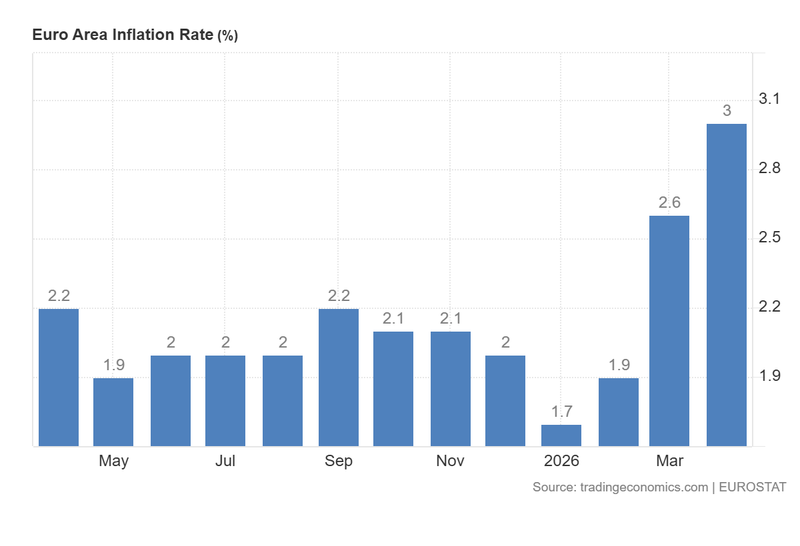
Figure 1. Euro Area Inflation Rate (2025–2026). Source: Data from Eurostat; Figure obtained from Trading Economics.
Technical analysis of the EUR/USD pair
From a technical standpoint, the EUR/USD pair maintains a robust long-term bullish trajectory, although price action is currently navigating a short-term consolidation pattern. Key observations include:
- Trend Context: Over the long term, the pair has preserved a market structure defined by higher highs and higher lows. Furthermore, the price is currently reclaiming the 50, 100, and 200-day Simple Moving Averages (SMAs), suggesting a resurgence of trend support levels.
- Resistance Levels: Should the structural long-term resistance at $1.1800 be breached, the next major technical ceiling is identified at the $1.2000 psychological barrier. A decisive breakout above this level would indicate potential for further extension toward higher valuations.
- Support Levels: If the $1.1670 support level is compromised, the next relevant floor is situated at the $1.1470 (a short-term support that converges to the 200-days SMA). A breach of the $1.1470 zone would significantly increase the probability of a deeper market correction.
- Momentum Indicators: The Relative Strength Index (RSI) is exhibiting an ascending trend, but it trades close to neutral levels. Therefore, fundamental drivers are likely to remain the key determinant of the market’s prevailing trend in the coming periods.
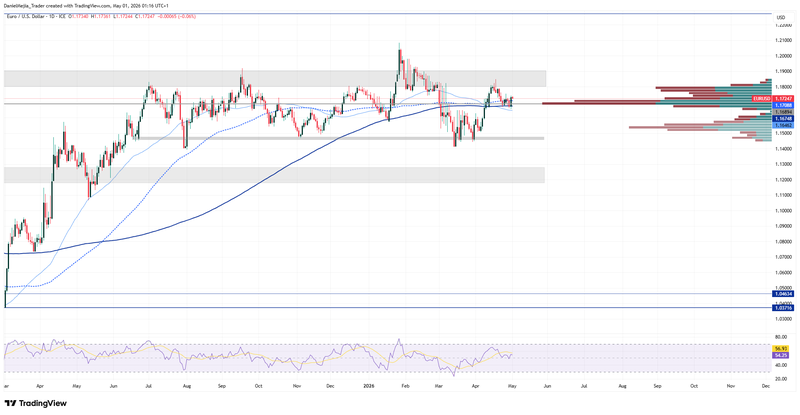
Figure 2. EUR/USD Pair (2025–2026). Source: Data from the Intercontinental Exchange (ICE); own analysis conducted via TradingView.


