Support
London session: why the forex market becomes most active in European trading
The London forex session is widely considered the most important trading window in the global currency market because it combines the deepest liquidity, the strongest institutional participation, and some of the highest volatility of the trading day.
London forex session, sometimes referred to as the European session, represents standard trading hours in the United Kingdom financial markets.
London session matters because it combines three critical elements at the same time: liquidity, volatility, and institutional participation.
XAU/USD often develops its strongest intraday trends during the overlap between London and New York.
What is the London forex session
The London forex session, sometimes referred to as the European session, represents standard trading hours in the United Kingdom financial markets. During this period, major banks, hedge funds, institutional desks, multinational corporations, and professional traders become highly active across the currency market.
London remains one of the largest financial centers in the world, which is why such a large share of global forex transactions flows through the city every day. Estimates generally place London’s share of global forex turnover between 35% and 43%, making it the dominant trading session globally.
That concentration of institutional activity matters because it creates the conditions many traders look for most: tighter spreads, faster execution, stronger momentum, and deeper liquidity.
London forex session trading hours
The London session typically follows standard UK business hours, although the exact timing shifts slightly depending on daylight saving adjustments.
During winter months under Greenwich Mean Time, the session generally runs from 8:00 AM to 5:00 PM GMT.
During summer months, when the UK moves to British Summer Time, the session usually operates from 7:00 AM to 4:00 PM UTC while still corresponding to 8:00 AM to 5:00 PM local London time.
The opening of the London session is particularly important because it overlaps briefly with the closing phase of Asian trading. This transition often produces a sharp increase in market activity as Asian participants close positions and European institutions begin entering new trades.
Why the London session matters so much
The London session matters because it combines three critical elements at the same time: liquidity, volatility, and institutional participation.
Compared with the Asian session, which is often quieter and more range-bound, London trading hours tend to produce larger directional movements and stronger momentum.
Institutional desks become significantly more active during European hours. Banks execute large interbank transactions, hedge funds adjust positioning, corporations hedge currency exposure, and asset managers rebalance portfolios.
That wave of institutional order flow tends to create cleaner price movement and more sustained trends.
Many professional traders pay especially close attention to the first two hours after the London open because overnight ranges established during Asian trading are often broken during this period. Once liquidity enters the market aggressively, momentum can develop quickly.
London and New York overlap is the market’s most active window
The overlap between London and New York City is widely viewed as the most important trading period in forex markets.
This overlap usually occurs between 1:00 PM and 4:00 PM GMT, when both European and American financial institutions are simultaneously active.
The reason this window matters is simple. It combines the two largest financial centers in the world at the same time.
Liquidity rises sharply during these hours, spreads often become tightest, and volatility increases across major currency pairs, commodities, and indices.
US economic data is also commonly released during this overlap. Reports tied to inflation, employment, GDP growth, and Federal Reserve policy expectations frequently trigger rapid repricing in global markets.
Tokyo and London overlap creates early volatility
There is also a shorter overlap between the Tokyo and London sessions, typically lasting from 8:00 AM to 9:00 AM GMT.
Although much smaller than the New York overlap, this transition remains important, particularly for yen-related currency pairs.
Pairs involving the Japanese yen, British pound, and euro can experience sharp movement during this period as Asian traders exit positions while European traders begin establishing new exposure.
Momentum generated during overnight Asian trading can sometimes carry directly into the London open, creating rapid directional moves shortly after European markets become active.
Best currency pairs to trade during the London session
The London session provides strong liquidity across most major forex pairs, but some instruments become especially active during European hours.
Currency pairs such as EUR/USD, GBP/USD, USD/JPY, and USD/CHF are among the most heavily traded because they involve the world’s largest reserve currencies and attract deep institutional participation.
Euro and pound pairs often experience their strongest movement during the European morning as markets react to regional economic developments and shifting central bank expectations.
Cross pairs such as GBP/JPY and EUR/JPY can also become highly volatile during the London open and the London-New York overlap. These instruments are particularly sensitive to global risk sentiment and institutional flows.
Gold trading tends to become more active as well
XAU/USD often develops its strongest intraday trends during the overlap between London and New York because both European and American capital flows influence the precious metals market simultaneously.
Institutional activity dominates the London session
One of the defining characteristics of the London session is the level of institutional dominance.
Unlike quieter periods where retail traders may have greater relative influence, European trading hours are largely driven by banks, hedge funds, asset managers, and professional trading desks.
Large institutional orders can influence short-term price direction significantly, especially around key technical levels or major economic releases.
This is one reason many traders focus closely on price behavior immediately after London opens. Breakouts, reversals, and liquidity sweeps that occur during this window often shape the structure of the entire trading day.
Economic releases drive sharp volatility
Economic data is one of the biggest catalysts during the London session.
Reports tied to inflation, employment, manufacturing, GDP growth, and central bank policy from the UK and Eurozone are typically released during European morning hours.
Statements from the Bank of England and the European Central Bank are especially influential because interest rate expectations remain one of the strongest drivers of currency valuation.
Volatility can rise extremely quickly during high-impact releases. Spreads may widen temporarily, momentum can accelerate rapidly, and false breakouts become more common.
Trading concept for London session
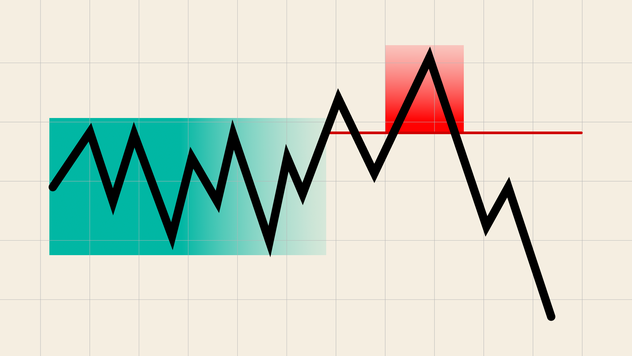
During the quieter Asian session, markets often trade within narrow consolidation ranges. Once London opens and liquidity increases, prices frequently break above or below that overnight range and begin trending.
Traders typically monitor the Asian session high and low, then look for confirmation once European trading begins.
A breakout above resistance may signal bullish continuation, while a breakdown below support can indicate bearish momentum.
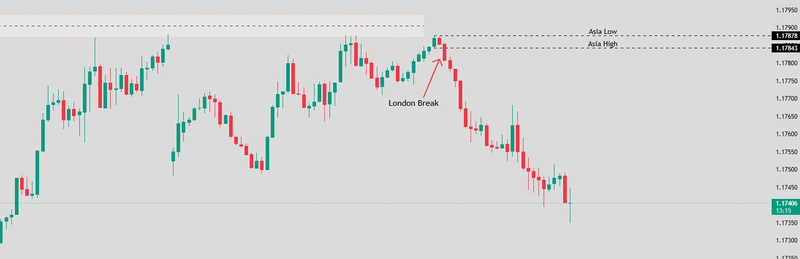
Source: Trading View
FAQs
What time does the London forex session open
The London forex session typically opens at 8:00 AM GMT during winter and 7:00 AM UTC during daylight saving time.
Why is the London session important in forex trading
The London session is important because it has the highest trading volume, deepest liquidity, and strongest institutional participation in the forex market.
What is the best forex pair to trade during the London session
Major pairs such as EUR/USD, GBP/USD, and USD/JPY are among the most actively traded pairs during the London session due to tight spreads and high liquidity.
What is the London and New York overlap
The London-New York overlap occurs when both financial centers trade simultaneously, usually between 1:00 PM and 4:00 PM GMT, creating the highest volatility and volume of the trading day.
What is the London breakout strategy
The London breakout strategy involves trading breakouts from the Asian session range after the London market opens and volatility increases.