Support
 Converting pesos to dollars: exchange rates guide
Pesos to dollars exchange rates move with changes in trade, interest rates and market expectations. Knowing how conversion works helps clarify the difference between mid-market rates and provider rates.
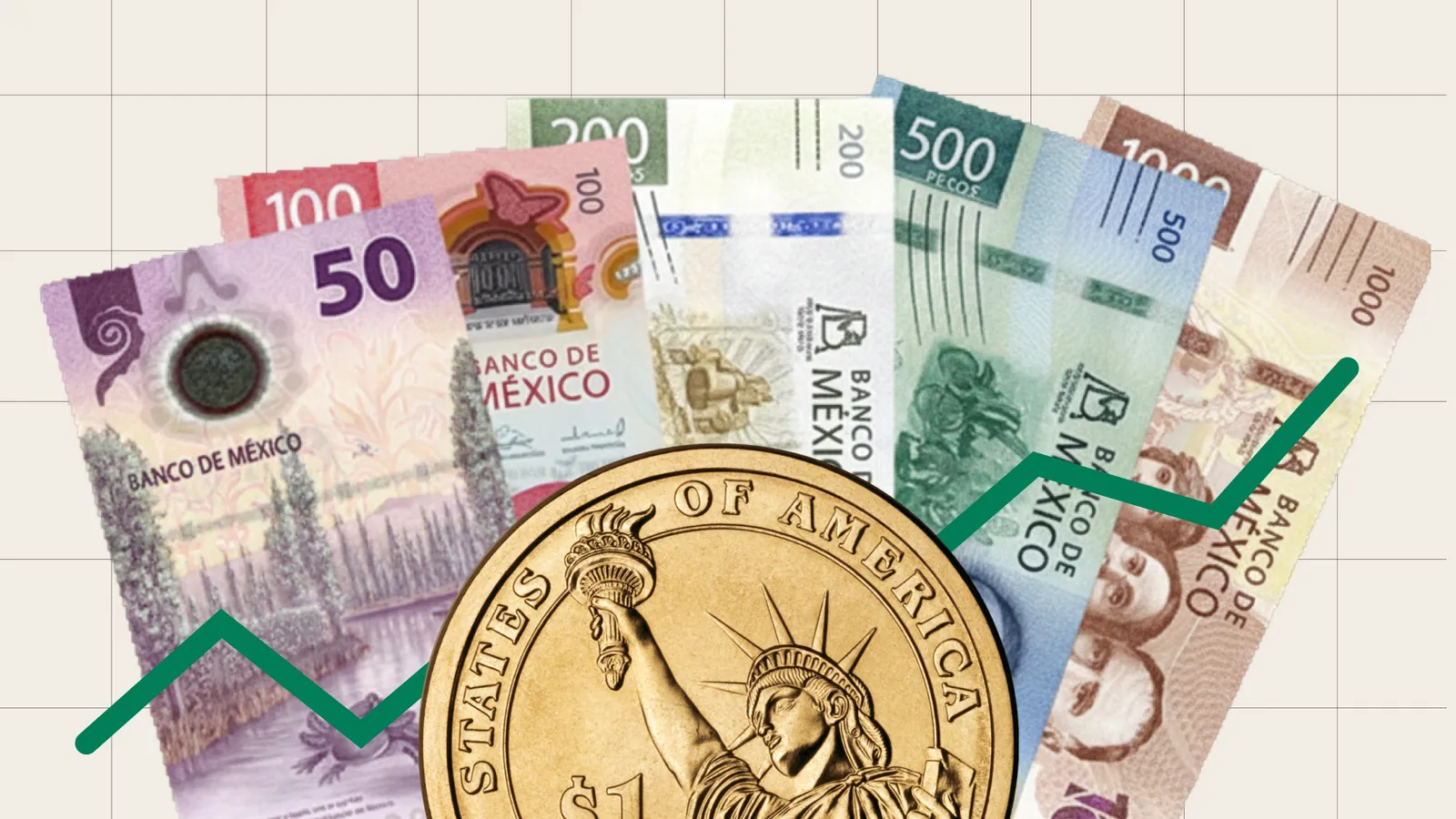
The USD/MXN exchange rate is free-floating, with its value mainly determined by supply and demand across the interconnected North American market.
The interest rate spread between the Bank of Mexico and the Federal Reserve is a major factor in global investment flows, influencing the peso’s rise or fall.
Converting pesos to dollars requires dividing the peso amount by the current exchange rate, while converting dollars to pesos involves multiplying by the rate.
Technical analysis, supported by tools such as the relative strength index and volume profile, helps traders assess liquidity levels in the USD/MXN pair.
MXN To USD Exchange Rate Today
The determination of the USD/MXN exchange rate is predicated upon a complex balance of multiple economic factors, most notably international trade volumes, macroeconomic expectations, and cross-border investment flows. It is essential to note that the exchange rate in Mexico is governed by a free-floating regime. Consequently, the market forces of supply and demand dictate the currency's value, establishing what participants consider to be an adequate and efficient price at any given moment.
Mid-Market Rate vs. Provider Rate
The Mid-Market Rate refers to the average exchange rate found in the global markets, representing the precise equilibrium point between bid and ask prices. By definition, this is regarded as the fairest value a currency can possess at the time of conversion. However, retail consumers and businesses typically encounter the Provider Rate during actual transactions.
The Provider Rate incorporates a profit margin for financial intermediaries, such as commercial banks and exchange houses. This rate essentially functions as a surcharge on the prevailing market levels of supply or demand. When a transaction is executed at this rate, it generates an implicit profit for the intermediary, which is effectively paid by the final consumer through the price mark-up. For instance, if the mid-market exchange rate is 19 pesos per dollar, but an intermediary offers a selling price of 20 pesos per dollar, the one-peso difference represents the intermediary's gross profit.
What Moves the Peso-Dollar Exchange Rate
The USD/MXN exchange rate is influenced by multifactorial aspects, with the following being the most relevant:
- International trade: Mexico is a key participant in a trilateral trade agreement with the United States and Canada (USMCA). This treaty represents one of the largest trading blocs globally, characterised by deeply integrated value chains across North America. As a result, the requirement for currency conversion is a constant and significant factor in the valuation of the pair.
- Investment flows: Investors closely monitor the monetary policy decisions of both the Federal Reserve and the Bank of Mexico (Banxico). When a substantial "spread" or difference exists between Banxico's interest rates and those of the Fed, the Mexican peso frequently experiences appreciation as investors seek higher yields—a process often associated with the carry trade. However, it is important to observe that this phenomenon is not guaranteed and depends on broader market sentiment.
- Macroeconomic expectations: Continuous comparative macroeconomic analysis between the two nations is a staple for market participants. Key indicators, including inflation rates, GDP growth, and industrial production, allow investors to anticipate future monetary policy shifts by central banks, thereby generating constant trading activity and price adjustments.
How To Convert Pesos To Dollars
Currency conversion is a fundamental component of risk management within the trading environment. An imprecise calculation can lead to substantial monetary losses, particularly in the context of Forex trading, where the use of financial leverage can magnify the impact of even minor errors.
Conversion Formula and Examples
The formula for converting Mexican pesos (MXN) into United States dollars (USD) is as follows:
- USD Amount = MXN Amount / Exchange Rate.
Conversely, the formula for converting United States dollars into Mexican pesos is:
- MXN Amount = USD Amount * Exchange Rate.
MXN to USD and USD to MXN Conversions
To provide a practical illustration, if one intended to convert 500,000 Mexican pesos into dollars at an exchange rate of 18.00 pesos per dollar, the calculation would be:
- 27,777 USD = 500,000 / 18
Alternatively, if one required the Mexican peso equivalent of 40,000 US dollars at an exchange rate of 18.50, the following formula would apply:
- 740,000 MXN = 40,000 * 18.50
MXN To USD Charts, History, and Statistics
Technical analysis serves as an excellent ally for those trading the USD/MXN pair. This analytical discipline encompasses various methodologies, including Price Action, Chartism (pattern recognition), and the use of statistical indicators to forecast future price movements based on historical data.
Reading a MXN to USD Chart
Figure 1 illustrates a practical application of technical analysis for the USD/MXN pair. The chart utilises a combination of Simple Moving Averages (SMA) which, at a glance, allow a trader to identify the primary market trend. Furthermore, the Moving Average Convergence Divergence (MACD) and the Relative Strength Index (RSI)—both momentum oscillators—assist in identifying overbought or oversold conditions. These tools are vital for pinpointing potential short-term trend reversals and avoiding entries into trends that are already exhausted.
Simultaneously, the volume profile highlights areas of price accumulation or distribution. This tool is instrumental in identifying the Point of Control (POC), which represents the price level where the greatest amount of liquidity has historically accumulated, marking it as a significant area of interest for future price action.
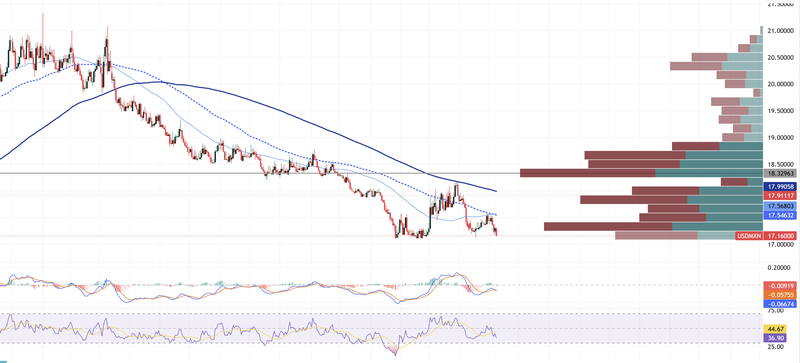
Figure 1. USD/MXN Pair. Source: Own analysis conducted via TradingView.
Short-Term vs. Long-Term Trends
The application of short-term or long-term analysis depends entirely on the trader's specific objectives and risk appetite. For example, Swing Traders typically analyse the USD/MXN pair using daily or weekly candlesticks to capture the overarching market trend. Due to the extended timeframe, macroeconomic factors and global news events exert a significant influence, necessitated by a rigorous application of fundamental analysis.
In contrast, day traders or scalpers generally focus on timeframes of minutes or hours, aiming to capitalise on short-term trends and minor price fluctuations. For this style of higher frequency trading, technical analysis is usually considered the trader’s most indispensable tool.
Conclusion
Understanding the exchange rate relationship between the Mexican peso and the US dollar requires a comprehensive perspective that integrates macroeconomic fundamentals with precise technical instruments. Factors such as North American trade integration and central bank monetary policies dictate the currency's underlying momentum, yet it is the accurate application of conversion formulae and trend analysis that ultimately protects a trader's capital. By distinguishing between the mid-market rate and the surcharges applied by intermediaries, individuals and institutions can achieve far more efficient and profitable financial management.
If you're interested in trading indices, foreign exchange, or commodities, consider exploring the CFD contracts offered by Equiti Group. Please note that trading leveraged derivatives involves a high level of risk and may not be suitable for all investors.
FAQs
How much is $1 dollar in pesos?
The value of one US dollar in Mexican pesos fluctuates constantly due to the free-floating exchange regime. If the USD/MXN exchange rate is quoted at 19.50, then one dollar is equivalent to 19.50 pesos. This price reflects the equilibrium between global supply and demand, influenced by bilateral trade under the USMCA and inflation expectations. It is vital to consult a real-time mid-market rate to obtain the most accurate valuation before conducting any financial transaction.
How much is $100 pesos in dollars?
To determine the dollar equivalent of 100 pesos, the amount must be divided by the current exchange rate. For example, at a rate of 18.50, the result would be approximately $5.40 USD. It is important to distinguish whether you are using the mid-market rate or a bank’s provider rate, as intermediaries typically apply a surcharge that reduces the final amount of dollars received.
How to easily convert pesos to dollars?
The most efficient and technically accurate method is to apply the standard formula: USD Amount = MXN Amount / Exchange Rate. For professional-grade conversion, one should not only calculate the nominal amount but also analyse the pair's trend using indicators like the RSI or moving averages. This helps identify whether the peso is in an overbought or oversold zone, helping you determine if it is an optimal moment for conversion or if it is wiser to wait for volatility to subside.
What is the difference between the Mid-Market Rate and the Provider Rate?
The mid-market rate is the real midpoint between the global "buy" and "sell" prices and is considered the most "fair" value of a currency. Conversely, the provider rate is the price offered to the public by banks or exchange houses, which includes a built-in profit margin or hidden commission. This spread represents the cost of the intermediary's service; consequently, the final consumer will always incur a higher cost when purchasing dollars compared to the rates observed on financial market data feeds.