
 Help
Help
U.S. approves limited export of Nvidia H200 chips to China
Recently, the United States, under the previous administration of Donald Trump, approved the limited export of Nvidia H200 AI chips to selected Chinese companies. This decision is part of a cautious approach to allow China access to advanced AI technology while maintaining strict regulatory controls.

Designed for advanced artificial intelligence applications.
Strict limits on how the chips can be used by approved companies.
Enables Nvidia to expand its business in China while complying with U.S. regulations.
What is the H200 Chip
The H200 is a high-performance AI chip designed specifically for advanced AI applications. It can process data faster, handle larger AI models, and improve efficiency in tasks such as machine learning, data analysis, and cloud computing. For Chinese companies, access to the H200 could accelerate AI research, improve data centers, and support new AI projects across multiple industries.
Strict Rules and Monitoring
Although the export is approved, the U.S. has set strict usage limits. Only selected companies meeting regulatory requirements can receive the chips, and their use will be closely monitored. This ensures the technology is not misused. The overall impact will depend on how many companies are approved and how quickly they deploy the chips.
Impact on Nvidia’s Business
For Nvidia, this approval provides an opportunity to grow its business in China while adhering to U.S. regulations. Previously, when exports were limited or blocked, Nvidia missed a key market with high demand for AI chips. With this limited export now allowed, the company can regain market share and improve its revenue and profit margins. Even with strict limits, Nvidia could see a noticeable boost compared to the period of export restrictions.
Benefits for China
For Chinese tech firms, access to the H200 can enhance AI innovation in cloud computing, data analytics, autonomous vehicles, and other technology-driven projects. The limited export demonstrates a careful balance between advancing technology and maintaining security. While it is not a full-scale opening, it lays the groundwork for future AI development in China. Both Nvidia and Chinese companies, especially VNET, are likely to benefit from this controlled step forward.
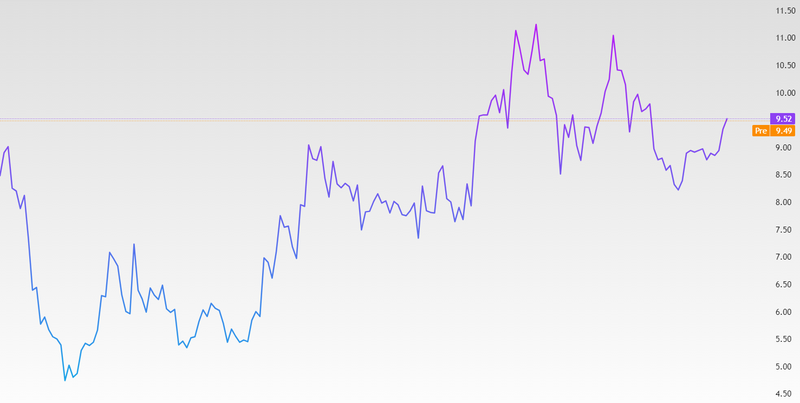
Source: Trading View
Risks and Considerations
Despite the benefits, there are risks. The U.S. will closely monitor usage, and any misuse could damage Nvidia’s reputation or lead to penalties. Investors and industry watchers will be paying attention to which companies receive the chips, how fast they deploy them, and the overall impact on Nvidia’s growth and margins.


