
 Help
Help
The BoJ hits the brakes on rate hikes
Bank of Japan has been navigating the opposite challenge: figuring out when to finally tighten. However, the latest market pricing suggests that the much-anticipated Japanese rate hike cycle is being pushed further down the road. BoJ is buying time. A combination of shifting political headwinds and easing inflation has given policymakers the breathing room to delay their next move.

Markets are pricing in the anticipated fiscal stimulus policies of Prime Minister Sanae Takaichi.
Consensus among economists is that the BoJ will eventually push rates to the 1.0% level by September.
BoJ will not move without structural proof that the economy can handle it.
The Takaishi effect
Fiscal stimulus does a lot of the heavy lifting for the economy, which inherently reduces the pressure on the Bank of Japan to act aggressively. Furthermore, with broader inflationary pressures beginning to subside domestically, the BoJ policymakers no longer have a "gun to their heads." They can afford to wait and see how the government's stimulus impacts the broader economy before stepping in to raise borrowing costs.
Prime minister Sanae Takaishi’s landslide election victory in February, her administration has an unprecedented mandate for "proactive public finances." Markets know that massive fiscal stimulus pairs better with a weaker, highly competitive Yen to boost corporate export profits.
Massive repricing of probabilities
This shifting narrative has caused institutional investors to aggressively reprice their expectations for the upcoming BoJ meetings. The short-term hawkish bets have essentially evaporated.
The probability of a standard quarter-point (0.25%) rate hike in March has collapsed, plummeting from 10% down to just 3%.
April was widely viewed as the most likely window for the next hike. However, the probability of a 25-basis-point increase here has also seen a severe downgrade, dropping from a coin-toss 50% down to 30%.
Despite the short-term delays, the overarching trend remains upward. According to the latest Reuters polling, the consensus among economists is that the BoJ will eventually push rates to the 1.0% level by September.
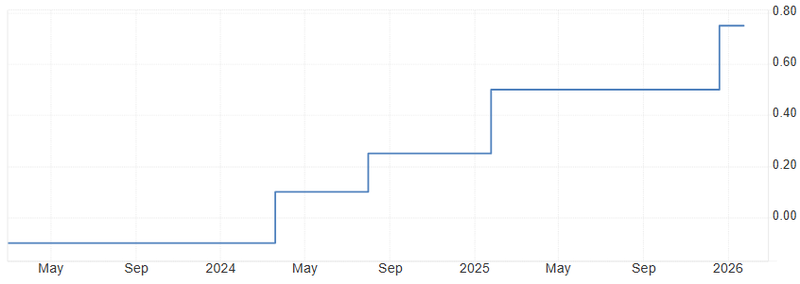
Source: Bank of Japan
Coiled spring waiting for June
The BoJ delay means the Yen's highly anticipated recovery has been postponed, not canceled. By late Q2, as the market digests the results of Japan's spring wage negotiations (Shunto), expectations for a June or July rate hike will begin to price back into the market
The BoJ will not move without structural proof that the economy can handle it. Over the next few months, everything will hinge on the release of new data regarding inflation levels, unemployment rates, and most importantly, wage growth. If wage growth (particularly from the upcoming spring negotiations) outpaces inflation, it will give the BoJ the definitive green light they need to hike in the late summer. If wages stagnate, that September 1.0% target will likely be pushed into 2027.


