
 Help
Help
Dollar stays dominant as Fed signals caution
The dollar remains the top performer this week, buoyed by strong U.S. GDP data and Powell’s resistance to a September pivot. Meanwhile, a major trade agreement with South Korea and rising inflation expectations in Japan shape a busy macro week.

Strong U.S. GDP and Powell’s guarded tone reduce odds of a Fed rate cut in September.
Gold and equities pause as markets await PCE inflation and jobs data.
Trump’s new South Korea deal eases tariffs and includes $350B investment into U.S. industries.
BoJ holds rates, lifts inflation forecasts, signaling gradual normalization.
India hit with fresh 25% U.S. tariff amid growing BRICS tensions.
Dollar leads as Fed pushes back on September cut
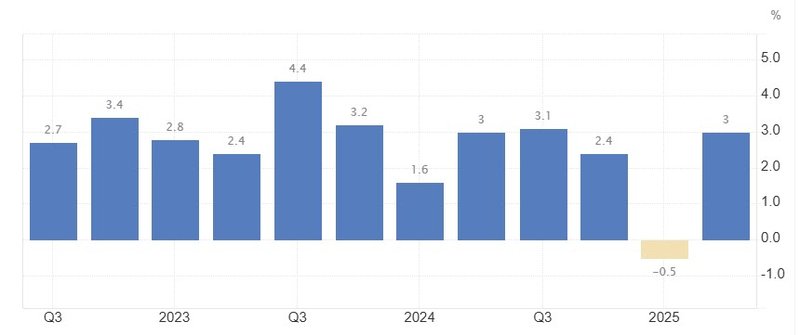
The U.S. dollar continued to dominate currency markets this week, holding its strength even after a modest retreat in Asian trading. The dollar rally gained momentum after the second-quarter GDP came in stronger than expected, with the economy expanding at a 3% annualized pace versus the 2.4% consensus. The robust growth print follows a surprise contraction in Q1 and further dampened expectations of a September rate cut.
Fed Chair Jerome Powell added to the hawkish shift during his post-meeting press conference. While two FOMC members — Michelle Bowman and Christopher Waller — dissented in favor of an immediate cut, Powell’s messaging struck a cautious tone. He stressed that "no decisions have been made" regarding the September meeting and warned that inflation driven by tariffs may have more persistent effects than initially projected.
The markets reacted by scaling back bets on a rate cut, with futures now pricing in just a 43% chance of easing in September — down from 65% the previous day. All eyes are now on today’s PCE inflation report and Friday’s non-farm payrolls, both of which will heavily influence short-term rate expectations.
In its policy statement, the Fed acknowledged steady growth and tight labor markets but cited “somewhat elevated” inflation. Powell reiterated that the U.S. economy remains resilient, saying, "The economy is not performing as though restrictive policy were holding it back inappropriately."
Trump’s South Korea deal slashes tariffs, launches massive U.S. investment
President Donald Trump unveiled a "full and complete" trade agreement with South Korea, reducing previously threatened tariffs on Korean goods. Blanket duties were capped at 15%, down from an initially proposed 25%. Notably, auto tariffs were cut from 25% to 15%.
The agreement also includes a USD 350 billion investment package from South Korea into U.S. industries, including semiconductors, biotech, and shipbuilding. Trump claimed that the package would be "owned and controlled" by U.S. authorities and guided by presidential authority, with Commerce Secretary Howard Lutnick stating that 90% of profits will flow directly to American interests.
However, South Korean President Lee Jae-myung emphasized mutual benefit, describing the investment as a strategic push to support Korean firms in gaining access to U.S. high-tech sectors. Of the total sum, USD 150 billion will be allocated to shipbuilding cooperation.
The deal comes just ahead of the August 1 tariff implementation window, marking a crucial diplomatic moment.
India slapped with 25% tariff as Trump targets BRICS
In contrast to the Korea deal, India now faces heightened trade pressure. Trump announced a 25% tariff on Indian imports, effective Friday. The move follows accusations that India maintains excessive non-monetary trade barriers and undermines U.S. interests through its participation in BRICS and continued purchases of Russian oil and military equipment.
Trump did leave the door open for negotiations, saying a resolution could be reached before the end of the week. The announcement underscores a broader White House strategy aimed at isolating BRICS-aligned economies while rewarding cooperative trade partners.
BoJ holds rates, raises inflation forecast sharply on food price surge
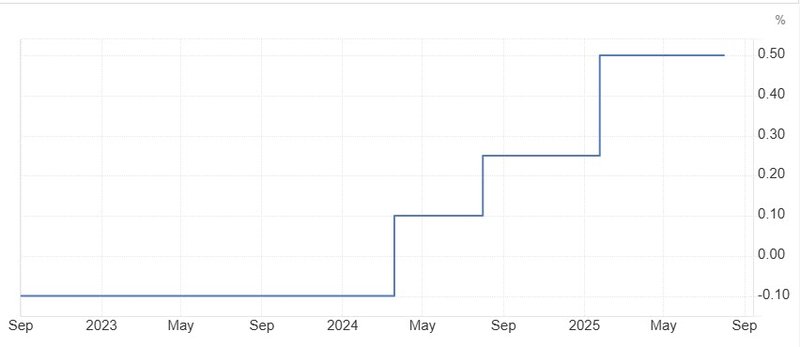
The Bank of Japan left its short-term interest rate unchanged at 0.50%, reaffirming its cautious stance amid global trade volatility. In its latest quarterly outlook, the central bank revised its inflation projections significantly upward.
Core CPI for fiscal 2025 was lifted from 2.2% to 2.7%, while core-core CPI (excluding fresh food and energy) increased from 2.3% to 2.8%. These upward revisions were primarily attributed to higher food prices. While inflation remains below target in the short run, the BoJ now expects it to approach the 2% stability goal in the second half of the forecast horizon.
For fiscal 2026, core CPI was adjusted up to 1.8% and core-core to 1.9%. The bank's GDP growth projection for 2025 was modestly raised to 0.6%, while forecasts for 2026 and 2027 remained at 0.7% and 1.0%, respectively. The BoJ acknowledged that growth risks remain tilted to the downside, while price risks are now considered more balanced.
Powell’s tone pressures equities, cools easing bets
U.S. equities ended the day mixed following the Fed’s decision to hold rates steady. Although the dissenting votes from Bowman and Waller signaled internal disagreement, Powell’s press conference dampened hopes for a rapid pivot.
Powell was direct in stating that the Fed is not ready to commit to a September cut, emphasizing that further data is needed. Between now and the next FOMC meeting, two rounds of labor market and inflation data will help shape the Fed’s path forward.
Inflation remains above the central bank’s 2% target, with the Consumer Price Index rising to an annualized 2.7% in June. Meanwhile, the economy is showing signs of strength, supported by a strong labor market and steady consumer activity.
Economists are now split on the likelihood of a September cut. While a majority still expect some easing by year-end, Powell’s emphasis on tariff risks and resilient growth has raised the threshold for action.
