
 Help
Help
Middle East geopolitical tensions trigger sharp volatility in oil markets
Crude oil markets are experiencing heightened volatility as the ongoing conflict involving the United States, Israel, and Iran continues to inject significant uncertainty into the Middle East. Consequently, supply-side disruptions and logistical bottlenecks have forced prices toward multi-year highs.

The Brent crude futures contract closed with a sharp appreciation of 6.76% after touching the $119.50 level during an exceptionally volatile trading session.
Key regional producers, including Kuwait, Iraq, and the United Arab Emirates, have reported significant operational challenges regarding crude production, refinery throughput, and export logistics as the conflict escalates.
G7 finance ministers have signalled that Western nations remain prepared to release strategic petroleum reserves (SPR) from their national stockpiles to mitigate supply shortages if required.
Brent prices approach $120 threshold amid Middle Eastern geopolitical instability
Escalating geopolitical tensions in the Middle East have catalysed a period of intense volatility within the energy sector. The Brent futures contract (BRNK26) reached an intraday peak of $119.50 per barrel before retracing toward the $99 level, ultimately marking a daily gain of approximately 6.76%. While regional uncertainty remains the primary driver of market sentiment, the sustained damage to energy infrastructure has resulted in severe supply disruptions, exerting significant upward pressure on crude benchmarks.
A primary concern for market participants is the closure of the Strait of Hormuz, a critical maritime artery through which approximately 20% of the world’s daily oil supply transits. The threat to this passage is causing a build-up of inventories in Middle Eastern countries alongside the forced closure of several refineries. In recent days, Kuwait announced precautionary cuts to both its crude production and refinery operations. Simultaneously, Iraqi output has been severely hindered by direct impacts on energy infrastructure and the logistical constraints imposed by the Strait’s vulnerability. Furthermore, the United Arab Emirates is reportedly reassessing its production targets in response to these maritime challenges. Consequently, a surge in demand from traders and hedgers is driving prices higher; analysts warn that a prolonged conflict could result in acute global shortages and sustained price inflation.
Regarding the response from Western economies, CNBC reports that G7 finance ministers stated, “the members are ready to take necessary measures to support the global energy supply, including the coordinated release of stockpiles.”
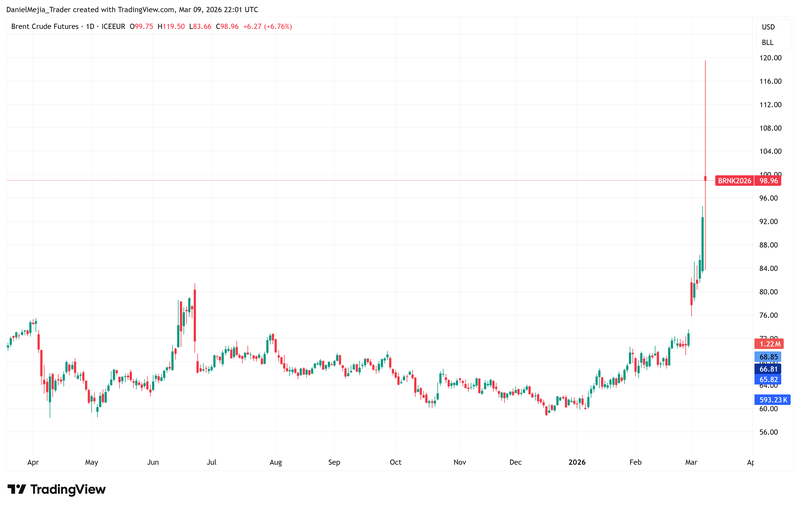
Figure 1. Brent Futures Contract (2025–2026). Source: Data from the ICE-EUR Exchange; Figure obtained from TradingView.
Quarterly financial results
The corporate earnings season continues this week, with several prominent technology entities scheduled to report. These results may introduce further volatility into the US equity markets:
- Monday: Hewlett Packard Enterprise (HPE)
- Tuesday: Oracle Corporation (ORCL)
- Thursday: Adobe Inc. (ADBE)
Key economic events this week
Several critical economic indicators are scheduled for release this week, which will be instrumental in shaping market expectations regarding inflation and growth:
Monday
- China: Inflation Rate (YoY)
- Australia: Westpac Consumer Confidence Change
Tuesday
- Australia: NAB Business Confidence
- China: Balance of Trade
- Germany: Balance of Trade
- US: Existing Home Sales
Wednesday
- US: Inflation Rate (CPI)
- US: EIA Crude Oil Stocks Change
Thursday
- US: Building Permits
- US: Housing Starts
Friday
- US: Durable Goods Orders
- US: University of Michigan Consumer Sentiment
- Canada: Unemployment Rate
