
 Help
Help
US–Iran ceasefire lifts global markets, sends oil prices tumbling
A potential ceasefire negotiated between the United States and Iran has bolstered global equity markets, as investors price in the possibility of a more accommodative monetary stance from central banks should inflationary risks remain contained. Concurrently, crude oil prices have retreated sharply amid renewed optimism regarding the reopening of the Strait of Hormuz and higher-than-anticipated US crude inventories.

Global stock markets advanced significantly on hopes of a resolution to the US–Israel–Iran tensions, following the announcement of a proposed two-week ceasefire by US and Iranian officials.
Oil prices fell in tandem as market participants factored in the potential for a reopening of the Strait of Hormuz, which could alleviate the severe supply-chain disruptions observed since the conflict began on 28 February.
US crude inventories recorded their seventh consecutive week of higher-than-expected growth, suggesting that domestic supply is currently outstripping both internal and international demand.
Global markets rebound sharply amid potential US–Iran ceasefire; Energy prices decline
According to US and Iranian officials, a fortnight-long ceasefire has been agreed between the two nations. The market reaction to this announcement was immediate and substantial; global equity markets rebounded while energy benchmarks experienced a sharp decline.
In the United States, the S&P 500 index increased by 2.51%, the Dow Jones Industrial Average rose by 2.85%, and the Nasdaq 100 appreciated by 2.90%. European markets saw even more pronounced gains: the French CAC 40 appreciated by 4.49%, the UK’s FTSE 100 rose by 2.51%, the Spanish IBEX 35 increased by 3.94%, and the German DAX 40 surged by 5.06%. Meanwhile, in Asia, the Japanese Nikkei 225 climbed by 5.39%. Global equities stand to benefit from a de-escalation in the Middle East, as a reduction in geopolitical risk may keep inflation in check, thereby alleviating the pressure on central banks to maintain the restrictive monetary stances that threaten economic growth.
Simultaneously, energy prices faced significant downward pressure. The Brent crude futures contract (BRNM6) decreased by 13.29% to $94.75 per barrel, while the West Texas Intermediate (WTI) contract (CLK6) fell by 16.5% to $94.45 per barrel. Furthermore, gasoline futures (RBK6) declined by 9% to $3.00 per gallon. Market participants anticipate that the reopening of the Strait of Hormuz—a primary condition of the negotiations—could restore energy flows through this vital corridor, mitigating the supply-chain disruptions that recently pushed fuel prices to multi-year highs.
However, ongoing hostilities between Israel and Lebanon have cast doubt upon the sustainability of the ceasefire. Iranian officials have asserted that any peace agreement must extend to Lebanese territory. Conversely, US and Israeli officials have maintained that the territory in question is not included in the current scope of the agreement. Consequently, there remains a risk that Iran could once again obstruct energy flows via the Strait, impacting global supply chains. Furthermore, some analysts remain concerned that the fundamental demands of the US and Iran remain structurally opposed, raising questions as to whether a lasting peace can be achieved.
US crude oil inventories rise considerably above analyst estimates
Data released by the US Energy Information Administration (EIA) reveals that crude oil inventories increased by 3.081 million barrels in the latest weekly assessment. This figure is comfortably above the consensus forecast of an 0.7-million-barrel increase. Although this represents a deceleration compared to the previous reading of 5.451 million barrels, the magnitude of the surprise remains notable.
This latest data marks the seventh consecutive week in which market expectations have been surpassed by a significant margin. Such a persistent surplus suggests that crude oil flows within the United States are currently exceeding the requirements of both domestic and international demand.
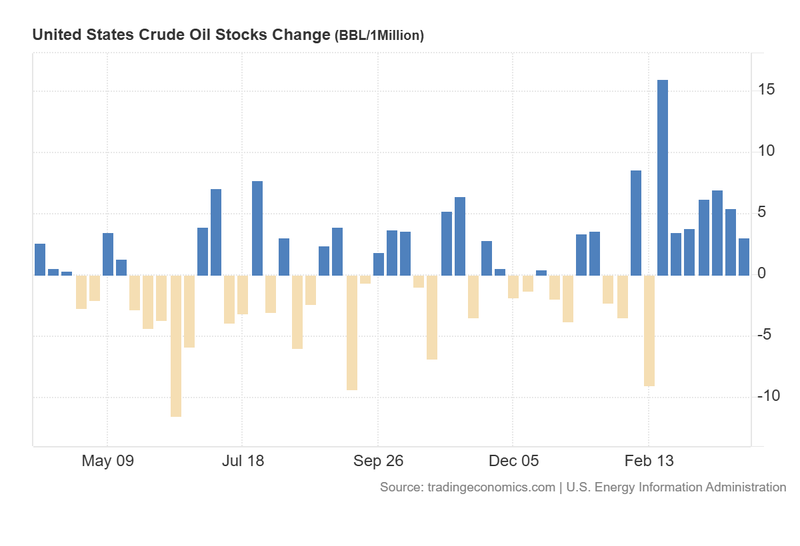
Figure 1. US Crude Oil Stocks Change (2025–2026). Source: Data from the Energy Information Administration (EIA); Figure obtained from Trading Economics.

