Help
Help 
How to calculate lot size in silver trading
XAGUSD in the CFD or forex environment, a “lot” represents the standardized quantity of silver you are trading. It is not just a number on the screen. It directly defines how much exposure you have to price movements. When silver moves by a small amount, your profit or loss is determined by the size of your lot.
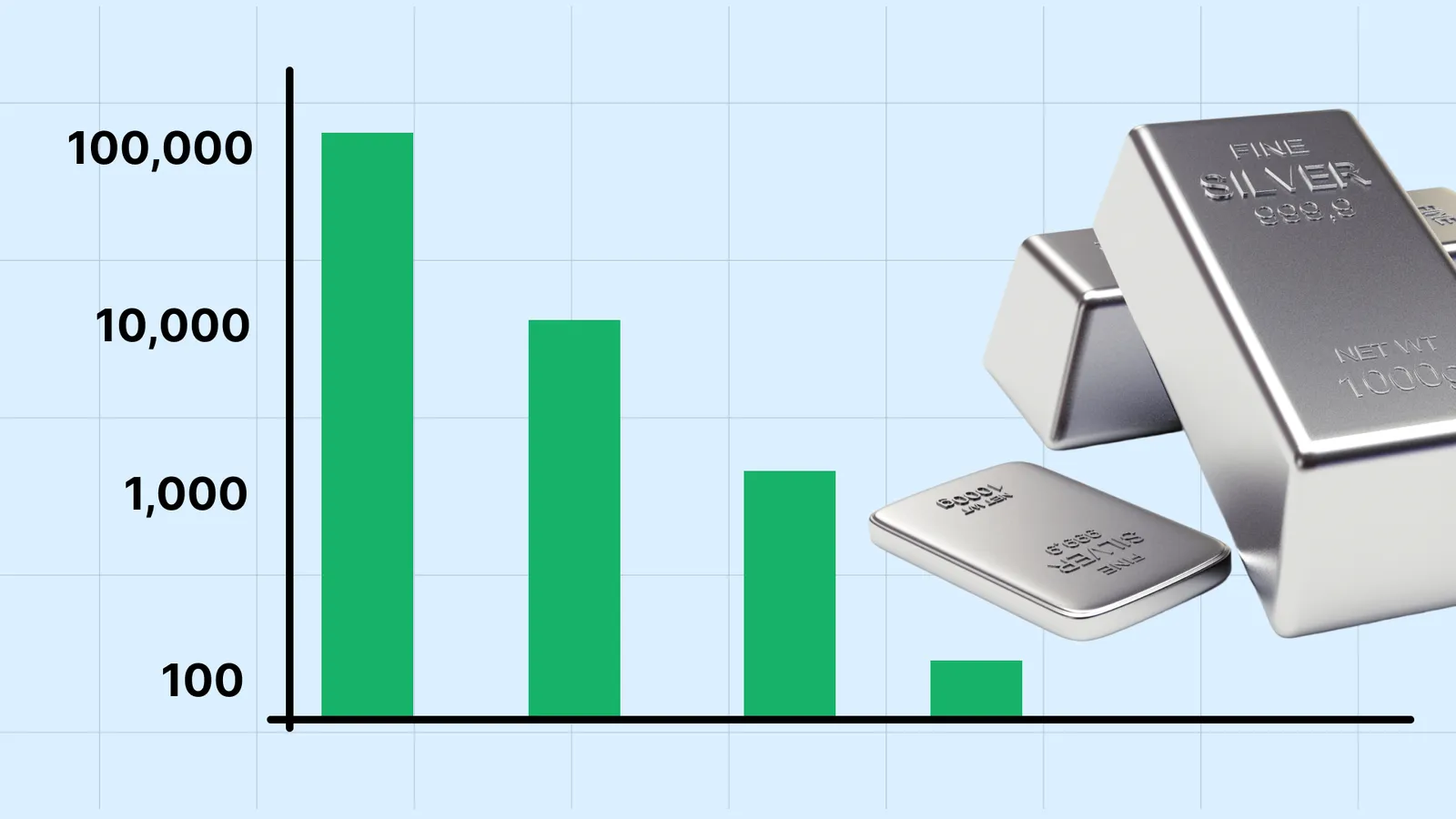
A standard lot in most CFD environments represents 5,000 ounces of silver.
Lot size is the bridge between your trading idea and your financial outcome.
Tick value defines how much money is gained or lost for each minimum price movement.
What Is a lot in silver trading
In trading, especially when dealing with XAGUSD in the CFD or forex environment, a “lot” represents the standardized quantity of silver you are trading. It is not just a number on the screen. It directly defines how much exposure you have to price movements. When silver moves by a small amount, your profit or loss is determined by the size of your lot.
Unlike equities where you buy shares, or futures where contracts are fixed, CFD brokers use the concept of lots to simplify position sizing. When you open 1 lot of XAGUSD, you are effectively controlling a specific number of ounces of silver, and every price fluctuation is applied to that full amount.
Many traders focus on entry points and signals, but the real driver of long-term survival is how much size they take relative to their account.
Standard, mini, and micro lots in silver
Lot sizes in silver trading are typically broken down into standard, mini, and micro units. A standard lot in most CFD environments represents 5,000 ounces of silver. A mini lot is usually 0.1 of that, meaning 500 ounces, and a micro lot is 0.01, or 50 ounces.
This scaling allows traders to adjust their exposure based on account size and risk tolerance. A beginner with a smaller account should not be trading standard lots, because even small price movements in silver can translate into significant dollar changes.
The key idea is flexibility. Lot sizing allows traders to match position size with their strategy rather than forcing the strategy to fit a fixed contract.
XAGUSD lot size Vs silver futures contract size
There is an important distinction between trading silver via CFDs and trading silver futures. In the futures market, one standard silver contract represents 5,000 ounces, which aligns with many CFD definitions of a standard lot. However, futures contracts are rigid. You cannot trade fractions of a contract easily without switching to micro futures.
In contrast, CFD trading allows fractional lot sizes, such as 0.23 or 0.57 lots, giving much finer control over risk. This is why many traders prefer XAGUSD CFDs when managing precise position sizing.
However, futures markets are centralized and often more transparent in pricing, while CFDs depend on broker conditions. Understanding the difference helps avoid confusion when comparing lot sizes across platforms.
How brokers define lot size and units
Not all brokers define lot sizes in exactly the same way. While many use 5,000 ounces per lot for silver, some may define it differently, especially depending on liquidity providers or platform settings.
This is why checking contract specifications is essential before trading. The platform will usually show how many ounces are represented per lot, along with tick size, tick value, and margin requirements.
Assuming standard definitions without verifying them can lead to incorrect risk calculations, which is one of the most common mistakes among traders.
Why lot size matters in silver trades
Lot size is the bridge between your trading idea and your financial outcome. Two traders can take the exact same entry and exit, but if their lot sizes differ, their results will be completely different.
Risk per trade and position size
Every trade should begin with a defined risk. This is usually expressed as a percentage of account balance, such as 1 percent or 2 percent. Once the risk is defined, the lot size is adjusted to match that risk.
If the stop-loss is wide, the lot size must be smaller. If the stop-loss is tight, the lot size can be larger. This relationship ensures that each trade carries a consistent level of risk regardless of market conditions. Ignoring this principle leads to inconsistent performance and large drawdowns.
Profit and loss sensitivity to silver price moves
Silver is known for its volatility. A move of 0.50 or even 1.00 in price is not unusual, especially during high-impact events. With a large lot size, these moves can translate into significant profits, but also equally large losses.
For example, if 1 lot equals 5,000 ounces, a 1 dollar move in silver results in a 5,000 dollar change in position value. This highlights how sensitive PnL is to lot size.
Traders who underestimate this relationship often find themselves overexposed without realizing it.
Silver contract specifications
Before calculating lot size, it is critical to understand the contract specifications provided by your broker.
Contract size and tick size
The contract size tells you how many ounces are represented by one lot. The tick size defines the minimum price movement. Together, these determine how much money is gained or lost per price change.
For example, if the tick size is 0.01 and the contract size is 5,000 ounces, then each 0.01 move equals 50 dollars per lot.
Quote currency and account currency
Silver is typically quoted in US dollars. If your trading account is also in dollars, calculations are straightforward. However, if your account is in another currency, such as euros, conversions must be considered. Ignoring currency differences can distort risk calculations and lead to unexpected results.
Brokers rules
Each broker may have specific rules regarding minimum lot size, step increments, and trading hours. Some allow trading in increments of 0.01 lots, while others may require larger steps.
Understanding these constraints ensures that your calculated lot size can actually be executed on the platform.
How to calculate lot size in silver trading
Set risk amount and stoploss distance
Start by determining how much you are willing to risk on the trade. For example, if your account is 10,000 dollars and you risk 1 percent, your risk per trade is 100 dollars.
Define your stop-loss distance in price terms. Suppose your stop-loss is 0.50 away from your entry.
Convert stoploss into dollar risk per 1 lot
How much money would be lost if price moves by the stop-loss distance for 1 lot. If 1 lot equals 5,000 ounces, then a 0.50 move results in a 2,500-dollar loss per lot.
Solve for lot size and round
To find the correct lot size, divide your risk amount by the dollar loss per lot. In this case, 100 divided by 2,500 equals 0.04 lots.
This means you should trade 0.04 lots to risk 100 dollars. The final step is to round this value to the nearest allowed increment based on your broker’s rules.
Margin, Leverage, And Pip Value for Silver
Understanding how margin and leverage interact with lot size is essential for managing exposure.
How to calculate margin
Margin is calculated based on the contract size, current price, and leverage. For example, if silver is trading at 25 dollars and you open 1 lot, the notional value is 125,000 dollars. With 1 to 100 leverages, the required margin would be 1,250 dollars.
How leverage changes position capacity
Leverage allows you to control larger positions with less capital, but it does not reduce risk. Risk is determined by stop-loss and lot size, not leverage. This distinction is critical.
Many traders confuse leverage with risk control, which often leads to overexposure.
Understanding tick value and price increment
Tick value defines how much money is gained or lost for each minimum price movement. In silver, even small price changes can have a meaningful financial impact when multiplied by large lot sizes.
Understanding this relationship helps traders anticipate how their positions will react to market volatility.
FAQs
How do you calculate lot size in silver trading?
Lot size is calculated by dividing your risk per trade by the dollar value of your stop-loss distance for one lot, then adjusting to match your broker’s allowed increments.
What is 1 lot in XAGUSD?
1 lot of XAGUSD represents 5,000 ounces of silver, but this can vary by broker, so checking specifications is essential.
Why is lot size important in silver trading?
Lot size determines how much you gain or lose per price movement and directly affects risk, margin usage, and account survival.
Does leverage affect lot size calculation?
Leverage affects how much margin is required, but it does not change the risk per trade. Risk is determined by lot size and stop-loss distance.
What is the best lot size for beginners?
Beginners should use small lot sizes, such as micro or mini lots, and focus on risking a small percentage of their account per trade.