Support
How the economy moves markets: A trader’s guide
Markets do not move on headlines alone. They move on what those headlines mean for growth, inflation, interest rates, and expectations. For traders, understanding that chain reaction is often the difference between reacting late and positioning early.
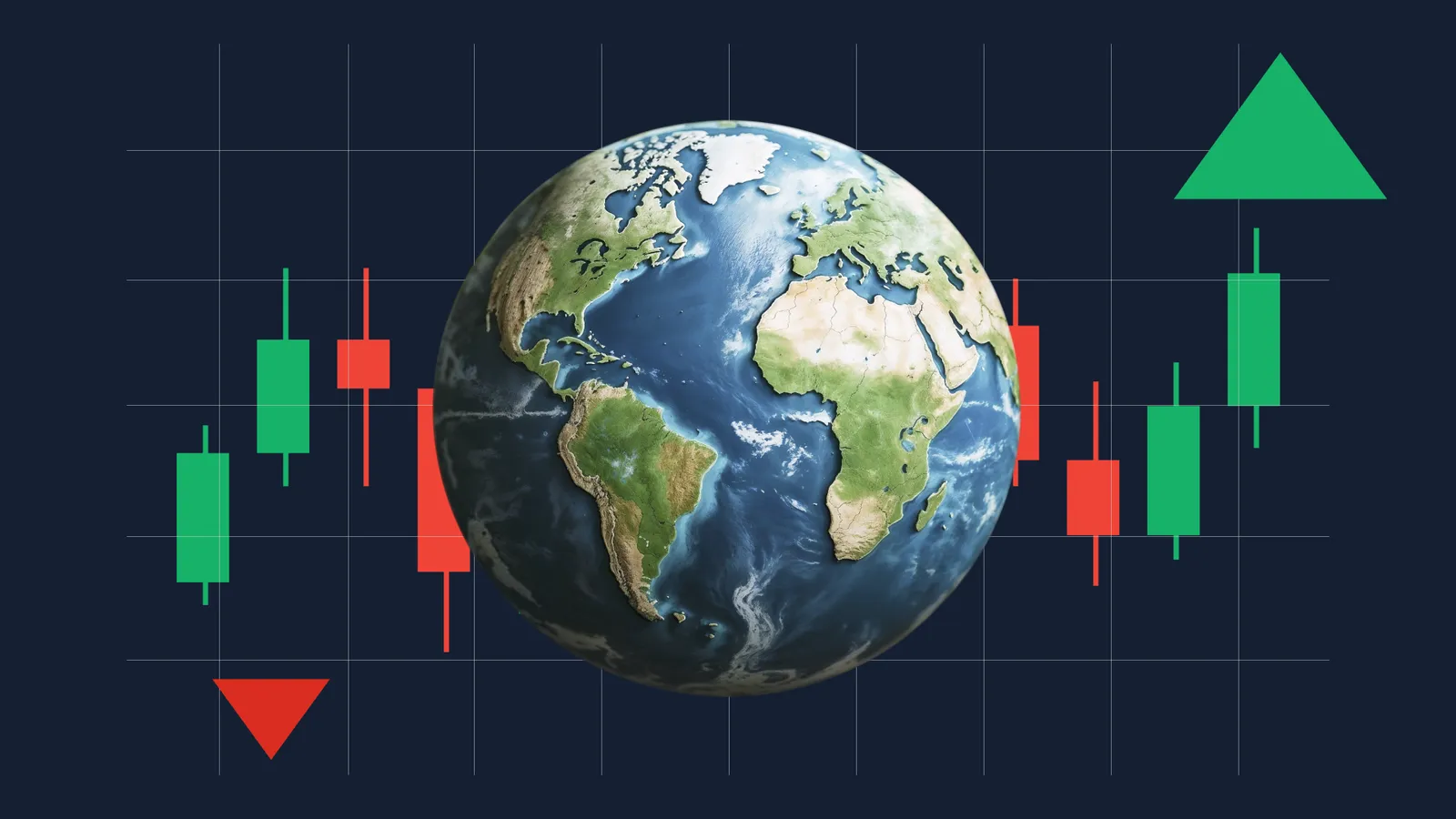
Economic data drives sentiment and repricing.
Interest rates shape nearly every asset class.
Markets react to surprises, not data alone.
Sector rotation reveals where capital is moving.
Why the economy matters to traders
Every market trade sits on a bigger foundation. Stocks, bonds, currencies, commodities, and indices do not move in isolation. They respond to the health of the economy, the direction of policy, and the expectations investors build around both.
That is why traders watch economic data so closely. A strong report can lift confidence, push yields higher, strengthen a currency, and reshape sector leadership in a matter of minutes. A weak report can do the opposite. What looks like a simple move on the chart is often the end result of a much larger process: investors reassessing growth, inflation, risk, and the likely response from central banks.
In other words, the economy is not background noise. It is one of the main engines that drives price.
Economic indicators are the market’s dashboard
Economic indicators matter because they tell traders how the economy is behaving right now, not how it behaved six months ago. They offer a working picture of growth, labor conditions, inflation pressure, and consumer demand.
Among the most important releases are gross domestic product, employment reports, inflation data, and consumer confidence. GDP gives the broadest read on economic strength. Employment data, especially the U.S. nonfarm payrolls report, often creates sharp moves because it speaks directly to household income, consumption, and the broader pace of the economy. Inflation data such as CPI and PPI matter because they influence how aggressive central banks need to be. Consumer confidence acts more like a leading signal, offering clues about whether spending may hold up or weaken in the months ahead.
Traders do not watch these indicators because they are economists. They watch them because the data changes expectations, and expectations move money.
Interest rates sit at the center of market pricing
If there is one economic force that touches nearly every asset class, it is interest rates. Rates affect the cost of borrowing, the return available on safer assets, and the discount rate investors use to value future earnings.
When rates rise, money becomes more expensive. Companies face higher financing costs, consumers feel more pressure, and high-growth stocks often lose some of their appeal because their future cash flows are suddenly worth less in present terms. At the same time, higher bond yields can pull capital away from equities because investors now have a more attractive low-risk alternative.
When rates fall, the opposite tends to happen. Liquidity feels easier, credit conditions improve, and risk appetite often expands. Growth sectors usually benefit most in that environment, especially technology and consumer discretionary names.
This is why central bank communication matters so much. Sometimes markets move not because rates changed today, but because traders believe they will change soon.
Markets care about surprises more than numbers
A common mistake among newer traders is assuming that “good” economic data should always be bullish and “bad” data should always be bearish. In real markets, it does not work that neatly.
What matters is not just the number itself, but how that number compares with expectations. A strong inflation report may sound positive if you are thinking only in terms of economic activity, but if the market was hoping for softer inflation, the reaction may be negative because traders now expect tighter monetary policy. A weak jobs report may initially hurt risk sentiment, but it can also trigger rallies if investors believe it increases the odds of future rate cuts.
This is why the concept of the economic surprise is so important. Markets are forward-looking. They price in expectations before the release. When the actual number arrives, traders are really asking one question: was it better or worse than consensus?
That gap between forecast and reality is often what creates volatility.
Order flow reveals how the market digests the news
Economic events do not just change sentiment. They change order flow.
When a major release hits the tape, traders, institutions, algorithms, and hedgers all react at once. Orders flood into the market, spreads can widen, and price can move sharply in a very short period. Sometimes the first move is driven by speed, not conviction. Then comes the second phase, when the market starts interpreting what the data really means.
That is why some releases create whipsaws. The first reaction may fade quickly if the deeper implications point the other way. Skilled traders learn to distinguish between the initial burst of volatility and the more durable directional move that follows once the market has had time to process the information.
Understanding order flow around economic events can help traders avoid one of the most expensive habits in trading: confusing a fast move with a reliable move.
Sector rotation is one of the clearest messages the market sends
The economy does not affect all sectors equally. This is where sector rotation becomes useful.
In slower-growth or risk-off environments, traders often see capital move toward defensive sectors such as healthcare, utilities, or consumer staples. These areas are favored because demand for their products tends to be steadier even when the economy softens.
In stronger-growth or easier-policy environments, money often rotates into sectors that benefit more directly from expansion and lower funding pressure. Technology, industrials, and consumer discretionary names tend to lead in those phases.
Commodities can also respond differently depending on the macro backdrop. Inflation, supply shocks, and geopolitical stress can lift oil, gold, or agricultural markets even when equities are under pressure. Currencies react through a different lens again, often reflecting yield differentials, central bank divergence, and broader risk appetite.
For traders, this matters because it helps answer a critical question: where is capital actually going?
How traders can use macro data without overcomplicating it
You do not need to become a full-time economist to trade macro effectively. But you do need a framework.
Start by following the major calendar events that move your market. If you trade forex, watch inflation, jobs, and central bank speeches closely. If you trade equity indices, pay attention to rates, growth data, and earnings. If you trade commodities, combine macro releases with supply-side developments.
Then focus on three things. First, what is the market expecting? Second, what did the data actually show? Third, how is price reacting after the first burst of volatility?
That process keeps you grounded. It stops you from trading the headline emotionally and helps you trade the market’s interpretation instead.
The economy moves markets because it shapes the assumptions behind every asset price. Growth affects earnings. Inflation affects rates. Rates affect valuation. Expectations affect positioning. And all of that shows up, eventually, in price.
For traders, the goal is not to predict every report perfectly. It is to understand how the pieces connect. When you can read that chain clearly, macro data stops feeling random. It starts to feel like structure.
And that is when economic news becomes more than noise. It becomes an edge.
FAQs
Which economic report moves markets the most?
It depends on the market, but inflation, jobs data, and central bank decisions are usually the biggest drivers.
Why do markets sometimes fall on good data?
Because strong data can raise expectations for tighter policy or higher interest rates.
What matters more: the data or the forecast?
The difference between the two often matters most.
Why does sector rotation matter to traders?
It shows where capital is flowing as the economic backdrop changes.