
 Support
Cooling inflation meets rising oil pressures
Japan’s latest inflation data points to a cooling trend, but the broader policy outlook remains far from settled. Annual inflation slowed to 1.3% in February 2026 marking the lowest level since March 2022.

Even with inflation below target, there’s a growing sense that this dip might not last.
Markets are not pricing out tightening altogether they’re just pushing it slightly further out.
Governor Kazuo Ueda made it clear that a rate increase is still on the table.
If growth stabilizes and oil-driven inflation begins to show up more clearly in the data, a rate hike becomes a realistic scenario.
Inflation eases but risks remain
Inflation in Japan is clearly cooling, but the story doesn’t end there. The drop to 1.3% suggests price pressures are easing for now, helped in part by softer food costs. But at the same time, new risks are starting to build in the background. Rising oil prices, driven by ongoing tensions involving Iran, are already feeding into import costs. For a country that relies heavily on imported energy, this matters more than the headline inflation number alone.
If oil stays elevated, it won’t take long for those costs to filter through into transport, utilities, and eventually consumer prices again. That’s why, even with inflation below target, there’s a growing sense that this dip might not last. The Bank of Japan is effectively looking at two timelines at once what inflation is doing today, and where it could be heading in a few months if external pressures persist.
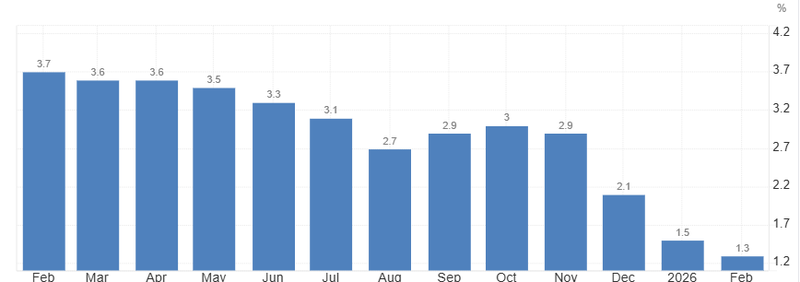
Source: Ministry of Internal Affairs & Communications
Bond market reflects cautious expectations
The bond market is already starting to reflect this uncertainty. Japan’s 10-year government bond yield has slipped back to around 2.27%, pulling away from recent highs. That move suggests investors are not fully convinced that tightening is imminent, especially with inflation currently below target.
At the same time, the decline in yields hasn’t been aggressive. Markets are not pricing out tightening altogether they’re just pushing it slightly further out. If oil prices remain elevated or move higher, that could quickly shift. Yields would likely start climbing again as investors adjust to the possibility that inflation may not stay this low for long.
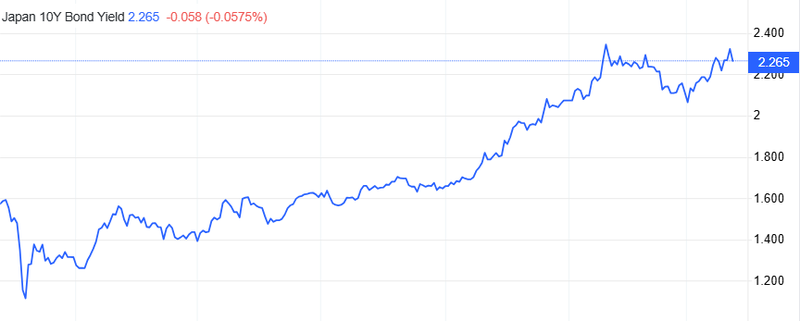
Source: Tradingeconomics
May in focus
Focus is now shifting toward the Bank of Japan’s May policy meeting. While no immediate rate change is expected, the central bank is preparing the ground for possible action. Should economic growth stabilise and oil-driven inflation start to feed through more clearly, a rate hike could become a realistic outcome.
The coming months will be crucial. If higher energy costs prove temporary and domestic demand stays subdued, the BoJ may hold off. However, renewed inflation pressures from imports could quickly push policymakers toward tightening.


