
 Support
Japan charts a steady rate-hike course as inflation sticks at elevated levels
July’s CPI data in Japan show a modest slowdown in headline inflation, but underlying pressures—especially core-core and processed food prices—remain firm, reinforcing the Bank of Japan’s path toward further tightening in October.

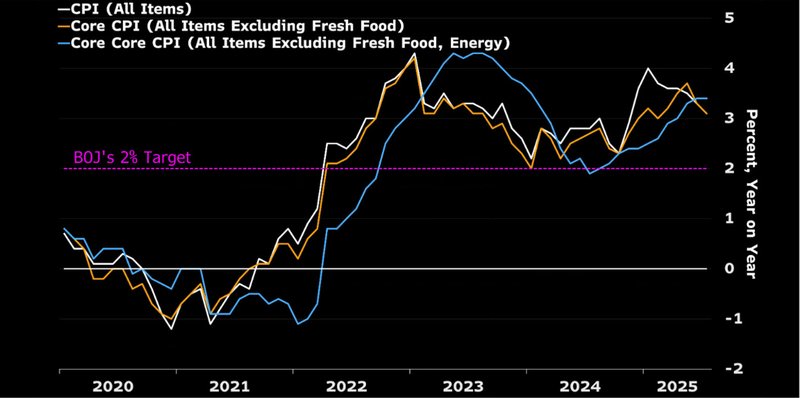
Headline CPI slowed to 3.1% y/y in July (from 3.3%), largely due to base effects and subsidy reversals.
Core CPI (excluding fresh food) also eased to 3.1%, but the deeper core-core gauge held firm at 3.4%, signaling persistent underlying inflation.
Energy costs dipped, while processed food—especially sushi and sweets—showed lingering price pressures due to earlier spikes in rice costs.
Services inflation remains steady, with private services inching up to 1.9% y/y, driven by wage growth and rising dining-out costs, reinforcing the case for policy normalization.
Inflation slows, but underlying pressures persist
Japan’s disinflation for July was modest: headline CPI cooled from 3.3% to 3.1% year-on-year, in line with forecasts. Core CPI mirrored that trend, retreating to 3.1%, though it still exceeded consensus expectations. Meanwhile, the core-core index—excluding food and energy—remained steady at 3.4%, signaling that fundamental inflation is running hot.
The easing in headline readings stems from base effects tied to last year’s energy subsidy rollback. Energy prices dropped 0.3% in July, easing the headline by approximately 26 basis points. However, processed food inflation remains stubborn—non-fresh food prices climbed 8.3%, with persistent pass-through from earlier rice price hikes keeping items like sushi and sweets elevated.
Services inflation reflects wage growth
Services—one of the Bank of Japan’s key inflation gauges—held firm in July. Overall services inflation stayed at 1.5% y/y, unchanged from June. Private services rose 1.9%, nearing the BOJ’s 2% target and supported by wage gains from this year’s spring negotiations (“shunto”) and higher food costs. Public services inflation edged up to 0.3%, led by increased expressway tolls.
BOJ poised to scale back stimulus in October
While headline data show a slight slowdown, the persistence of core inflation—coupled with solid services pressures and wage-driven cost dynamics—gives the BOJ the justification to continue normalizing monetary policy. The Bank may choose to scale back its ultra-loose stance further in October, assuming inflation remains elevated despite global trade tensions and domestic softness.


