
 Support
US core CPI jumps in July, pressuring Fed cut hopes
July’s inflation data showed the fastest monthly rise in core consumer prices since January, led by a rebound in services and vehicle costs, while tariff-related price pressures eased.

Core CPI rose 0.32% in July, the highest monthly increase since January, driven by services (+0.4%) and a rebound in used car prices (+0.5%).
Tariff pass-through to consumer prices slowed, with the coefficient dropping to 0.23 from 0.27 in June.
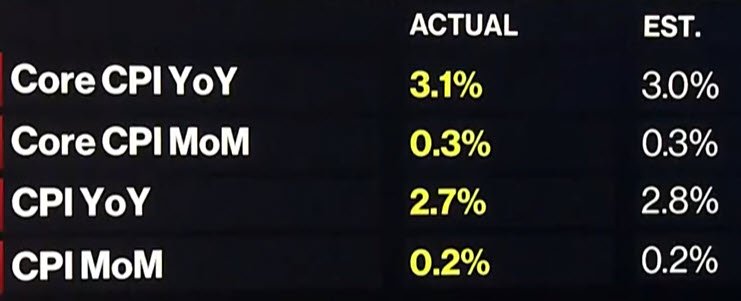
Headline CPI held steady at 2.7% y/y, while core CPI climbed to 3.1% from 2.9%.
Markets trimmed September Fed rate cut bets, with futures pricing showing 24 bps of easing versus 22 bps pre-release.
Core inflation reaccelerates despite tariff relief
The US core Consumer Price Index rose 0.32% in July, marking the sharpest monthly gain since January and exceeding June’s 0.23% pace. Core services inflation picked up to 0.4%, reversing the recent cooling trend, while core goods inflation held steady at 0.2%. The rebound came largely from categories insulated from recent tariffs, suggesting underlying domestic price pressures are reasserting themselves.
On a year-over-year basis, headline CPI was unchanged at 2.7%, matching consensus, while core CPI accelerated to 3.1% from 2.9%. Annualized core inflation over the past three months rose to 2.8% from 2.4%, signaling that disinflation momentum is fading.
Services and vehicle prices lead the uptick
Within core services, airfares jumped 4%, reversing June’s slight decline and contributing around four basis points to the monthly headline reading. Other notable increases were seen in recreation services, education, garbage collection, and medical care.
In the goods sector, the standout was vehicles. Used car prices rose 0.5% after four straight months of declines, while new car prices were flat. Excluding vehicles, core goods inflation would have decelerated. The combination of firming services and vehicle prices offset ongoing softness in tariff-exposed goods such as major appliances (-2.2%) and personal computers (-1.2%).
Tariff pass-through slows as consumers push back
Contrary to some market fears, tariff-related price pressures eased in July. Bloomberg Economics estimates the pass-through rate — the CPI increase per 1 percentage point of tariff shock — fell to 0.23 from 0.27 in June. This moderation reflects both earlier front-loaded price hikes and signs of consumer resistance to further increases, particularly in categories that saw large jumps earlier this year, such as audio equipment and women’s apparel.
Apparel prices overall declined, and key home goods categories registered slower price growth, offsetting gains in smaller segments like infant clothing and photographic equipment.
Diffusion indexes show broader pressures, but not runaway inflation
The share of core CPI components rising at an annualized pace above 4% rose to 48% in July from 46% in June, while the share of categories posting outright declines fell to 27% from 33%. This indicates price pressures are broadening modestly, even as some parts of the index continue to see outright deflation.
Such mixed signals suggest that while inflationary forces have gained ground, significant softness remains in parts of the consumer basket, tempering the overall risk profile.
Markets rethink Fed rate cut path
Following the CPI release, Fed funds futures showed slightly less conviction in a September rate cut. Markets now price around 24 bps of easing for the month, compared with 22 bps beforehand, and about 62 bps in total cuts for 2025, up from 57 bps.
US Treasury yields fell, led by the front end, with two-year yields dropping five basis points to 3.72% and ten-year yields down three bps to 4.26%. Equities firmed, with S&P 500 futures up 0.4%, while the dollar weakened by about 0.3% on average against major peers.


