
 Support
ECB to hold fire as Trump tariff risks cloud global outlook
The European Central Bank is expected to pause its record easing cycle amid rising trade uncertainty, persistent tariff threats from the U.S., and fragile global diplomatic ties.

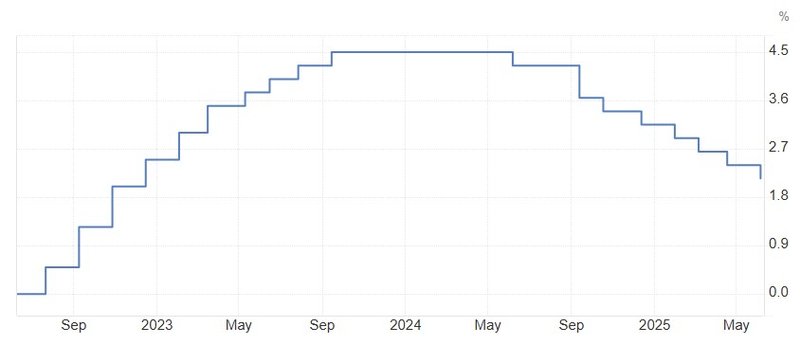
The ECB is set to hold rates at 2.15%, ending a historic eight-cut easing cycle as inflation drops below target.
Markets price in just one more rate cut this year, with traders split on a September move.
Trump raises tariff floor to 15% and signals escalation ahead of the Aug. 1 deadline, adding pressure on global trade.
Tensions flare as EU-China summit is shortened, while Trump’s planned Fed visit sparks concern over central bank independence.
ECB to pause after eight cuts as inflation moderates
The European Central Bank is expected to hold interest rates steady on Thursday, signaling a potential end to its easing cycle after eight consecutive cuts brought the deposit rate to 2% and the main refinancing rate to 2.15% — the lowest since November 2022.
Policymakers are adopting a cautious “wait-and-see” stance as they assess the impact of mounting global trade frictions, particularly the potential fallout from looming U.S. tariffs on European goods. This marks the ECB’s first policy hold in over a year, reflecting growing confidence that inflation is cooling but also concern over geopolitical headwinds.
After reaching the ECB’s 2% inflation target in June, prices are now forecast to slip below that level later in the year. The subdued outlook — driven by a stronger euro, falling energy costs, and cheaper imports from China — is expected to persist for the next 18 months. As of now, market participants assign a roughly 50% probability to another rate cut in September, with expectations largely capped at just one more cut before a potential pivot back to tightening in 2026.
Trump raises tariff floor, rattles trade partners
Adding to the ECB’s caution is fresh uncertainty from Washington. U.S. President Donald Trump confirmed Wednesday that upcoming reciprocal tariffs would start at 15%, and could rise to 50%, depending on each country's trade alignment with the U.S.
“We’ll have a straight, simple tariff of anywhere between 15% and 50%,” Trump stated at an AI summit in Washington. “We have 50 because we haven’t been getting along with those countries too well.”
The remarks effectively raise the minimum tariff rate ahead of the key August 1 deadline and signal that few U.S. trading partners will be exempt from a broad expansion of duties. Analysts say this could disrupt European exports at a sensitive moment for the continent’s economy, which is already contending with sluggish growth and subdued manufacturing activity.
Trump’s visit to the Fed fuels independence concerns
In a highly symbolic move, President Trump is scheduled to visit the Federal Reserve — the first such presidential visit in nearly two decades. The development raises eyebrows among policymakers and market participants alike, given Trump’s long-standing criticism of Fed Chair Jerome Powell and his prior attempts to influence monetary policy.
Although rumors have circulated about Powell’s potential removal, Treasury Secretary Bessent moved to reassure markets, stating that any successor would only be nominated by year-end. The delay appears to have calmed immediate fears of political interference, but observers note that the optics of the visit could erode perceptions of central bank independence.
EU-China summit underscores diplomatic tension
Geopolitical uncertainty was also on display in Beijing, where EU leaders met with Chinese President Xi Jinping to mark five decades of diplomatic relations. However, the summit — initially planned for two days — was cut short to just one, reflecting the strained nature of EU-China ties amid tensions over trade policy and the Ukraine war.
European Commission President Ursula von der Leyen called for a “rebalancing” in trade, referencing the EU’s rising trade deficit with China and persistent concerns over market access. President Xi, meanwhile, urged the EU to make “strategic choices” and deepen cooperation. The lack of any major breakthrough underscored the fragile state of relations, with both sides keen to maintain dialogue but wary of escalating conflict.

