
 Support
Oil shock, central bank caution, and a shift in expectations
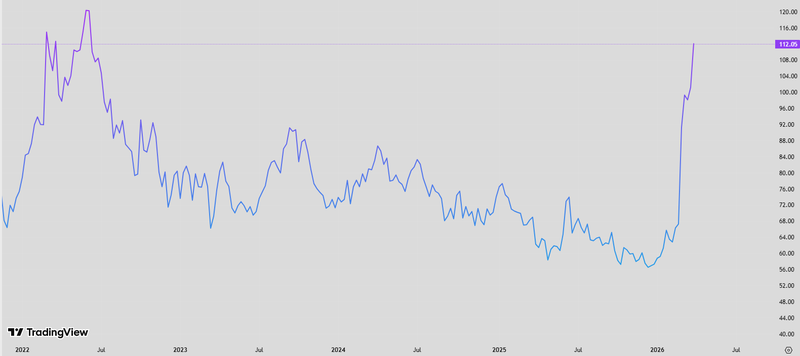
Today’s market tone was shaped by one dominant energy force. Oil surged aggressively, jumping nearly 17% in a single session and pushing toward the $113 level, Comments from John Williams highlight the dilemma central banks are now facing again. Higher energy prices don’t just push inflation higher they also slow growth. That combination is one of the most difficult environments for monetary policy.

Oil surged aggressively, jumping nearly 17%.
John Williams highlight the dilemma central banks are now facing again.
The market is not yet convinced that aggressive tightening is coming.
Oil takes control of the narrative
Today’s market tone was shaped by one dominant energy force. Oil surged aggressively, jumping nearly 17% in a single session and pushing toward the $113 level, overtaking key global benchmarks in the process. Moves of that magnitude are rarely just about supply and demand in the traditional sense; they reflect fear, positioning, and a rapidly rising risk premium.
The backdrop makes that clear. Renewed geopolitical tension, amplified by comments from Donald Trump about potentially striking Iran “extremely hard,” has pushed the market to reprice the probability of real disruption. Whether or not action follows, the signal alone is enough. Markets do not wait for confirmation when it comes to supply risk they move ahead of it.
What stands out now is that the risk is no longer being treated as theoretical. Between military rhetoric and the possibility of disruptions through key routes like Hormuz, the oil market is starting to price in a genuine shortage scenario. And once oil moves like this, it doesn’t stay isolated. It feeds into everything yields, currencies, equities, and most importantly, inflation expectations.
Source: Trading View
The fed faces a familiar problem, with worse timing
Comments from John Williams highlight the dilemma central banks are now facing again. Higher energy prices don’t just push inflation higher they also slow growth. That combination is one of the most difficult environments for monetary policy.
What makes the situation more complex is timing. Inflation does not show up immediately in the data. There is always a lag, often measured in months, between price shocks and official readings. That means what markets are reacting to today may not fully appear in economic data until later.
Markets are already adjusting expectations, but policymakers are still looking at data that reflects a different environment. For the Federal Reserve, this is likely to translate into patience in the near term, but with a clear bias toward action if inflation begins to reaccelerate, the Fed is unlikely to rush but it also cannot afford to ignore what is building beneath the surface.
Europe watches and waits
The situation in Europe reflects a similar tension, though with its own constraints. The European Central Bank appears to be leaning toward the possibility of further tightening, but without committing to a clear path. The tone is cautious, and deliberately so.
Energy is once again the central issue. If disruptions persist, particularly through critical supply routes, Europe remains highly exposed. Unlike the U.S., it does not have the same level of energy independence, making inflation more sensitive to external shocks.
At the same time, growth across the region remains fragile. That leaves policymakers in a difficult position. Move too early, and they risk slowing the economy further. Move too late, and inflation could become more entrenched.
This balancing act offers only mild support to the euro. The market is not yet convinced that aggressive tightening is coming. It is waiting for a clearer signal either from inflation data or from the energy market itself.
