
 Support
OPEC+ considers third straight output hike as oil drops toward $60
OPEC+ is weighing a third consecutive production hike of 411,000 barrels per day for July, as crude prices sink and forecasters turn bearish on oil demand for the rest of 2025.

OPEC+ mulls another 411k bpd supply hike for July amid weak price action.
Brent falls below $64, pressured by oversupply fears and slowing demand outlook.
Saudi Arabia signals further hikes to discipline overproducing members.
IEA warns of cooling demand in H2 2025; Goldman expects OPEC+ to pause hikes after July.
OPEC+ is reportedly discussing a third consecutive output increase of 411,000 barrels per day (bpd) for July, as the alliance prepares to finalize its production strategy in upcoming meetings. The proposal, under review ahead of an official decision on June 1, follows similar hikes already scheduled for May and June, and reflects a growing shift away from the group’s traditional role as a price stabilizer.
Since OPEC+ announced the May and June increases, oil prices have tumbled. The market has struggled to absorb the added supply, despite initial claims that the hikes were aimed at meeting rising demand.
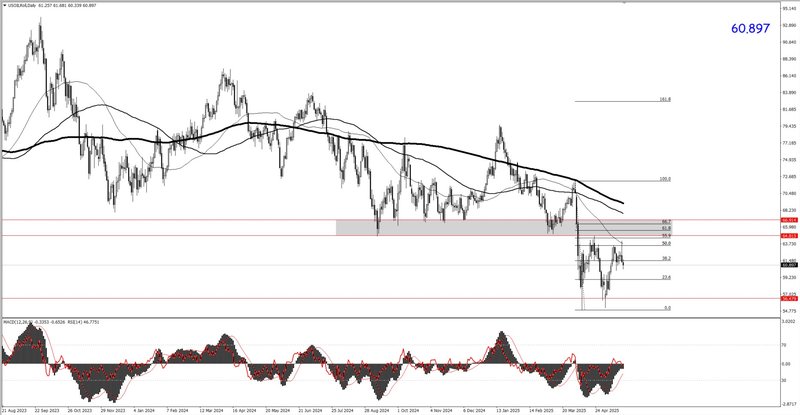
But behind closed doors, officials have pointed to broader motives: enforcing compliance among over-producing members, regaining lost market share, and easing political pressure from the US, where President Donald Trump has ramped up demands for cheaper energy and stronger trade leverage.
Saudi Arabia turns up the pressure on non-compliant producers
OPEC+’s pivot to aggressive supply increases marks a historic departure from its years-long strategy of defending prices through voluntary cuts. Now, the group—led by Saudi Arabia—is increasingly using output policy to punish internal dissent, particularly from countries like Kazakhstan and Iraq, which have consistently exceeded their quotas.
At the previous meeting, Saudi officials warned that further hikes were likely unless compliance improved. Since then, Kazakhstan has continued to export near-record levels, showing little movement toward enforcing domestic cuts on international operators.
One OPEC+ delegate noted that the 411k bpd hike for July is now the "base case" under internal discussions. If agreed, this would bring the total additional production over three months to over 1.2 million bpd, a move that has already helped drive oil to its lowest levels since 2021.
Market outlook turns bearish
The market is showing signs of oversaturation. The International Energy Agency (IEA) recently downgraded its demand outlook, forecasting a sharp deceleration in global oil consumption during the second half of 2025. Slowing industrial activity and economic uncertainty—particularly in Europe and China—are weighing on forecasts.
Given these dynamics, analysts at Goldman Sachs expect OPEC+ to pause further increases beyond July, even if the next hike is approved. A shift in tone may come during OPEC’s May 28 virtual session, where the 22-nation alliance will have the chance to review baseline production quotas for 2025 and 2026.
In the meantime, eight core OPEC+ members will meet via video conference on June 1 to finalize July's output strategy. Traders will be watching closely for signals of future policy direction, especially as prices hover dangerously close to the psychologically significant $60 mark.
While the group continues to defend its recent moves as pragmatic and demand-driven, the reality is that the oil market now faces a delicate balance between geopolitical strategy, internal cohesion, and the risk of oversupply-induced volatility.

