
 Support
Targeted tariffs, dovish Fed bets, and labor weakness shape global markets
New U.S. sector-specific tariff threats, Fed leadership uncertainty, and signs of global labor market strain drive cautious sentiment across major asset classes.

The White House pivots from country-level tariffs to targeted sectoral actions, with pharma and semiconductors facing potential 250% levies.
Trump says a successor to outgoing Fed Governor Kugler and Powell's potential replacement will be named soon, raising concerns over Fed independence.
Gold hovers near 2-week highs as ISM services data miss expectations and September rate cut odds jump to 90%.
Japan and New Zealand labor data point to persistent wage and employment weakness, reinforcing dovish bias in BoJ and RBNZ outlooks.
White House shifts to sectoral tariff escalation
The planned sector-specific tariffs mark a new phase in the trade war. While reciprocal country-level tariffs appear largely set following last week’s sweeping executive orders, the White House is now pivoting toward targeted sectoral action. Alongside semiconductors, Trump flagged the pharmaceutical industry as another category under review — with some levies potentially rising as high as 250%, the steepest threat to date.
Despite diplomatic overtures, tensions remain. Trump reiterated that a decision on sanctions for nations purchasing Russian energy would follow a Wednesday meeting with Russia. The EU, meanwhile, has postponed a package of countermeasures for six months as it works with the U.S. on a joint tariff statement. However, key disagreements — particularly around U.S. automotive and strategic sector tariffs — remain unresolved.
Trump eyes Fed shake-up amid data credibility concerns
A successor to outgoing Fed Governor Adriana Kugler will be named by the end of the week, Trump confirmed. He has also narrowed down four candidates to replace Fed Chair Jerome Powell, including Kevin Warsh and Kevin Hassett. The developments have intensified concerns over the independence of the U.S. central bank.
Trump's comments on a proposed 100% tariff on Russian oil, noting that "quite a bit of that" is under consideration, further added to market unease.
Gold holds near 2-week highs as U.S. data weakens
Gold traded around $3,375 per ounce on Wednesday, holding most of its recent gains and remaining near a two-week high. Growing expectations of a more dovish monetary policy stance have boosted the metal's appeal.
The ISM services index declined in July, missing forecasts and pointing to sluggish growth, falling employment, and rising price pressures.
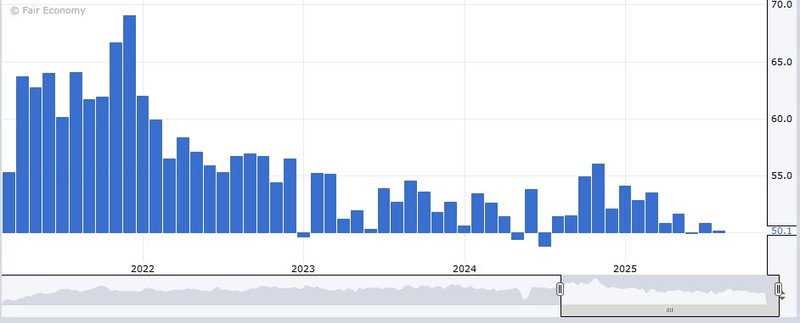
Combined with recent signs of labor market and consumer spending softness, these indicators have raised the odds of a September Fed rate cut to 90%. Renewed concerns about the Fed’s independence following Kugler’s resignation also supported gold’s safe-haven status.
Japan real wages remain negative despite nominal gains
Japan’s real wages declined -1.3% y/y in June, marking the sixth consecutive monthly drop. This was an improvement from May’s revised -2.6%, but persistent inflation — especially in food prices — continues to erode purchasing power. Consumer prices used for wage calculations rose 3.8% y/y, far outpacing nominal wage gains.
Nominal wages climbed 2.5% y/y, up from 1.4% in May, but missed expectations of 3.2%. Base pay rose 2.1%, and bonuses grew 3.0%, lending only modest support. The trend suggests the BoJ’s normalization path may remain cautious amid fragile wage dynamics.
New Zealand jobless rate climbs, August rate cut in play
New Zealand’s Q2 labour market report showed clear signs of softening. The unemployment rate rose to 5.2%, the highest since 2020, with employment falling -0.1% q/q and participation dropping to 70.5%, the lowest since early 2021.
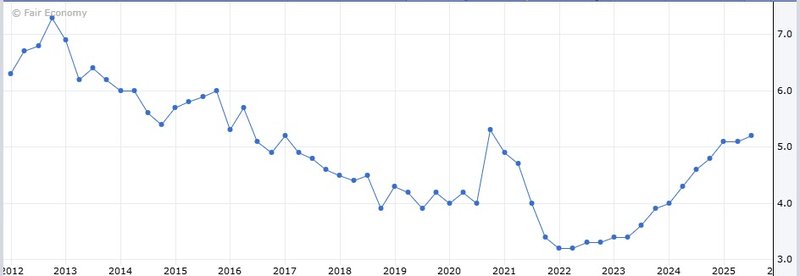
Private sector wages rose 0.6% q/q, beating expectations, but annual wage inflation eased to 2.2%, a three-year low. With inflation at 2.7% y/y, the data aligns with expectations for a 25bp rate cut by the RBNZ this month. However, the central bank is unlikely to commit to further easing without clearer signs of disinflation.

