
 Support
Tariff sparks risk exodus
Global markets tumble as Trump's sweeping tariffs ignite a cross-border retaliation and fuel recession fears.

Asian equities plunge and U.S. futures slide after Trump imposes sweeping import tariffs, sparking fears of a global recession.
China hits back with a 34% tariff on all American goods, intensifying trade tensions and pressuring U.S. exporters.
Oil tumbles, gold rebounds, and the dollar weakens as investors seek safe havens amid deepening market turmoil.
Global financial markets are in turmoil following President Donald Trump's announcement of sweeping new tariffs, with Asian equities leading the decline. The Nikkei 225 plummeted nearly 9%, while Hong Kong's Hang Seng Index dropped over 8%. U.S. stock futures also point to significant losses at the open, as investors grapple with the escalating trade tensions.
In response to the U.S. tariffs, China has imposed a 34% duty on all American goods, targeting sectors from aviation to agriculture. This retaliation is expected to have significant repercussions for U.S. companies heavily reliant on Chinese markets.
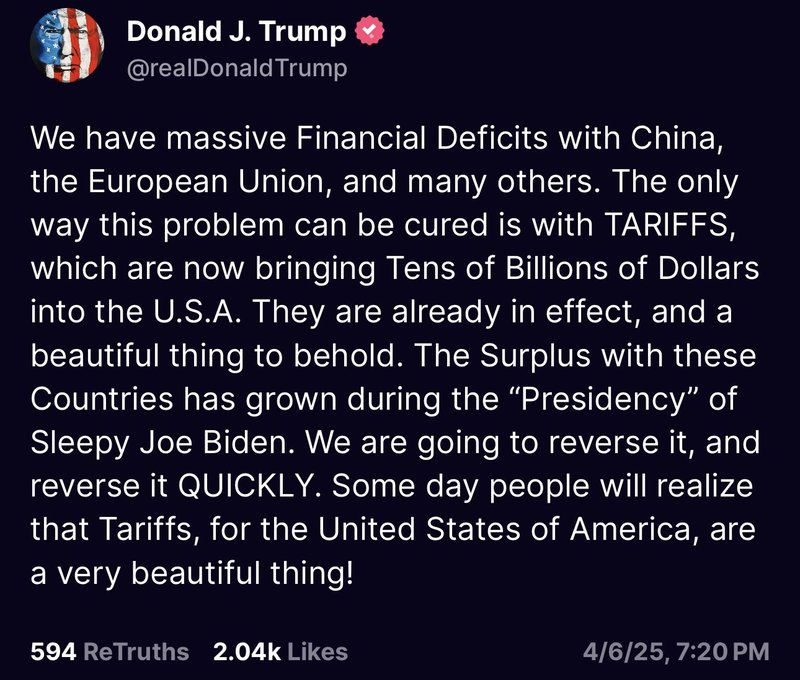
President Trump remains steadfast, likening the tariffs to "medicine to fix something," emphasizing their necessity despite market upheavals.
President Donald Trump's broadening trade war drove a sharp slide in financial markets amid fears that it could push the global economy into a recession. Trump’s blanket 10% tax on imports is now in effect, with even steeper tariffs for many countries expected to be implemented later this week. Meanwhile, Federal Reserve Chairman Jerome Powell warned that tariffs raised the risks of higher inflation and slower economic growth, underscoring a difficult path ahead for policymakers.
Oil
In the commodities market, oil prices have declined sharply, with WTI crude falling below $60 per barrel, reflecting concerns over reduced global demand amid the trade conflict.
Gold
Gold prices have experienced volatility, initially dipping below the $3,000 level but rebounding as investors seek safe-haven assets amid the market instability.
US dollar
The U.S. dollar has weakened against major currencies, with the euro and Japanese yen gaining as investors move towards perceived safer assets. The dollar's decline reflects concerns over the potential impact of the trade war on the U.S. economy.
As the situation develops, market participants remain on edge, closely monitoring further policy announcements and potential retaliatory measures from affected trading partners.

