
 Support
EUR/USD pair advances on sharp acceleration in German inflation
German inflation surged to 2.7% in March, driven primarily by soaring energy costs amidst heightened Middle East tensions. This inflationary spike has bolstered the Euro as market participants anticipate a more restrictive policy response from the European Central Bank (ECB).

German headline inflation jumped to 2.7% in March, propelled by a 7.2% surge in energy prices and significant increases in fuel costs linked to geopolitical instability.
The EUR/USD rose to $1.1721 as persistent inflationary pressure signals a potentially more hawkish ECB tilt, thereby enhancing the appeal of Euro-denominated assets.
Ascending MACD and RSI readings suggest strengthening bullish momentum, with the spot price currently reclaiming its long-term 50, 100, and 200-day Simple Moving Averages (SMAs).
German inflation rate jumps in March, meeting market expectations
According to data from the Federal Statistical Office of Germany (Destatis), headline inflation accelerated sharply from 1.9% in February to 2.7% in March (year-on-year basis)—reaching its highest level since January 2024—and aligning with analyst forecasts. An analysis provided by Trading Economics reveals that the most significant pressure originated from energy prices, which accelerated by 7.2%. Notable contributors included fuel costs, which rose by 20%, and light heating oil, which surged by 44.4%. This sharp escalation in energy prices, following the US-Israel-Iran conflict, has exerted upward pressure on global inflation rates. Furthermore, goods inflation accelerated by 2.3%, while services inflation increased by 3.2%. Conversely, food prices decelerated from 1.1% in February to 0.9% in March, while core inflation—excluding volatile items—softened slightly from 2.5% to 2.3%.
Consequently, the Euro appreciated by 0.18% against the US Dollar to reach $1.1721, reflecting Germany's systemic importance within the Eurozone. Elevated inflation levels may compel the European Central Bank to adopt a more restrictive monetary policy stance. Domestic currencies typically strengthen in such environments, as higher interest rates tend to generate more attractive yields within sovereign debt markets.
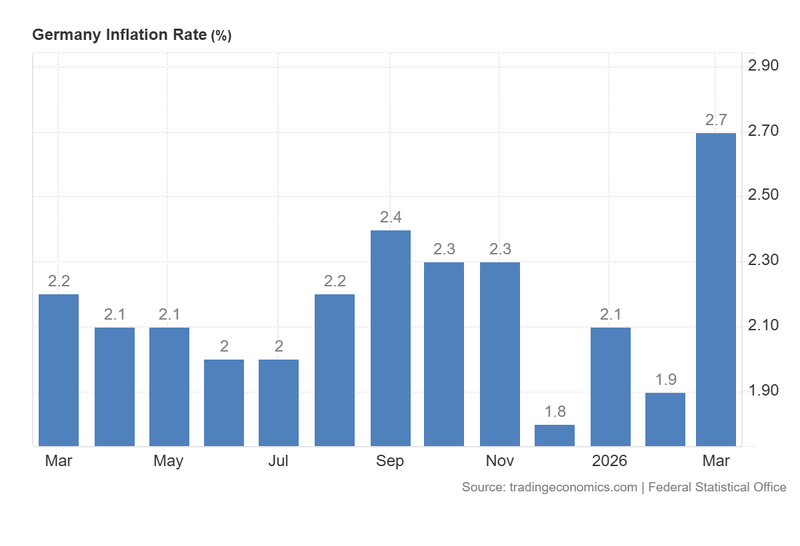
Figure 1. Germany Inflation Rate (2025–2026). Source: Data from the Federal Statistical Office; Figure obtained from Trading Economics.
Technical analysis of the EUR/USD pair
From a technical standpoint, the EUR/USD pair maintains a robust long-term bullish posture, although the price action is currently oscillating within a short-term consolidation pattern. Key observations include:
- Trend Context: Over the long term, the pair has preserved a market structure defined by higher highs and higher lows. Furthermore, the spot price is currently reclaiming the 50, 100, and 200-day Simple Moving Averages (SMAs), suggesting a recovery of trend supports.
- Resistance Levels: Should the structural long-term resistance at $1.1850 be breached, the next major technical ceiling is identified at the $1.2000 psychological barrier. A decisive breakout above this level would indicate potential for further extension toward higher valuations.
- Support Levels: If the $1.1480 support level is compromised, the next relevant floor is situated at the $1.1230 structural pivot point. A breach of the $1.1230 zone would significantly increase the probability of a deeper market correction.
- Momentum Indicators: Both the Moving Average Convergence Divergence (MACD) and the Relative Strength Index (RSI) are exhibiting ascending trends. This suggests that the short-term bullish impulse is reinforcing itself, potentially providing the catalyst needed for a breakout. Nevertheless, fundamentals are likely to be the key determinant of the market’s prevailing trend for ahead periods.
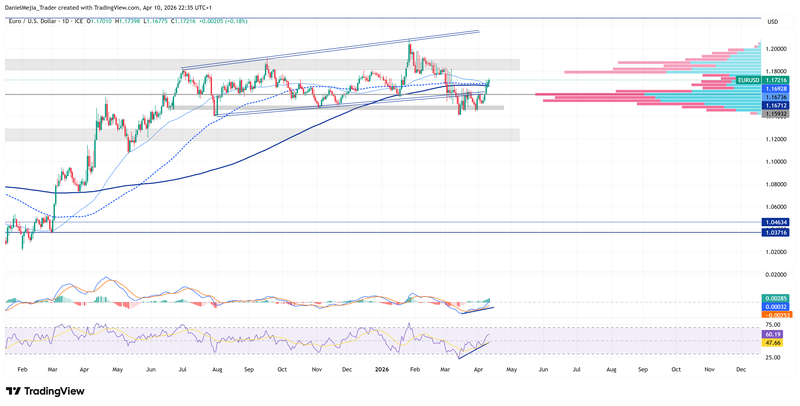
Figure 2. EUR/USD pair (2024–2026). Source: Data from the Intercontinental Exchange (ICE); own analysis conducted via TradingView.


