
 Support
Intel from comeback story to credibility test
Intel’s recent move is not just another headline-driven rally, it reflects a shift in how the market is starting to price its role in the AI infrastructure cycle. The April 9 multiyear collaboration with Google is central to that shift.

Q2 is whether this story moves from narrative to numbers.
PC market, the major pillar of Intel’s business, remains uncertain.
The key level is around $68–70, which acts as a major resistance zone.
Intel from headlines to credibility
Intel’s recent move is not just another headline-driven rally it reflects a shift in how the market is starting to price its role in the AI infrastructure cycle. The April 9 multiyear collaboration with Google is central to that shift. What matters is not just the partnership itself, but what it signals: hyperscale’s are willing to commit to Intel’s roadmap across multiple generations of Xeon processors and co-develop infrastructure components like IPUs. That aligns with where AI demand is going. The first wave was about training; the next phase is about inference, deployment and orchestration areas where CPUs regain importance.
The key question for Q2 is whether this story moves from narrative to numbers. Markets have seen partnerships before; what they need now is confirmation that this demand translates into revenue, utilization and margins. The rally so far reflects improved credibility, but credibility needs validation.
Partnerships, data centers and the real test
The demand backdrop is mixed but with a clear divide. On the positive side, global data center spending remains strong. Forecasts point to double-digit growth in server demand, reflecting continued investment in AI infrastructure. This creates a large and expanding pool of opportunity where Intel can participate, especially if its Xeon roadmap aligns with inference-driven workloads.
At the same time, the PC market, the other major pillar of Intel’s business, remains uncertain. While Q1 saw modest growth, part of that was driven by pull-forward demand ahead of higher prices and supply constraints. That raises the risk of softer comparisons in Q2.
Google partnership reinforces the bullish case, but it does not guarantee immediate financial impact. It is a signal of alignment, not a revenue spike. The same applies to Intel’s move to fully control its Ireland Fab 34 strategically positive, but with benefits that materialize over time.
Technical outlook
Intel is clearly in a well-defined medium- to long-term rising channel, and what stands out is not just the trend but the quality of the trend. Price is consistently making higher highs and higher lows, which reflects sustained institutional accumulation rather than short-term speculation. The recent breakout above prior resistance reinforces that momentum, signaling that the market is willing to reprice the stock higher as the narrative improves.
The next key level is around $68–70, which acts as a major resistance zone and likely profit-taking area. If price reaches that region, could see some consolidation rather than a straight breakout. On the downside, $51 is the critical structural support this is where buyers previously stepped in aggressively, and losing that level would change the trend, not just pause it.
Volume confirms the trend quality. Higher volume on rallies and lighter volume on pullbacks suggest accumulation, not distribution. That’s a strong signal that dips are being bought rather than sold into.
Q2 will be defined by one key event is earnings and guidance. If Intel can show even modest margin stabilization alongside steady data center demand, the stock can continue to re-rate. If not, the market may shift focus back to the scale of its challenges, particularly foundry losses and execution risk.
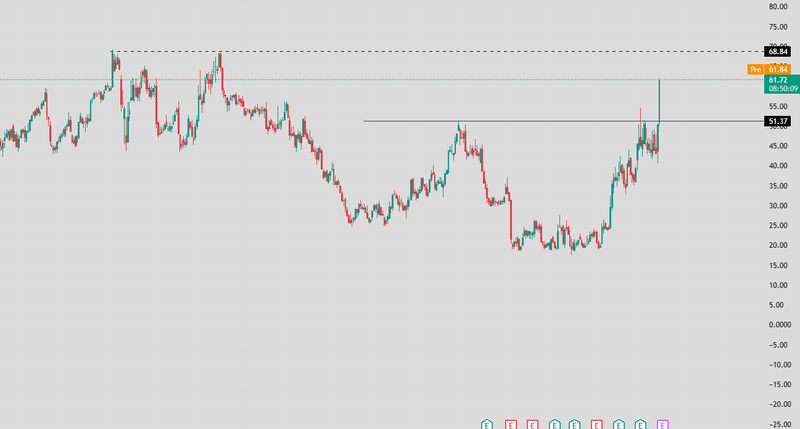
Source: Trading View


