Help
Help 
Retail sales when growth meets inflation reality
All eyes are on the march retail sales hit the wires. On the surface, the expectation is strong, a 1.4% month-over-month increase, sharply higher than the previous 0.6% and the fastest pace since mid-2025.
Retail expectation 1.4% increase, sharply higher than the previous 0.6%.
A strong retail sales print would reinforce the idea that the economy can handle higher rates.
Stronger dollar tightens global financial conditions, pressures emerging markets.
Inflation in disguise
All eyes are on the march retail sales hit the wires. On the surface, the expectation is strong, a 1.4% month-over-month increase, sharply higher than the previous 0.6% and the fastest pace since mid-2025. That kind of number would normally signal a resilient consumer and a stable growth backdrop.
With oil prices elevated and inflation still sticky, headline retail sales risk being misleading. Higher gasoline prices and rising input costs can inflate the total value of sales without reflecting real demand. In other words, consumers may be spending more dollars… but not necessarily buying more goods.
That is why institutional focus is shifting toward core retail sales. By stripping out autos and gasoline, the data reveals something more important… whether underlying consumption is holding up or starting to weaken. This distinction matters because it separates nominal growth from real economic strength, and right now, the market is highly sensitive to that difference.
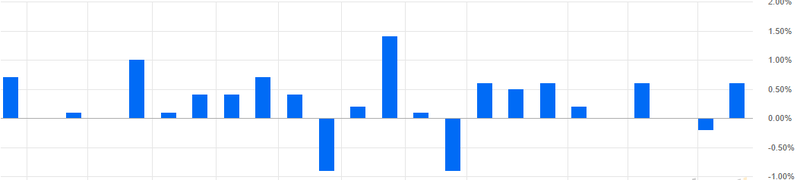
Source: Investing.com
Growth and inflation are no longer balanced
This data lands at the moment when the Federal Reserve is becoming visibly more cautious. Recent FOMC minutes made it clear that progress on inflation has stalled, with policymakers acknowledging that disinflation momentum has faded.
The complication is coming from energy. The Middle East conflict is no longer seen as a contained shock. It is feeding into broader pricing dynamics, raising the risk that inflation becomes persistent rather than temporary.
That shift is changing the Fed’s reaction function, markets still lean toward a single rate cut later in the year, likely in December. But internally, the tone is becoming more divided. Some policymakers are now openly framing policy as “two-sided,” meaning the path forward is no longer just about when to cut, but whether tightening could return if inflation re-accelerates. A strong retail sales print would reinforce the idea that the economy can handle higher rates, effectively locking in a “higher for longer” environment. A weak print, on the other hand, would reopen the door to earlier easing… but only if inflation pressures begin to soften alongside demand.
Dollar still at the center of global capital flows
Beyond growth and policy, there is a deeper layer shaping how markets respond the strength of the U.S. dollar.
In an environment where U.S. rates remain elevated and global uncertainty is rising; capital continues to flow toward the dollar. This is not just about interest rate differentials it is about trust and liquidity. The dollar remains the core of global trade, energy pricing, and financial stability.
Higher oil prices reinforce this dynamic. Energy is priced in dollars, so as crude rises, global demand for dollars increases. Countries importing energy must secure more dollar liquidity, strengthening the currency further. This creates a feedback loop where inflation, energy, and currency flows all reinforce each other.
For markets that has clear implications, stronger dollar tightens global financial conditions, pressures emerging markets, and weighs on commodities like gold. At the same time, it attracts capital into U.S. assets, even as domestic policy remains restrictive.