Help
Help 
US–Iran tensions choke the world’s oil artery
The Strait of Hormuz has always been critical, but the latest disruption shows just how fragile the global energy system really is. China sending five ships stands out not for its scale, but for how limited activity has become. The strait is not fully closed, but it is far from functioning normally.
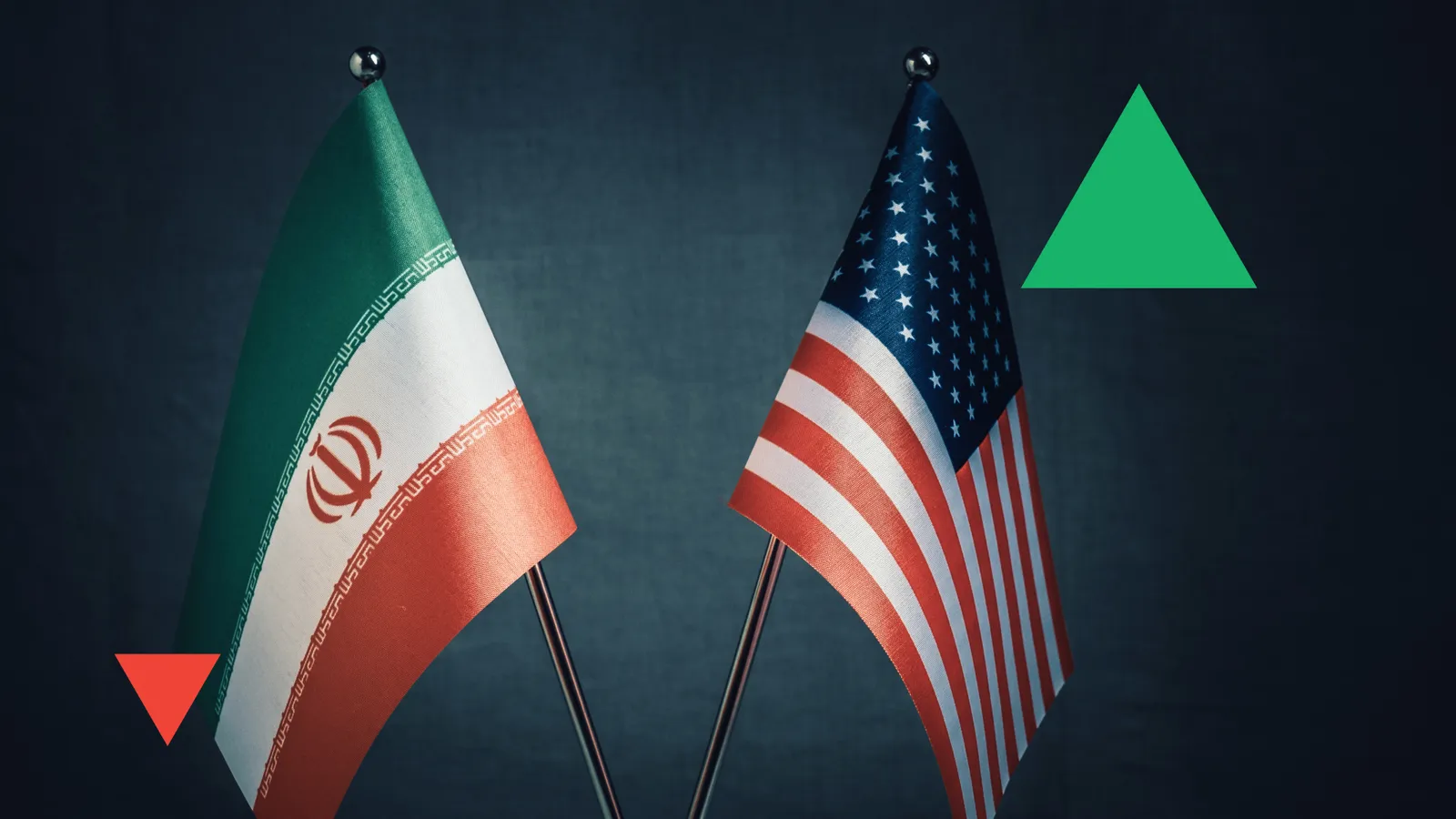
Exports from Qatar and the UAE dropping by over 300 million cubic meters per day.
Physical oil system moves on trust and that gap is what defines the current environment.
China energy security under stress
The Strait of Hormuz has always been one of those places the market watches quietly until something breaks. In normal conditions, it carries around 20 million barrels per day, roughly 20–25% of global seaborne oil supply. On top of that, about 112 billion cubic meters of LNG pass through annually, close to one-fifth of global trade. On any given day, between 100 and 135 vessels move through this narrow corridor. It is not just a busy route it is a critical artery for the global economy, linking Middle Eastern supply directly to Asia, Europe and beyond.
What makes the current situation different is not just the disruption, but the scale of the slowdown. Flows have dropped to roughly 1 million barrels per day, a fraction of normal levels. The International Energy Agency estimates this translates into a global supply shock of around 8 million barrels per day, enough to reshape pricing across energy markets. LNG flows have also been hit hard, with exports from Qatar and the UAE falling sharply cutting more than 300 million cubic meters per day, or over 2 billion cubic meters each week, from global supply.
The clearest signal comes from shipping activity. Traffic has collapsed from over 100 vessels a day to just 11–12 ships, a drop of more than 90%. That is not a temporary slowdown, it is a system operating under stress. Even China sending five ships four tankers and one cargo vessel stands out, not for its scale, but for what it represents. China is one of the largest buyers of Middle Eastern energy, and its willingness to keep ships moving, even at reduced levels, reflects both necessity and strategy. It cannot easily replace these flows, which makes Hormuz critical not just for global markets, but for China’s own energy security.
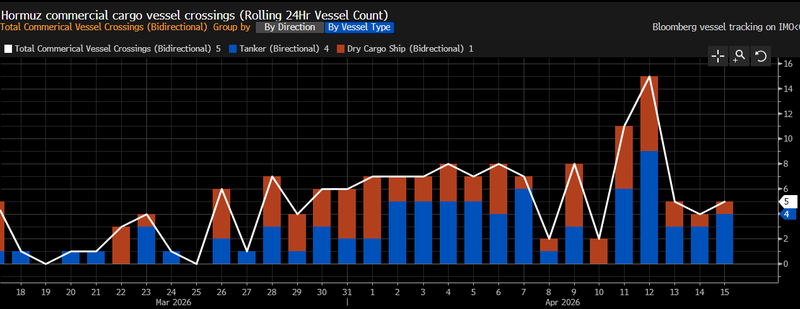
Source: Bloomberg
Markets react faster than physical flows recover
Physical oil system moves on trust and that gap is what defines the current environment. When tensions escalated around the Strait of Hormuz, oil prices surged almost immediately, pricing in the risk of disruption to one of the world’s most critical supply routes. But reversing that move is not as simple as announcing talks or even a temporary ceasefire. Physical supply chains do not switch back on overnight.
Even if U.S.–Iran talks resume later this week and produce a temporary easing, the real constraint lies deeper, shipping companies, insurers and refiners need more than diplomatic signals, they need consistent proof that transit is safe. War-risk insurance premiums remain elevated, and many operators are still treating the route as conditionally navigable rather than fully secure. That distinction matters. A route can be technically open, but if it is not considered reliable, volumes will remain limited. This is why oil prices have only been partially retraced. While ceasefire headlines have reduced the probability of a full closure, the physical system has not normalized.
Tankers that were delayed or rerouted are still working through backlogs, and charter rates remain elevated. Refiners are also adjusting cautiously, often relying on existing inventories rather than immediately increasing exposure to uncertain supply routes. In a best-case scenario, where negotiations lead to a stable de-escalation, flows could gradually recover over the coming weeks. But even then, normalization requires a transition from “possible transit” to “reliable transit.” That means repeated, incident-free shipments and a decline in insurance and security concerns something that typically takes time to rebuild.
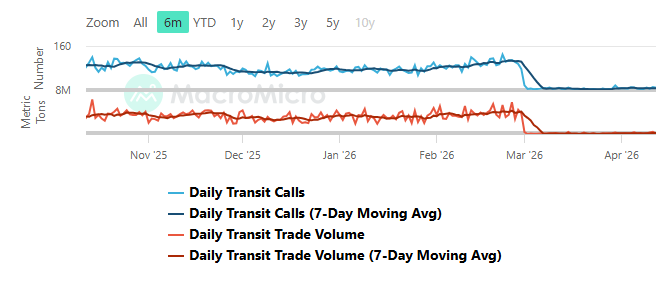
What stands out is not just the drop in Strait of Hormuz activity, but the shape of it. For months, daily transit calls were relatively stable, hovering near the upper end of their range, while trade volumes also moved within a fairly normal band. Then, around early March, both series fell off abruptly. The seven-day moving average for transit calls dropped from roughly the 140–150 range to near zero, while transit trade volume followed the same pattern, collapsing from several million tons a day to almost nothing.
Source: MacroMicro