Support
Silver is under pressure and the next move matters
Silver has already seen a record rally, a sharp supply shock and a historic one-day collapse, all within weeks. Now, as Q2 begins, geopolitics, policy and positioning are starting to collide, leaving the outlook far less clear.
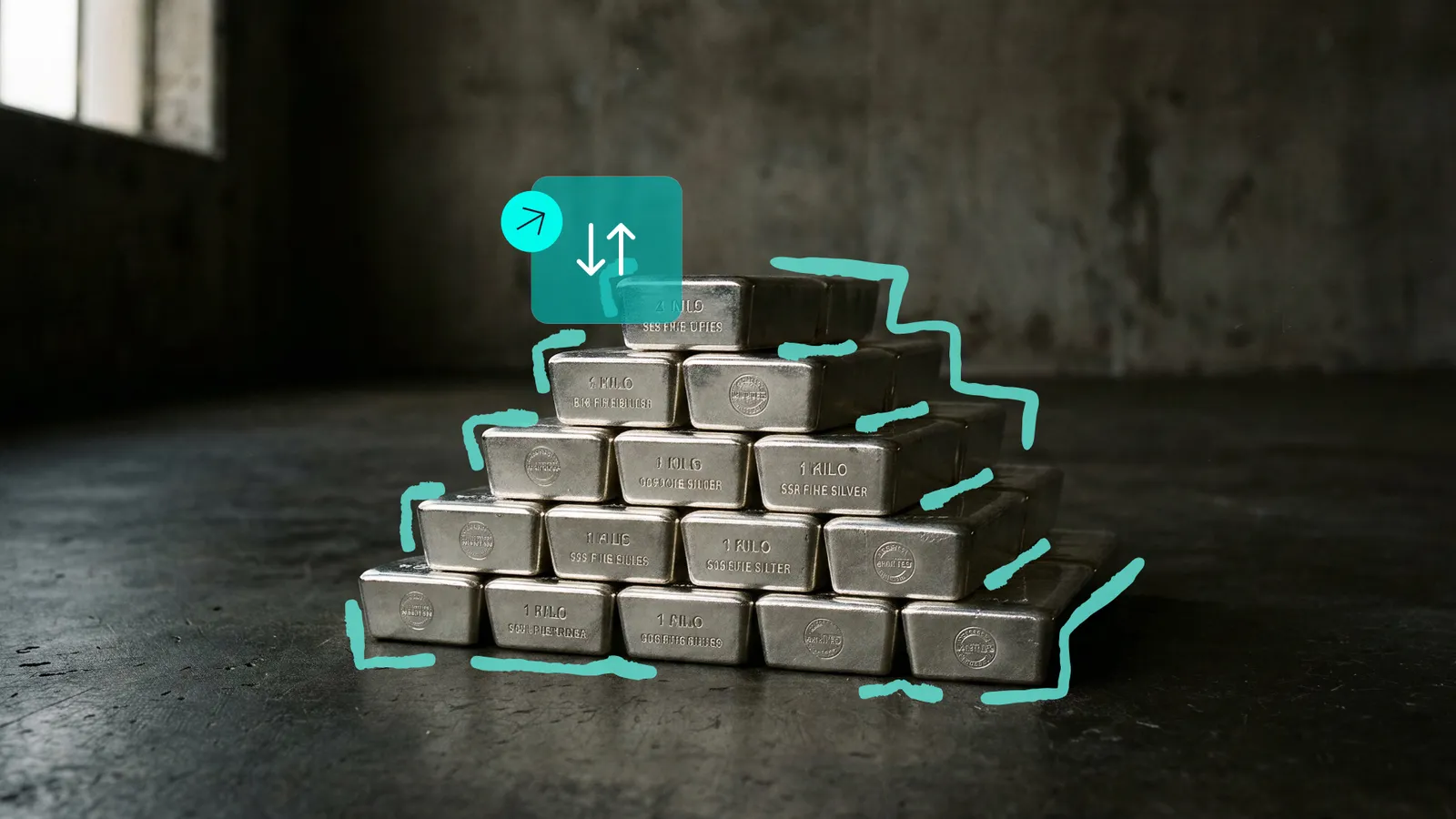
Silver recorded its largest single-day drop since 1980, falling 26%.
Industrial demand remains firm. Solar panel installations are up 18% year-on-year in early 2026.
A sustained ceasefire and progress in negotiations could ease pressure, allowing the silver market to stabilise and potentially find a bottom.
The rally is under pressure
Silver opened the year at $72.17/oz and surged to a record high of $121.62/oz, a 68.52% gain in January alone. The move was driven by a global supply shock, after China introduced export licensing restrictions that limited shipments to a small group of state-approved firms, effectively sidelining hundreds of smaller exporters.
At the same time, silver’s designation as a critical mineral in the US added to market uncertainty, fuelling concerns around potential import tariffs. Physical demand surged, with large flows moving into COMEX-linked vaults in New York. This drained London LBMA inventories, pushed lease rates to record highs and briefly disrupted the physical market.
However, the rally reversed sharply. On 30 January, silver recorded its largest single-day drop since 1980, falling 26%. Since then, prices have moved into a more range-bound phase. Amid the ongoing US-Israel-Iran conflict, volatility remains elevated, but overall gains have moderated, with silver up around 5% year-to-date.
Caught between geopolitics and a supply squeeze
The silver market is entering Q2 at a critical point, following President Trump’s announcement of a two-week conditional ceasefire with Iran on 7 April 2026. The development has immediate and complex implications for silver, which is currently trading around $76/oz.
A key condition of the ceasefire is the reopening of the Strait of Hormuz. If traffic through this route normalises, it should ease global transport costs and reduce the “physical scarcity” premium that pushed both silver and oil higher in Q1.
At the same time, underlying fundamentals remain tight. The Silver Institute expects the market to record a sixth consecutive annual deficit in 2026, with a shortfall of around 67 million ounces. Physical tightness in London, continued inflows into exchange-traded products, with global holdings near 1.31 billion ounces as of February 2026, and strong industrial demand continue to support the imbalance. In this context, a de-escalation in Q2 could allow the silver rally to resume, as selling pressure linked to margin calls and panic subsides. A renewed escalation, however, would likely weigh on momentum and disrupt the bullish trend seen over the past two years.
Beyond geopolitics, industrial demand remains firm. Solar panel installations are up 18% year-on-year in early 2026, while China’s ongoing export controls on critical materials are likely to keep physical supply tight regardless of developments in the Middle East.
Taken together, these factors provide a supportive floor for silver from a macro perspective heading into Q2.
What’s driving silver now?
Rates holding higher are weighing on sentiment
The Fed held rates at 3.50%-3.75% in mid-March, maintaining a hawkish stance. Alongside stronger-than-expected PPI data, this triggered a sharp speculative unwind. Silver fell more than 10% in the week of 20 March as leveraged and momentum positions were rapidly unwound.
While CPI held steady at 2.4% year-on-year in February, unchanged from January, PPI rose to 3.4% from 2.9%, pointing to renewed inflation pressure. This raises the likelihood of rates staying higher for longer, which could weigh on silver relative to US Treasuries.
Tariffs and trade tensions are adding friction
Beyond geopolitics, tariffs and export controls are becoming an important driver for silver markets in Q2. On 25 February 2026, the US introduced a 15% global import tariff under Section 122 of the Trade Act. There are also indications that tariffs could rise to 25% by 1 June for countries that do not meet certain strategic conditions.
Silver products from China may face additional duties ranging from 7.5% to 25%, while the European Union is considering retaliatory measures that could also include silver. These developments add another layer of uncertainty to pricing and trade flows.
Solar demand faces a substitution challenge
Structural demand remains strong, but there are emerging headwinds. Bloomberg analysts expect silver use in solar modules to decline by 7% to 194 million ounces in 2026, driven by a shift toward copper-based technologies.
Rising costs and ongoing “thrifting” across the industry are accelerating this transition, creating a potential cap on longer-term demand growth.
Positioning shows a clear unwind
COMEX silver futures open interest peaked at 156,637 contracts in the week of 27 January before falling sharply after the 30 January price decline. By 3 February, open interest had dropped to 143,180 contracts, a decline of 8.6% in just one week.
The trend continued through Q1, falling to 133,641 by 10 February, 125,454 by 24 February and 113,164 by 24 March. This represents a 27.7% decline from the January peak, confirming a broad liquidation of positions following the rally.
A similar pattern was seen in China. The Shanghai Futures Exchange recorded a single-day drop of 58,754 contracts on 3 February, reflecting global deleveraging alongside margin increases and tighter hedging limits.
Volatility remains elevated despite strong demand
Volatility surged in Q1. Silver rallied to $121.62/oz on 29 January before falling more than 33% to $76/oz the next day, driven by Fed expectations and forced liquidations.
In response, CME raised margin requirements multiple times in early February, while the Shanghai Metals Market introduced margins of 19-22% and price limits of 20% by 4 February. Both realised and implied volatility rose significantly compared with Q4 2025.
Despite this, activity remained strong. Around 70% of Shanghai Futures Exchange volume was concentrated in front-month contracts in early February, while physical and investment demand remained elevated across LBMA and India’s MCX. This suggests underlying demand is still firm, even after the post-crash liquidation phase.
Geopolitics remains the key risk
The US-Israel-Iran conflict remains the biggest risk factor heading into Q2. A further escalation could trigger renewed deleveraging across precious metals, leading to additional liquidation and downside pressure.
On the other hand, a sustained ceasefire and progress in negotiations could ease pressure, allowing the silver market to stabilise and potentially find a bottom.