Support
Dow theory principles and how traders use them
Dow theory is a foundational concept in technical analysis, built on the work of Charles Dow. Its principles help traders read market direction and understand how trends develop.
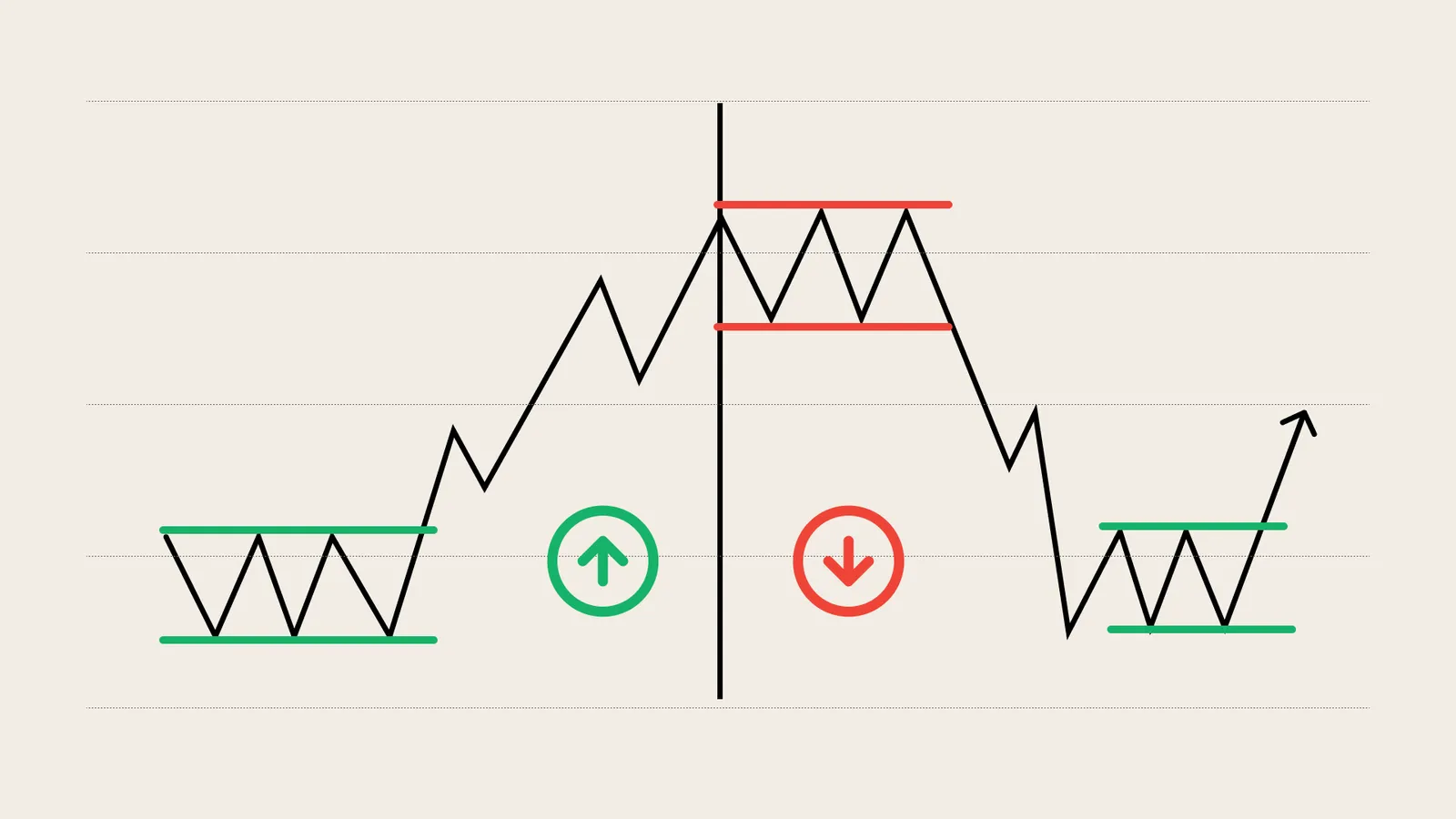
Dow theory centres on the idea that market prices move in identifiable trends.
The theory was first built around the link between the Dow Jones Industrial Average and the Dow Jones Transportation Average.
If one market moves higher while connected markets fail to confirm, traders may become cautious as momentum could be weakening.
What is Dow theory
Dow Theory is one of the oldest and most influential concepts in technical analysis. Developed from the work of Charles Dow in the late nineteenth century, it laid the foundation for modern market trend analysis and continues to influence how traders and investors interpret price action today.
At its core, Dow Theory is built around the idea that markets move in identifiable trends and that these trends reflect the collective psychology, expectations, and economic outlook of market participants. Long before advanced indicators and algorithmic systems existed, Dow Theory focused on the relationship between price, trend structure, and confirmation. Even today, many modern strategies are indirectly based on principles originally introduced through this framework.
The importance of Dow Theory is not limited to stock indices. Its concepts can be applied across forex, commodities, indices, and even cryptocurrencies because it focuses on market behavior rather than a specific asset class.
Origins and purpose of Dow theory
Dow Theory emerged through a series of editorials written by Charles Dow in The Wall Street Journal. Dow never formally published the theory as a structured system, but later analysts compiled and expanded his ideas into what became known as Dow Theory.
The original purpose was to identify the primary direction of the stock market and distinguish meaningful long-term movements from short-term noise. At the time, Dow observed that markets moved in trends rather than random fluctuations, and that understanding these trends was essential for interpreting economic conditions.
The theory originally relied on the relationship between the Dow Jones Industrial Average and the Dow Jones Transportation Average. The logic was straightforward. If industrial companies were producing goods, transportation companies should also be moving those goods. If both averages moved together, the trend was considered healthy and confirmed.
Why Dow theory still matters today
Despite being more than a century old, Dow Theory remains relevant because market psychology has not changed. Technology evolves, trading speed changes, and financial products expand, but fear, greed, optimism, and panic continue to drive price behavior.
Modern traders still rely on concepts central to Dow Theory, including trend confirmation, volume analysis, and the idea that markets discount future expectations before economic data fully reflects them.
Many contemporary trend-following systems, moving average strategies, and market structure approaches are deeply connected to Dow Theory principles, even if traders do not explicitly recognize it.
The Six core tenets of Dow theory
Dow Theory is built on six foundational principles that explain how markets behave and how trends develop.
The market discounts everything
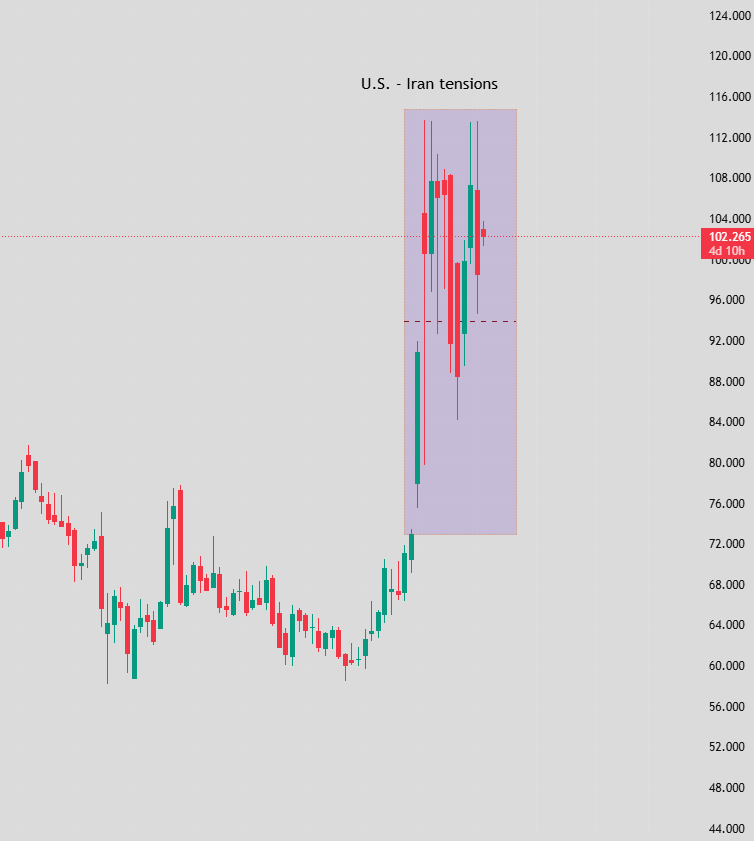
One of the central ideas in Dow Theory is that all known information is already reflected in price. Economic data, political developments, interest rates, expectations, and investor sentiment are continuously absorbed into market pricing.
This does not mean markets are always perfectly efficient, but rather that price itself becomes the most important reflection of collective market opinion.
Source: Trading View
Markets must confirm each other
Dow believed that market trends become more reliable when different averages move together. Originally, this referred to industrial and transportation stocks confirming the same trend direction.
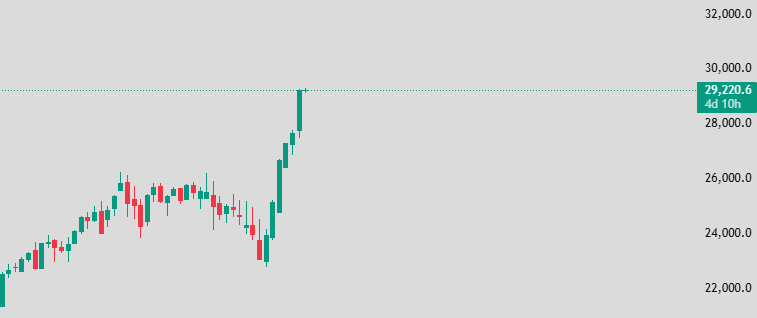
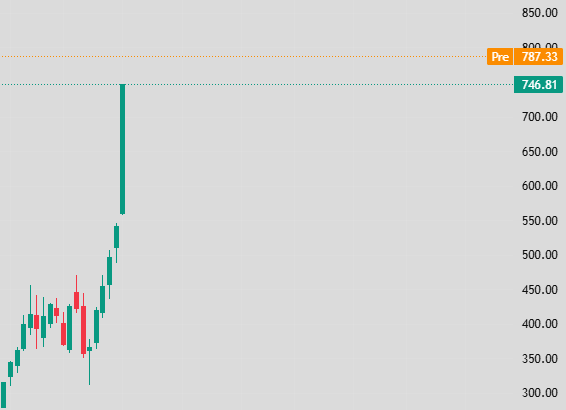
Today, traders apply this idea more broadly. For example, if equity indices are breaking higher while cyclical sectors and transportation stocks also strengthen, the bullish trend appears healthier.
If one market rises while related markets fail to confirm, caution increases because divergence may signal weakening momentum, in the example below shows Nasdaq and Micron stock how both confirm each other move.
Source: Trading View
Trends persist until a clear reversal occurs
Dow Theory assumes that trends remain intact until there is clear evidence of reversal. This principle forms the basis of trend-following analysis.
Many traders make the mistake of trying to predict tops and bottoms prematurely. Dow Theory instead emphasizes respecting the existing trend until price action confirms that conditions have changed.
Trends in Dow theory
Understanding trends is one of the most important aspects of the theory.
The three types of trends
Dow Theory identifies three categories of market trends.
The primary trend represents the dominant long-term direction and can last months or even years. This is the most important trend because it reflects the broader market cycle.
The secondary trend is a correction or retracement within the primary trend. These moves can last weeks or months and often create confusion because they temporarily move in the dominant direction.
The minor trend consists of short-term fluctuations and daily volatility. Dow considered these movements less important because they often reflect noise rather than structural change.
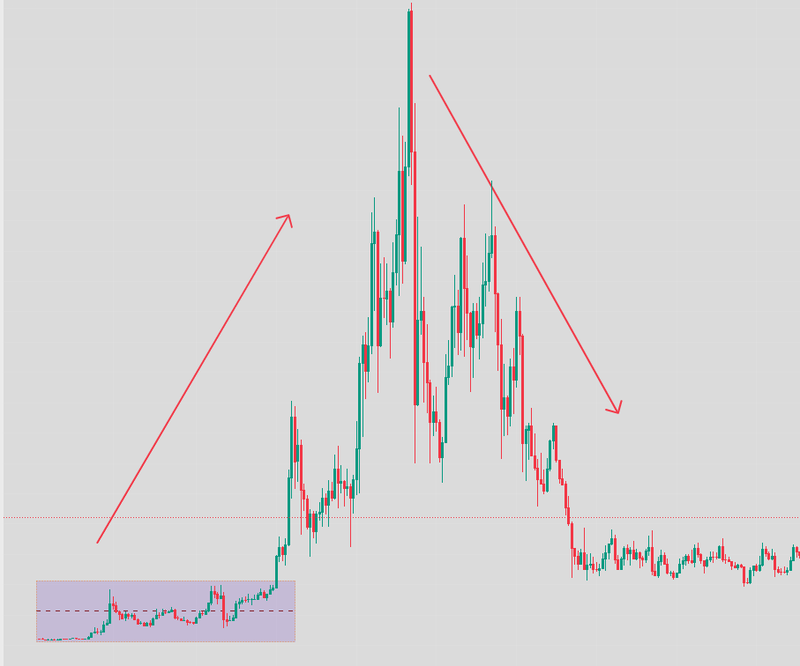
The three phases of a primary trend
According to Dow Theory, primary trends develop in three phases.
In a bullish market, the first phase is accumulation. During this period, informed participants begin buying while general sentiment remains pessimistic.
The second phase is public participation, where economic conditions improve, optimism grows, and trend momentum accelerates.
The final phase is excess and speculation. Public enthusiasm becomes extreme, valuations stretch, and emotional buying dominates. This often occurs near major market tops.
Source: Trading View
How to identify trend and reversal signals
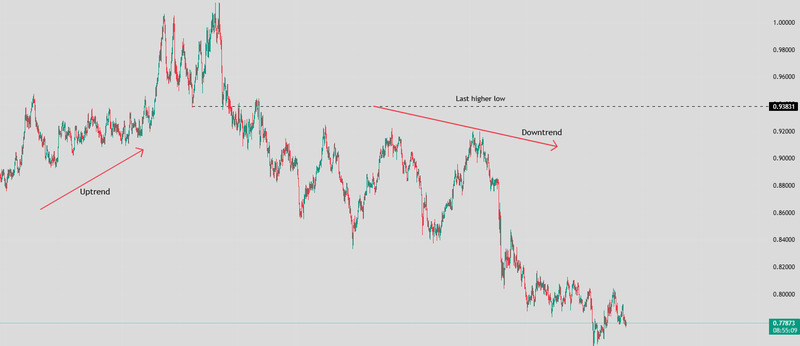
Dow Theory identifies reversals through a sequence of highs and lows.
An uptrend remains valid as long as price continues making higher highs and higher lows. A downtrend persists while lower highs and lower lows dominate.
A potential reversal occurs when this structure breaks. For example, if an uptrend fails to make a new high and then breaks below a previous significant low, the probability of trend reversal increases.
Source: Trading View
How index confirmation works
When related indices or sectors confirm each other, confidence in the trend increases.
For example, if industrial stocks break to new highs while transportation stocks also advance, this suggests economic activity remains strong and supports the bullish trend.
However, if one index rises while another weakens, divergence emerges. This divergence does not guarantee reversal, but it often signals that momentum is weakening beneath the surface.
Volume confirms trend strength
In healthy bullish trends, volume should generally increase during advances and decrease during pullbacks. In bearish trends, selling pressure should be accompanied by stronger volume.
If price rises while volume declines significantly, it may indicate weakening participation and reduced conviction.
Volume helps traders distinguish between sustainable trends and temporary moves driven by limited participation.
Entry and exit rules based on confirmed trends
Dow Theory encourages traders to align entries with confirmed trend direction rather than attempting to predict reversals too early.
A common approach is to enter after confirmation of a new higher high in an uptrend or a lower low in a downtrend. Traders often wait for confirmation from related markets or volume before committing fully.
Exits are generally based on structural reversal signals. If an uptrend breaks its sequence of higher lows and fails to recover, traders may interpret this as evidence that the trend has changed.
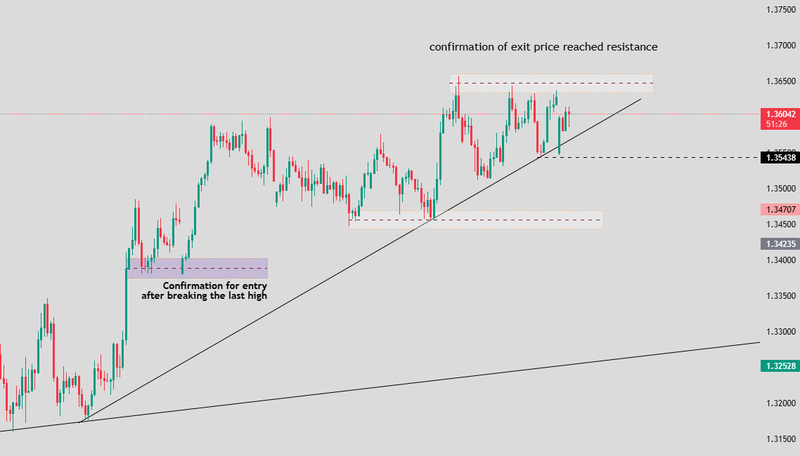
Source: Trading View
When Dow theory works best and when it does not
Dow Theory tends to work best in trending environments where market direction is clear and sustained. Strong macroeconomic cycles, monetary policy shifts, and broad risk sentiment trends often align well with its principles.
However, the theory becomes less effective in highly choppy or range-bound conditions where markets lack clear direction. During these periods, confirmation signals may become inconsistent and trend reversals may occur frequently.
It is also important to recognize that Dow Theory is not designed for ultra-short-term trading. Its strength lies in identifying broader market direction rather than capturing every short-term fluctuation.
FAQs
What is Dow Theory in Trading?
Dow Theory is a foundational technical analysis framework that explains how markets trend and how traders can identify trend direction through price action, confirmation, and volume.
Who created Dow Theory
Dow Theory was based on the work of Charles Dow, co-founder of Dow Jones and The Wall Street Journal.
What are the three trends in Dow Theory
Dow Theory identifies primary trends, secondary trends, and minor trends, each representing different time horizons in market movement.
Why is confirmation important in Dow Theory
Confirmation helps validate trend strength by ensuring related market averages and volume move in the same direction.
Does Dow Theory still work today
Yes. Many modern trading systems still rely on principles rooted in Dow Theory, especially trend-following and confirmation analysis.
Is Dow Theory bullish or bearish
Dow Theory itself is neutral. It provides a framework for identifying both bullish and bearish market trends based on confirmation and structure.