Support
 A guide to lot size calculation in currency trading
Lots and pips are central to understanding trade size in currency trading. This article introduces how leverage and margin affect position sizing and risk management.
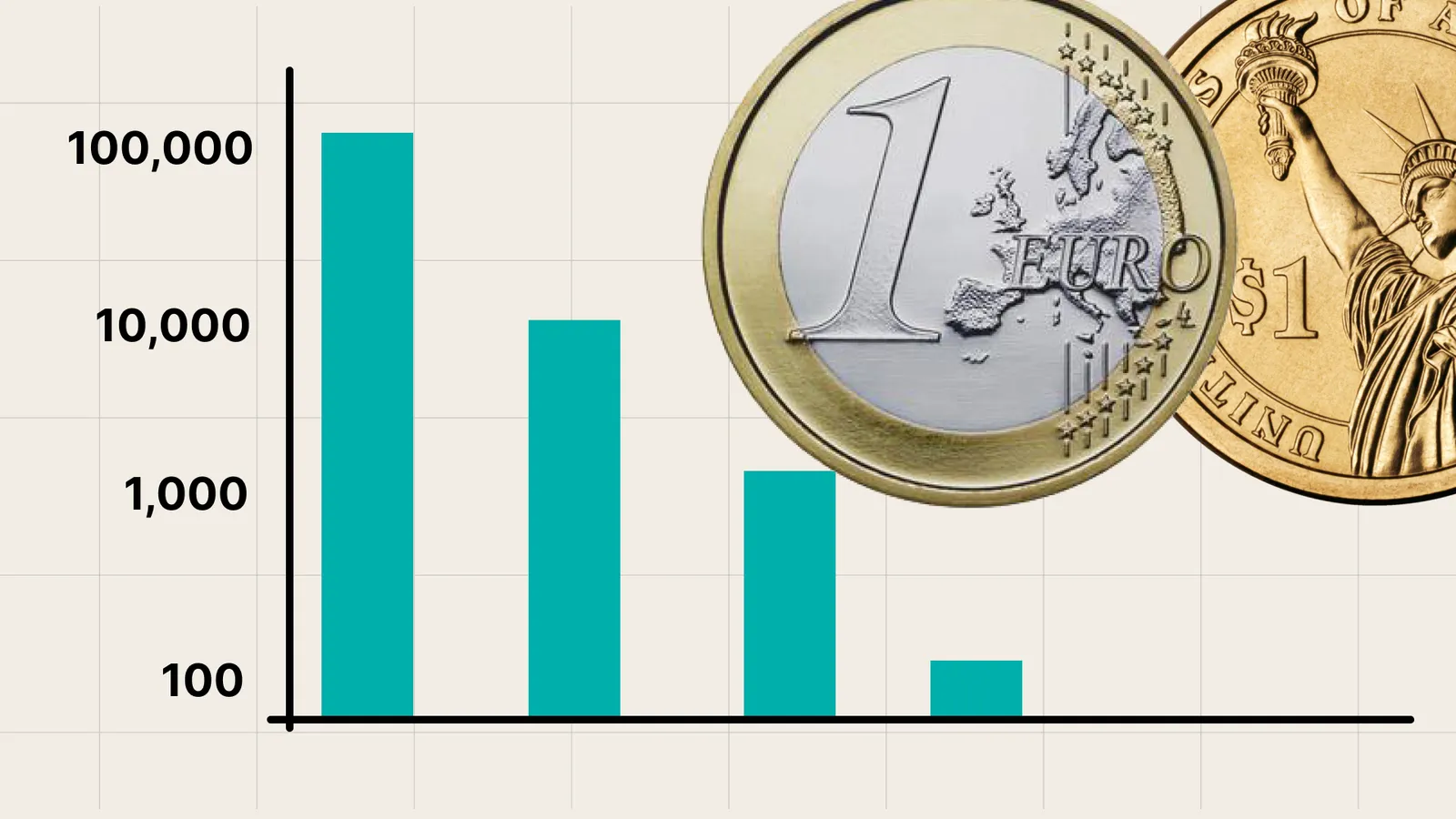
The lot represents the standard measure in the foreign exchange market and is categorised into standard (1.0), mini (0.10) and micro (0.01) sizes.
Leverage enables traders to handle large nominal positions with limited initial margin, making disciplined position sizing essential to protect capital.
A pip refers to the smallest price change in currency pairs, normally at the fourth decimal place, while Japanese yen pairs use the second decimal place.
Determining pip value according to trading volume is important for assessing real currency risk at selected stop-loss levels.
What is a Lot in Currency Trading?
The foreign exchange market—recognised as one of the most liquid global financial environments—relies on the standardisation of exchange units known as lots. A lot is defined as a standardised unit of measurement required to execute any monetary exchange between currency pairs. For speculative trading, institutional investment, or trade activities, this universal standardisation system is applied to all contract volumes and lot sizes.
Lot standardisation in Forex Trading
The foreign exchange market has evolved towards a form of democratisation, ensuring that individual operators and corporate entities can access the market regardless of their available capital. This has resulted in the fragmentation of contracts into smaller, manageable sizes. The following classifications represent the most common contract fragmentations:
- Standard Lot: Comprising 100,000 units of the base currency, represented by a trading volume of 1.0.
- Mini Lot: Comprising 10,000 units of the base currency, represented by a trading volume of 0.10.
- Micro Lot: Comprising 1,000 units of the base currency, represented by a trading volume of 0.01.
Risk management in the foreign exchange market and its relationship to required margin
Various regulatory frameworks permit the use of leverage in Forex trading. Leverage enables a trader to open positions of a significantly higher notional value using a smaller capital outlay, referred to as the "required margin".
For example, a trading account with a leverage ratio of 1:100 can open a standard lot position valued at $100,000 with a required margin of only $1,000 ($100,000 / 100). While this provides a distinct advantage for traders with limited capital, it also introduces substantial risk. A minor price fluctuation against a $100,000 contract could result in the total loss of equity or a significant proportion of the trading account balance.
Position Sizing
Given the inherent risks associated with leverage, professional traders manage their capital using tools such as "position sizing". This process involves defining a specific percentage of the total account equity (balance) to be allocated as required margin for a single trade. For instance, if an account balance is $10,000 and the trader stipulates that no position should risk more than 2% of equity, the maximum risk per position is $200 ($10,000 * 0.02). This methodology provides rigorous control over potential losses, as even small lot variations could otherwise exhaust the initial margin or lead to a margin call.
Calculating lot size in relation to maximum risk of loss
Once the maximum risk amount (the result of the position sizing) is established, it is necessary to convert this figure into a trading volume. Trading platforms typically specify the initial margin required by the broker for each standard lot.
Continuing with the previous example, if the trading account permits a leverage of 1:100, a platform like MetaTrader will automatically calculate the margin requirement. In this scenario, the broker requires a margin of $1,000 for one standard lot. To determine the appropriate volume, the maximum risk amount ($200) is divided by the margin required per contract unit ($1,000). The result, 0.20, represents the volume required to adhere to the position-sizing rule. The conversion formula is expressed as follows:
- Volume to be traded = Maximum amount to risk / Margin required per contract unit
What is a Pip in currency pairs?
A "Pip" (Percentage in Point) is the smallest unit of measurement for currency pairs, representing the most minute change a pair can experience. For the majority of currency pairs (e.g., EUR/USD, GBP/USD, or USD/CAD), the pip is located at the fourth decimal place (0.0001). However, for currency pairs involving the Japanese Yen as the quote currency (e.g., USD/JPY, EUR/JPY, or GBP/JPY), the pip is located at the second decimal place (0.01).
For instance, if the EUR/USD pair is trading at $1.1511 and moves to $1.1516, the pair has appreciated by 5 pips, indicating the Euro has strengthened against the US Dollar by that quantity of units.
How to calculate a Pip?
As every quote is implied, a pip carries a specific monetary value relative to the pair being traded. The formula to determine the nominal value of a pip is:
- Pip value (in quote currency) = One pip * Lot size
For example, the pip value for one standard lot of EUR/USD is $10 (0.0001 * 100,000). Since the quote currency is the US Dollar, the result is automatically denominated in USD.
When the account currency is the US Dollar but the quote currency differs, the following conversion is applied to find the USD value: For a standard lot of USD/JPY trading at ¥150.00, the pip value would be approximately $6.67 (0.01 / 150] * 100,000).
Why is it important to know the Pip value in Forex risk management?
Understanding pip value is critical for Forex risk management as it allows for the rapid calculation of potential loss or profit, complementing the position-sizing process.
If the calculated trading volume is 0.20 units (as determined in the position-sizing example) and the pip value for a standard EUR/USD lot is $10, the adjusted pip value for that specific position is $2 ($10 * 0.20).
With this information, a trader can measure the distance to the stop-loss level in pips and multiply it by the position’s nominal pip value. If the stop-loss is set 20 pips from the entry price, the maximum risk of loss is $40 (20 pips * $2). To calculate profit potential, the same operation is performed using the take-profit distance; if the target is 40 pips away, the potential profit is $80 (40 pips * $2).
Conclusion
Mastering lot calculation and pip valuation is the cornerstone of sustainability in Forex trading. Success in the markets involves more than mere price prediction; it requires a comprehensive understanding of the mathematical architecture underlying every operation. By integrating position sizing with the nominal value of a pip, a trader transforms speculation into disciplined risk management, safeguarding capital against market volatility and enhancing technical execution.
If you're interested in trading indices, foreign exchange, shares, or commodities, consider exploring the CFD contracts offered by Equiti Group. Please note that trading leveraged derivatives involves a high level of risk and may not be suitable for all investors.
FAQs
What is the difference between a standard, mini, and micro lot?
The difference lies in the number of units of the base currency controlled. A standard lot equals 100,000 units (volume 1.0), a mini lot equals 10,000 units (volume 0.10), and a micro lot equals 1,000 units (volume 0.01). This fragmentation democratises market access, allowing participants with smaller capital balances to adjust their exposure accurately.
How is risk-based trading volume calculated?
First, the maximum risk amount is defined (e.g., 2% of the account balance). Then, the margin required by the broker for a standard lot is identified based on the leverage provided. The formula involves dividing the maximum risk amount by the margin required per contract unit. This ensures the position adheres to the risk management plan, preventing market fluctuations from compromising an excessive proportion of the account.
What is a "Pip" and where is it located in the price?
A pip is the minimum unit of variation in a currency pair. In most pairs, such as EUR/USD, it is located at the fourth decimal place (0.0001). In pairs involving the Japanese Yen (JPY), the pip is found at the second decimal place (0.01). Correctly identifying this position is vital for calculating profits and losses and setting accurate technical exit levels.