Help
Help 
Trump pauses Project Freedom as Washington tests opening for Iran deal
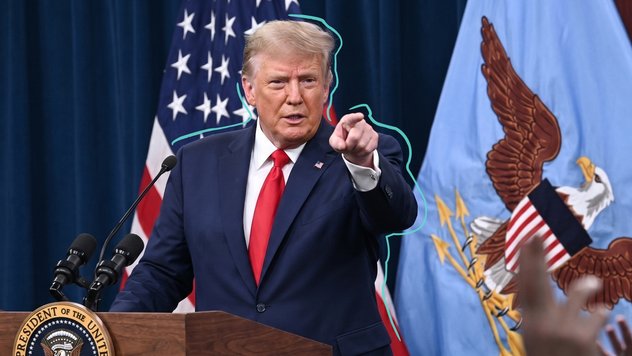
President Donald Trump has put a temporary hold on a US effort to help trapped ships leave the Strait of Hormuz, betting that a diplomatic opening with Iran may still produce a broader agreement to end the war. The pause marks a sharp tactical shift: Washington is easing back from one military step even as its blockade on vessels tied to Iranian ports remains fully in place.
Trump said “Project Freedom,” the US effort to guide ships through Hormuz, will be paused briefly.
He claimed there had been “great progress” toward a possible deal with Iran, though no specifics were given.
The US blockade on shipping to and from Iranian ports will remain in force.
Oil fell after the announcement, though the path to a lasting agreement still looks uncertain.
Washington hits pause on its Hormuz escort plan
President Donald Trump said the US would temporarily suspend its effort to help stranded vessels move through the Strait of Hormuz, as the administration explores whether recent diplomatic contacts with Iran can be turned into a broader agreement to end the war.
In a social media post on Tuesday, Trump said “Project Freedom”, the operation meant to support ship movements through the strait, would be paused for a short period to see whether an agreement could be finalized and signed. The operation had only begun a day earlier.
Trump said the decision followed “great progress” toward what he described as a “complete and final agreement” with Iranian representatives. He added that Pakistan, which has been helping mediate contacts between Washington and Tehran, as well as other countries, had asked for the pause.
The blockade stays, even as the escort plan is shelved
The halt does not amount to a broad rollback in US pressure. Trump made clear that the American blockade on ships transiting to and from Iranian ports would remain “in full force and effect.”
That distinction matters. The administration is stepping back from one element of its military posture, direct support for trapped shipping, while keeping another intact. In effect, Washington is trying to lower the temperature without giving up leverage.
It is also a striking reversal in timing. Only hours before Trump’s announcement, top US officials had been describing the military resources committed to the next phase of the Hormuz operation, including guided-missile destroyers, more than 100 aircraft, 15,000 personnel in the region, and a range of drone capabilities.
Markets hear diplomacy, but not clarity
Oil prices fell after Trump’s comments, with Brent sliding toward $108 a barrel after an earlier drop. The move reflected relief that Washington may be looking for a way to de-escalate rather than push deeper into direct confrontation around the strait.
Still, the market response also reflected how little clarity accompanied the announcement. Trump did not explain what specific progress had been made, what terms were under discussion, or whether Iran had in fact moved closer to accepting any workable framework.
That lack of detail is significant because the White House had sounded far less optimistic in recent days. Trump had openly expressed frustration with the pace of talks and suggested Tehran’s proposals were falling short of what Washington wanted.
The administration is under pressure to cool the energy shock
The pause also highlights the domestic political pressures building inside the US. Higher fuel prices have added to broader economic strains, and Republicans are increasingly aware that a prolonged energy shock could damage them heading into the November midterm elections.
That helps explain why the White House appears to be looking for an off-ramp. Before Trump’s announcement, Secretary of State Marco Rubio had already signaled that offensive US operations against Iran were over. The message from Washington now seems to be that it wants to contain the conflict, or at least stop making it worse, while testing whether diplomacy can carry more of the burden.
The route to a real deal remains difficult
Even so, the path to any meaningful agreement still looks narrow. The Strait of Hormuz, which carries roughly a fifth of the world’s oil exports, remains effectively choked, and the broader war has already killed thousands in Iran and Lebanon while rattling global energy markets.
The practical situation in the waterway is still dangerous. A British monitoring organization reported Tuesday that a cargo ship in the strait had been hit by an unidentified projectile. US officials also said the shutdown had left more than 1,550 commercial vessels and about 22,000 sailors stranded inside the Gulf.
That is the backdrop against which the administration is now asking markets to believe diplomacy is making headway.
Tehran is not signaling surrender
Iran, for its part, has not sounded like a government preparing to fold. Before Trump announced the pause, President Masoud Pezeshkian dismissed renewed US demands for talks as impossible under current conditions, arguing that Washington could not pursue a policy of maximum pressure while also expecting Tehran to come to the table and accept unilateral demands.
US officials have also acknowledged that negotiations are slow and complicated, in part because decision-making inside Iran is fragmented and even harder to navigate after the damage the country suffered during the war.
Rubio put it bluntly: responses to proposals can take days, winding through multiple layers before ever reaching the supreme leader.
China and the UN add new layers to the diplomacy
The diplomatic picture became even more crowded on Wednesday, when Chinese Foreign Minister Wang Yi held talks in Beijing with Iranian Foreign Minister Abbas Araghchi, according to Xinhua. At the same time, the US and its allies backed a draft UN Security Council resolution that could open the door to sanctions or even military action if Iran does not ease its grip on the strait.
That proposal would require support from both China and Russia, which means the diplomacy is no longer just about Washington and Tehran. It is now entangled with broader geopolitical alignments as well.
A tactical pause, not a breakthrough
For now, Trump’s move looks less like a breakthrough than a tactical pause, an attempt to create space for talks without fully stepping away from coercion. The US is freezing one visible military plan while preserving the blockade that gives it leverage. Iran, meanwhile, is showing little sign that it is ready to accept Washington’s terms outright.
That is why the market’s initial relief should be treated carefully. The pause in “Project Freedom” may reduce the immediate risk of another escalation step, but it does not mean the strait is safe, the blockade is gone, or a deal is close.
The administration may be buying time. Whether that time produces diplomacy or merely delays the next confrontation is still very much an open question.