Help
Help 
China reduces reliance on the US system
China’s steady accumulation of gold is no longer just about portfolio balance it increasingly reflects a strategic move to build protection outside the U.S.-dominated financial system. The People’s Bank of China has now bought gold for 17 consecutive months.
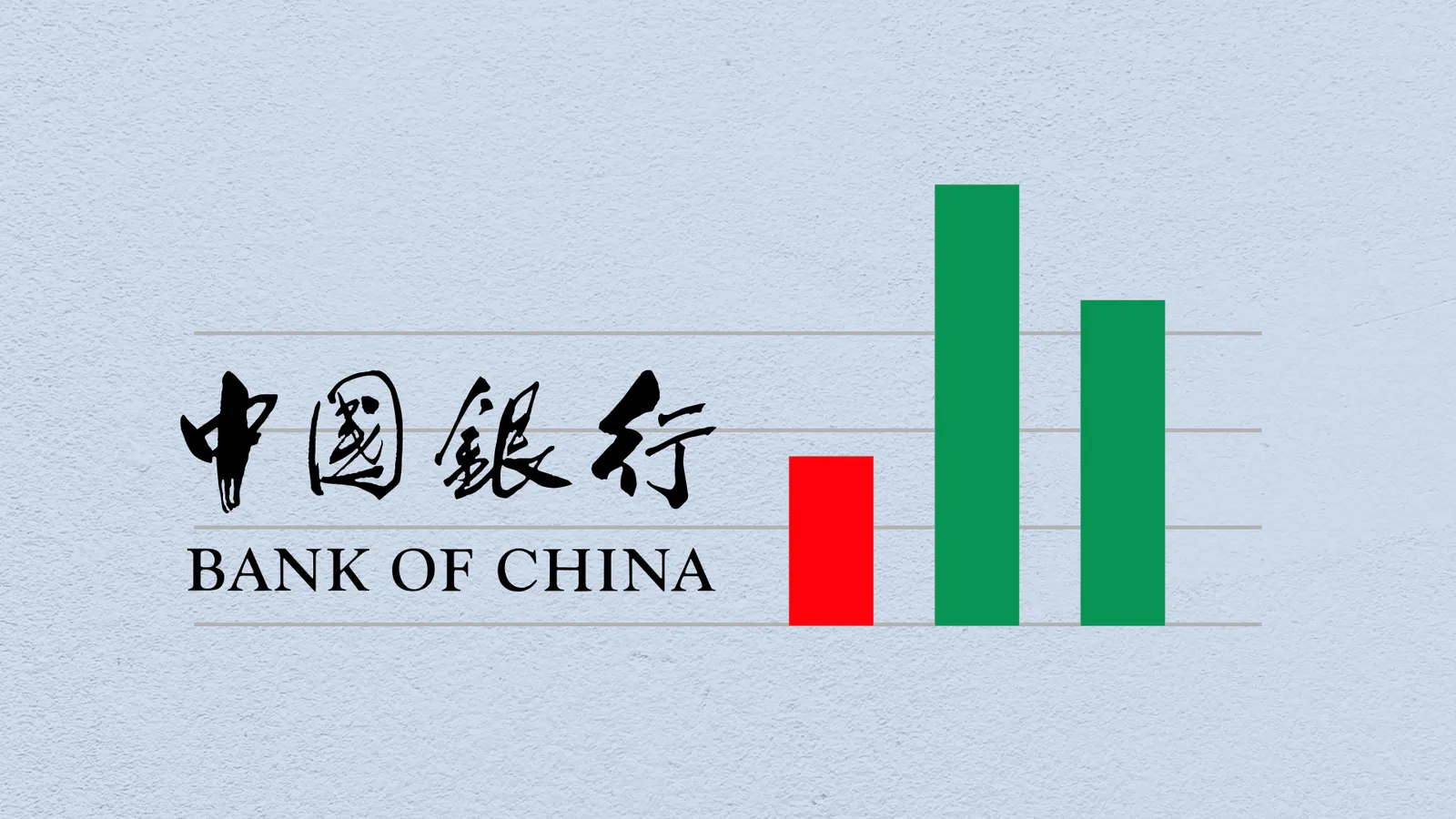
China has now bought gold for 17 consecutive months.
China has been steadily reducing its exposure to U.S. Treasuries.
China is not abandoning the dollar system, but it is reducing its reliance on it.
China using gold to build a financial buffer outside the system
China’s steady accumulation of gold is no longer just about portfolio balance it increasingly reflects a strategic move to build protection outside the U.S.-dominated financial system. The People’s Bank of China has now bought gold for 17 consecutive months, adding another 5 tonnes in March and bringing total reserves to 2,313 tonnes. That takes gold to around 9% of its foreign exchange reserves. The pace may look gradual, but the consistency is the real signal. This is not opportunistic buying it is a long-term repositioning.
Gold offers something unique for China it sits outside the reach of sanctions, is not tied to any single country’s monetary policy, and provides insulation against geopolitical pressure. In a world where financial systems are increasingly used as tools of influence, holding gold is less about return and more about control. For China, it acts as a hedge not just against inflation or currency volatility, but against the structure of the global financial system itself.
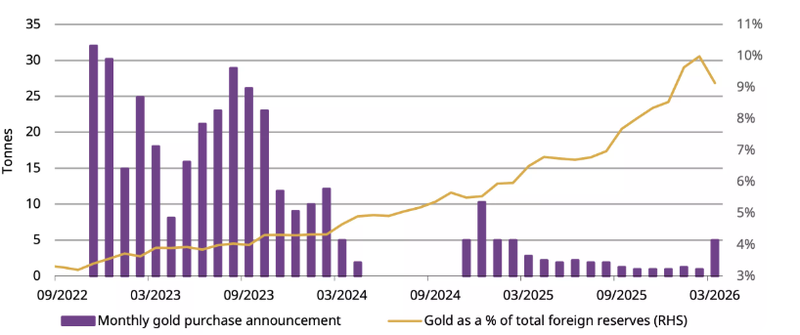
Source: World Gold Council
China and the US: reducing reliance, not cutting ties
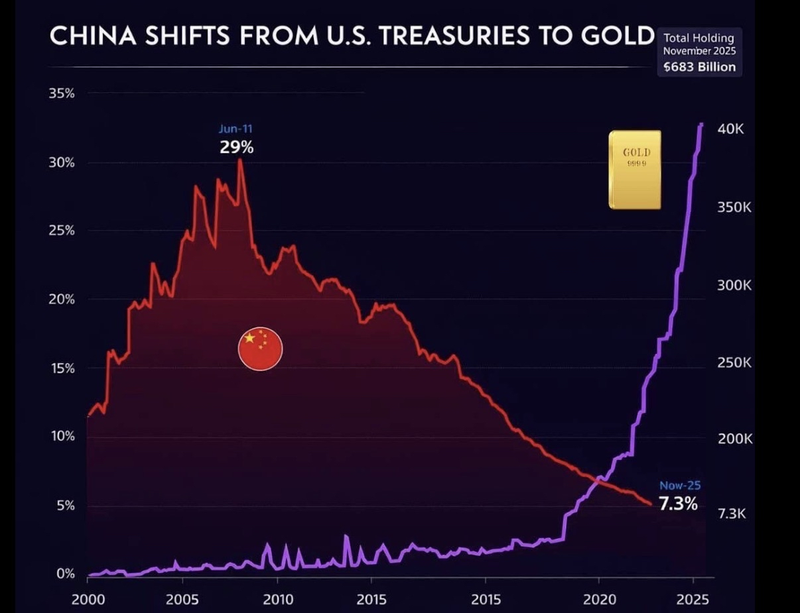
At the same time, China has been steadily reducing its exposure to U.S. Treasuries, cutting holdings from over $1.3 trillion to around $694 billion the lowest level in more than 15 years. This is not a sudden break, but it is a clear signal. Beijing is becoming less comfortable holding large amounts of assets tied directly to U.S. policy decisions. The dollar remains dominant, but from China’s perspective, it is no longer seen as fully neutral.
This shift comes at a sensitive moment. With tensions rising over energy flows, trade and geopolitical alignment, the upcoming meeting between Donald Trump and Xi Jinping in May will be closely watched. It may set the tone for how both sides manage economic and financial friction going forward.
China is not abandoning the dollar system overnight it cannot, but it is clearly reducing its reliance on it, step by step. The combination of lower Treasury holdings and steady gold accumulation reflects a broader strategy: remaining connected to the global system, but less dependent on it.
Energy, geopolitics and pressure on China’s position
What complicates this strategy is energy. China’s role in global oil markets particularly its purchases of Iranian crude has become more visible. Reports suggest Beijing has been buying a large share of Iran’s sanctioned exports, meeting a meaningful portion of its own demand. That puts China directly in the crosscurrents of current tensions.
The recent U.S. stance around the Strait of Hormuz, including pressure on Iranian-linked shipping, raises the stakes. If enforcement tightens, China faces a difficult trade-off: secure energy supply at higher geopolitical cost or adjust sourcing at potentially higher prices. Either path feeds back into inflation or growth.
This is where gold buying change the story, it is not just a reserve asset it is a hedge against exactly this type of uncertainty the more fragmented global trade becomes, the stronger the incentive for China to hold assets that sit outside the traditional financial system.
Into the coming months, the trajectory is likely to remain gradual. China will continue adding gold, not in large bursts, but with steady consistency. Treasury holdings may drift lower over time but not collapse.
For gold, this provides a structural floor. Central bank demand led by China offers support even when policy conditions turn against it. But it does not guarantee immediate upside, especially in an environment where yields and the dollar remain strong.