Support
Kevin Warsh faces his first real test: winning Trump without losing the market
Federal Reserve chairman-designate Kevin Warsh testifies before the Senate, with markets watching closely for signals on Fed policy, interest rates, inflation, and volatility.
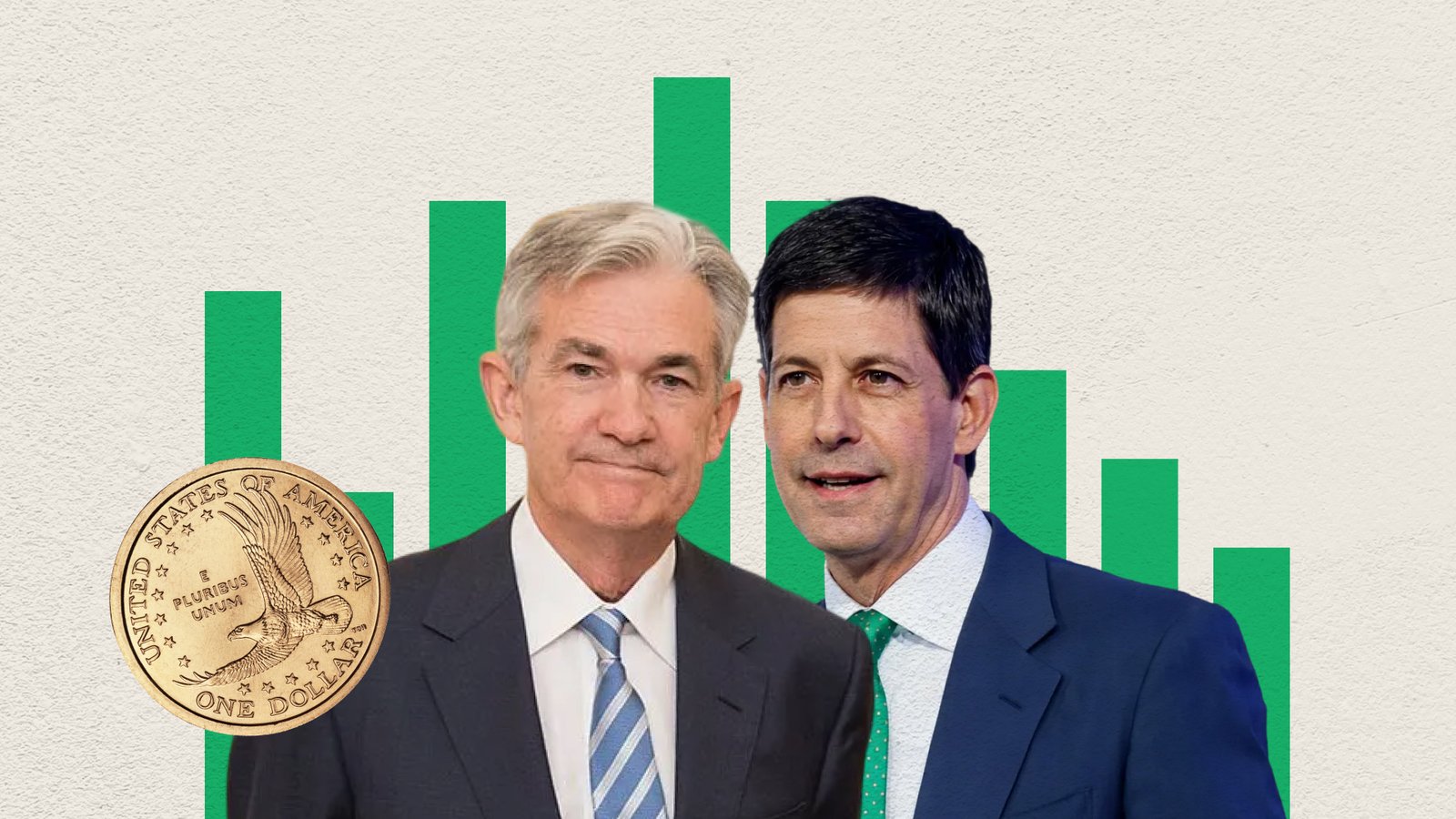
Kevin Warsh’s confirmation hearing will focus heavily on his independence from President Trump.
He is likely to argue that lower rates make sense over time, but not without economic justification.
The Iran-related energy shock makes it harder for him to sound dovish in the near term.
His views on balance-sheet reduction and MBS sales could matter as much as his rate outlook.
A confirmation hearing with much bigger stakes
The Federal Reserve may have entered its quiet period ahead of the April 29 FOMC meeting, but that will do little to stop the noise around US monetary policy. Kevin Warsh’s confirmation hearing to become the next Fed chair is arriving at a sensitive moment for both the central bank and the market. On paper, it is a nomination hearing. In practice, it is a credibility test.
Warsh is walking into this process with a reputation that is more complicated than the current political framing suggests. When he served as a Fed governor between 2006 and 2011, he was generally seen as hawkish. Now he is President Trump’s nominee, and Trump has made no secret of his desire for significantly lower interest rates. That alone guarantees the main line of questioning: is Warsh aligned with the president’s macroeconomic instincts, or is he prepared to defend the Fed’s independence when it matters?
The central question is not whether he likes lower rates
Warsh will almost certainly avoid presenting himself as a reflexive dove. More likely, he will argue that lower borrowing costs make sense over time if the economic conditions justify them. That position would allow him to remain broadly consistent with Trump’s preference for easier policy without sounding as though he is simply taking orders from the White House.
That nuance is essential. Market credibility is not a side issue for an incoming Fed chair. It is the job. If Warsh appears too politically compliant, investors may begin to doubt the Fed’s inflation-fighting resolve. And once that doubt creeps in, long-term yields can rise even if the policy rate falls. That would blunt the very easing Trump wants and could leave mortgage rates and corporate borrowing costs higher, not lower.
The Iran shock makes a dovish tone harder to sell
The timing of Warsh’s hearing could hardly be more awkward. The war-driven jump in fuel prices has added another inflation shock at a moment when both headline and core inflation have already spent years above the Fed’s 2% target. Even if the energy surge proves temporary, it complicates the optics of talking too warmly about rate cuts.
Warsh will know that. He is unlikely to want his first major public appearance as chair-designate to reinforce fears that inflation expectations could drift higher. If that happens, the bond market will not wait politely for clarification. It will react immediately, and the first place it will show up is in longer-dated Treasury yields.
That matters politically too. Treasury Secretary Scott Bessent has already made clear that the 10-year Treasury yield is, in his view, the most important market rate because of its impact on mortgages and wider borrowing costs. In that sense, Bessent and the market are saying the same thing: cutting the Fed funds rate is only useful if the bond market believes you.
The near-term message may be cautious, but the medium-term vision is easier money
Structurally, Warsh is likely to present a more optimistic long-term narrative. He appears convinced that technology and artificial intelligence will lift productivity, allowing the US economy to grow faster without generating the same inflation pressure. That argument gives him a coherent way to support lower rates over the medium term without sounding reckless in the short run.
Importantly, that view is not entirely outside the Fed mainstream. In the March projections, officials raised their estimate for long-run GDP growth to 2% from 1.8% without changing the long-run inflation forecast. The minutes also noted that several policymakers expected stronger productivity growth tied to technological or deregulatory developments to put downward pressure on inflation.
Warsh can use that as cover. He does not need to argue for easier policy as a political favor. He can argue for it as the logical consequence of an economy that may be able to grow faster without overheating.
His balance-sheet thinking may be the more important story
The deeper and more interesting issue is not rate cuts alone. It is Warsh’s broader theory of how the Fed should use its balance sheet.
He appears to believe that the central bank still owns too many bonds and that shrinking the balance sheet creates room for lower policy rates. In rough terms, he has suggested that every $1 trillion of Fed bond holdings equates to about 50 basis points on the policy rate. Under that framework, balance-sheet contraction could substitute for some of the work normally done by keeping rates higher.
That is convenient for a would-be chair who wants to preserve credibility while still opening the door to lower rates later. It also explains why Warsh has spoken critically about the Fed’s large holdings of mortgage-backed securities. MBS appear to be a particular target in his thinking, with a preference for passive runoff where possible but an openness to faster reduction.
The technical problem is reserves, and it is not small
The problem is that shrinking the balance sheet is not just an accounting exercise. It directly affects bank reserves, and bank reserves are where the plumbing starts to matter.
The US has already seen what happens when reserves fall too far. Repo-market stress emerged in 2019 and again in the second half of 2025 when liquidity became tight. The informal lesson from those episodes is that reserves approaching around 10% of GDP can start to feel uncomfortably low.
That leaves Warsh with a practical challenge. If the Fed aggressively reduces its holdings, especially through MBS sales, it risks putting downward pressure on reserves and reviving repo-market instability. The cleaner workaround would be to offset some of that pressure by buying Treasury bills while selling or allowing MBS to roll off. That would not look like classic quantitative easing, but it would still leave the Fed balance sheet large and full of government securities.
In other words, Warsh’s theory has internal logic, but it still needs an operational plan. And if he does not have a persuasive answer on reserves, the market will notice even if senators do not.
Powell may still be in place longer than Trump wants
There is another complication. Warsh’s path to confirmation may not be especially quick. The Department of Justice probe into construction overspending at the Fed has created a political bottleneck, and Republican Senator Thom Tillis has said he will block the nomination until the pressure campaign against Chair Jerome Powell ends.
That matters because it means Powell may remain in the chair role beyond the nominal end of his term on May 15. His term as governor runs until January 31, 2028, so unless Warsh is approved, Powell stays.
That could prolong the tension between the Fed and the White House, especially if Trump continues demanding faster easing while Powell resists. But it also underscores an important point: whatever the politics around the nomination, the institutional guardrails remain strong. The Fed may be under pressure, but its independence is not simply evaporating because the president is impatient.
The real challenge starts tomorrow
Warsh’s hearing is therefore about much more than his biography or his policy preferences in the abstract. It is about whether he can present himself as a chairman who understands the president’s growth agenda without becoming its instrument.
If he leans too hawkish, he risks disappointing the White House that chose him. If he leans too dovish, he risks unsettling the market he needs to command. That is the real challenge. And tomorrow will be the first serious indication of whether he knows how to walk that line.