
 Help
Help Ethereum weakens despite institutional trading framework announcement
Standard Chartered, BlackRock, and OKX have launched a pioneering framework that utilizes tokenised US Treasury bonds (via the BUIDL fund) as collateral for institutional cryptocurrency trading. This initiative aims to bolster market security by leveraging bank-grade custody solutions. However, despite this significant institutional milestone, Ethereum (ETH) experienced a 2.4% decline, retreating to the $2,300 level.

The new framework permits BlackRock’s BUIDL fund to serve as margin collateral, effectively mitigating exchange-related counterparty risk by appointing Standard Chartered as an independent custodian.
Despite the ostensibly bullish news regarding institutional integration, Ethereum’s price fell by 2.4% to $2,300, highlighting a distinct decoupling of fundamental developments from immediate price action.
ETH maintains a bearish posture while trading below its 200-day Simple Moving Average (SMA). Although it faces immediate resistance, a neutral RSI and suppressed volatility suggest a period of market indecision within a consolidative pattern.
Standard Chartered, BlackRock, and OKX launch BUIDL-Backed institutional trading framework
According to a report by Reuters, Standard Chartered, BlackRock, and the digital asset exchange OKX have developed a sophisticated system enabling institutional clients to utilise the BUIDL fund (BlackRock USD Institutional Digital Liquidity Fund) as collateral for cryptocurrency trading. The BUIDL fund, which is tokenised on the blockchain, invests in cash, US Treasury bills, and repurchase agreements to generate distributed yields. The primary value proposition of this initiative is its ability to reduce counterparty and security risks; institutional investors can trade in crypto-asset markets without the necessity of depositing funds directly into an exchange, although they continue to bear the full market risk associated with their trading positions.
This integration, which is currently operational via OKX Middle East, allows institutional investors to employ these tokens for margin trading, thereby expanding the utility of traditional digitalised assets within the crypto-ecosystem. The model introduces a hybrid architecture in which Standard Chartered functions as an independent custodian, holding assets off-exchange to minimise systemic risk, while OKX facilitates operations and manages collateral monitoring. Clients retain the flexibility to maintain assets in bank custody or transfer them to the exchange, ensuring they preserve ownership and continue to receive fund returns. This arrangement strengthens the nexus between traditional finance and the digital asset sector, reflecting a broader trend towards the adoption of tokenised instruments for investment, settlement, and trading.
Regarding the market’s response, while such developments typically signal increasing institutional appetite for crypto-assets, Ethereum retreated slightly. The asset depreciated by 2.4%, closing at $2,300.
Technical analysis of Ethereum
From a technical perspective, Ethereum has recently invalidated its long-term bullish structure and is currently contending with a significant zone of overhead supply. Key observations include:
- Trend Context: On the long-term overview, Ethereum continues to trade beneath its 200-day Simple Moving Average (SMA). This positioning reinforces a prevailing bearish bias. In the short term, however, price action is characterised by a consolidative range pattern that has persisted for approximately three months.
- Resistance Levels: Should immediate resistance near $2,350 be breached, the next critical technical ceiling is identified at $2,750, which coincides with the 200-day SMA. Reclaiming these benchmarks is a necessary prerequisite for re-establishing broader bullish momentum.
- Support Levels: If the primary psychological support at $2,000 is compromised, the next critical floor resides at the $1,800 mark—a significant structural support level. A sustained move below this threshold would likely accelerate selling pressure and increase the probability of a more profound market correction.
- Momentum Indicators: The Relative Strength Index (RSI) is currently oscillating within a neutral zone, reflecting a lack of definitive market direction. Simultaneously, the Average True Range (ATR) indicator signals low volatility, suggesting that a significant breakout from the current market structure may require a further influx of institutional liquidity or a major fundamental catalyst.
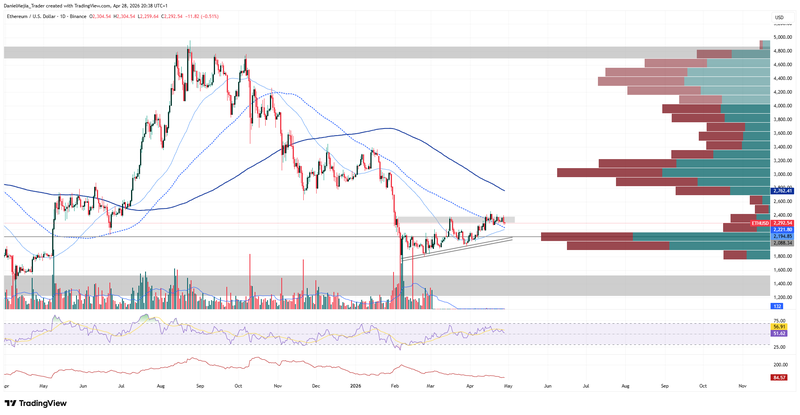
Figure 1. Ethereum Prices (2025–2026). Source: Data from the Binance Exchange; Own analysis conducted via TradingView.


