
 Help
Help China trade and Aussie sentiment weaken, but markets rally on geopolitical relief hopes
Ongoing tensions in the Middle East have disrupted global trade corridors, causing China’s trade balance to contract significantly to $51.13 billion and sending Australian confidence to multi-year lows. However, optimism surrounding potential peace negotiations in Pakistan bolstered US equity markets and gold prices.

China’s trade balance fell to $51.13 billion as export growth stalled at 2.5%, while imports of strategic resources surged to mitigate supply chain risks.
Consumer and business confidence in Australia hit multi-year lows, driven by persistent inflationary pressures and energy security concerns stemming from the Strait of Hormuz.
Renewed hopes for peace talks in Pakistan propelled gold to $4,865 and lifted US equity markets, as investors anticipated a potentially less restrictive monetary policy from the Federal Reserve.
Oil prices retreated sharply, with WTI falling nearly 8%, as the prospect of conflict resolution reduced the geopolitical risk premium previously embedded in energy valuations.
Tensions in the Strait of Hormuz impact the Chinese balance of trade
According to data released by the General Administration of Customs of China, the trade balance decreased substantially from $90.98 billion in February to $51.13 billion in March, falling considerably short of market expectations, which had anticipated a figure of $112 billion. This reading represents the lowest level since February 2025 and reflects the significant supply chain volatility in the Middle East. These disruptions have not only heightened inflationary risks but have also hampered the flow of international trade.
Chinese export growth decelerated from 39.6% to 2.5% over the same period, weighed down by softening global demand. Conversely, Chinese imports saw a robust increase, rising from 13.8% to 27.8%. This was driven by strategic state purchasing of semiconductors and natural resources aimed at mitigating the risks associated with Middle Eastern supply route disruptions.
Despite the contraction in trade figures, equity markets advanced in tandem. The FTSE China A50 index rose by 1.25% to 15,315 points, while the Hang Seng index appreciated by 1% to 25,911 points, bolstered by rising expectations of a diplomatic resolution to the US-Israel-Iran conflict.
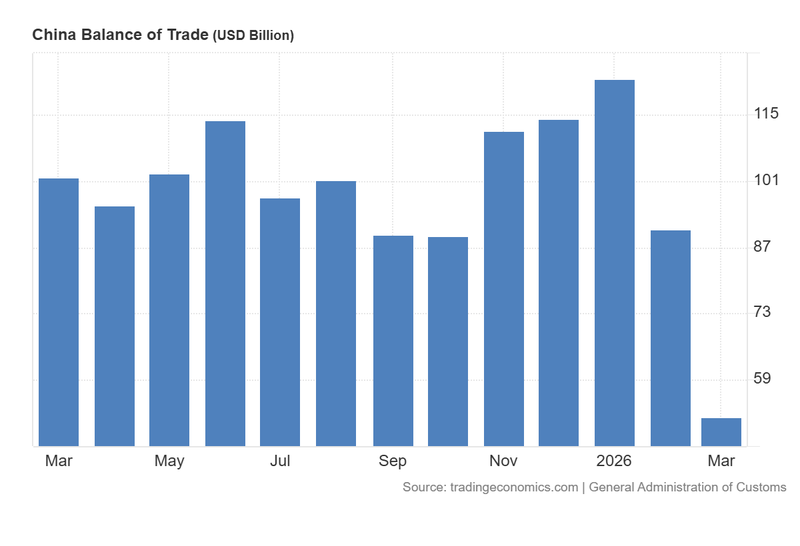
Figure 1. China Balance of Trade (2025-2026). Source: Data from the General Administration of Customs of China; Figure obtained from Trading Economics.
Australian consumer and business confidence decrease sharply amid rising inflation risks
Data provided by Westpac Banking Corporation and the Melbourne Institute indicates that Australian consumer confidence plummeted by 12.5% in April, the sharpest decline observed in approximately six years. The report suggests that the Middle East conflict has severely dampened household sentiment regarding personal finances and general economic conditions, leading to a marked reluctance to commit to major household purchases. Simultaneously, concerns regarding fuel prices and potential job losses have intensified amidst the current economic instability.
In a concurrent release, the National Australia Bank (NAB) reported a severe 29-point drop in business confidence, marking its most significant decline since April 2020. The vulnerability of the energy supply chain in the Strait of Hormuz has impacted a broad spectrum of Australian industries, casting a shadow over the corporate outlook for the coming months.
Despite the downturn in domestic sentiment, the Australian dollar appreciated 0.43% against the US dollar to 0.7123. This movement was largely driven by hopes that a resolution in the Middle East would reduce the likelihood of further "hawkish" policy shifts by the Federal Reserve, thereby weighing on the US dollar.
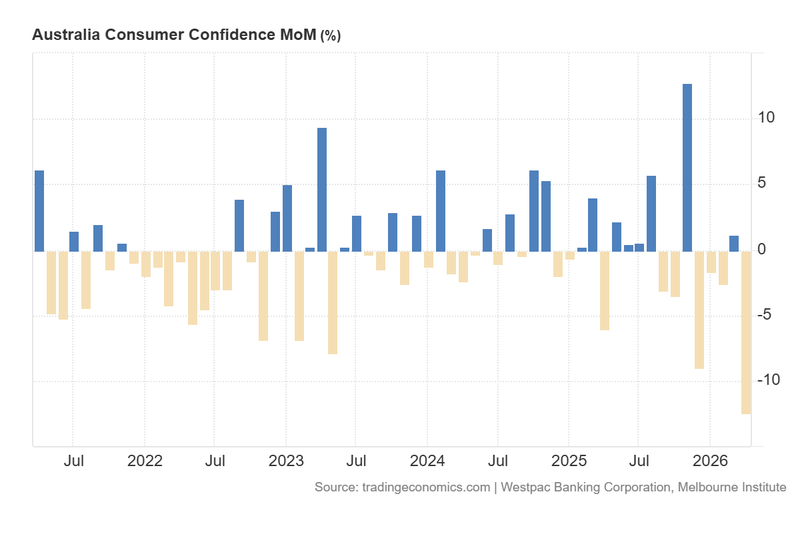
Figure 2. Australia Consumer Confidence (2021-2026). Source: Data from the Westpac Banking Corporation, Melbourne Institute; Figure obtained from Trading Economics.
Expectations of US-Iran conflict resolution drive higher stock valuations and gold, while oil drops
According to reports from Reuters, US president Donald Trump has indicated that negotiations to resolve the conflict involving the US, Israel, and Iran could resume in Pakistan in the coming days. This statement follows the collapse of a previous round of talks held in Pakistani territory last weekend.
Following the Trump's remarks, gold prices rose sharply, with bullion increasing by 2.05% to reach $4,865 per ounce during the session. This appreciation was primarily facilitated by a 0.27% decline in the US Dollar Index (DXY); market participants believe a resolution in the Middle East could deter the Federal Reserve from adopting a more restrictive monetary stance. Consequently, gold has become increasingly attractive to foreign investors as its dollar-denominated price softened.
US equity markets also rallied on the prospect of a conflict resolution that might prevent further interest rate hikes and support current valuations. The S&P 500 index rose 2.21% to 6,967 points, the Dow Jones Industrial Average gained 0.66% to reach 48,535, and the Nasdaq 100 advanced 1.81% to 25,842 points.
In contrast, energy markets saw a prominent decline. The Brent crude futures contract (BRNM6) dropped by 4.60% to $94.79 per barrel, while the West Texas Intermediate (WTI) futures contract (CLK6) fell by 7.87% to settle at $91.28 per barrel, as the perceived risk to global supply eased.
