
 Help
Help Michigan Consumer Sentiment falls to historic low; US Dollar Index retreats
United States consumer sentiment fell to a record low of 48.2 in May, driven by soaring energy costs and mounting concerns regarding trade tariffs. The reading missed market forecasts, reflecting a deepening pessimism among households regarding geopolitical and economic stability.
The University of Michigan’s Consumer Sentiment Index hit a record low of 48.2, falling short of analyst expectations as high energy prices and trade tariffs have impacted household outlooks.
One-year inflation expectations eased marginally to 4.5%; however, consumers remain cautious, anticipating that persistent price pressures could constrain domestic demand.
The US Dollar Index remains confined within a bearish descending channel. Momentum indicators, such as the RSI and MACD, are currently neutral, suggesting a lack of a clear directional catalyst in the short term.
Michigan Consumer Sentiment slumps in May amid geopolitical and economic instability
According to data released by the University of Michigan, consumer confidence in the United States fell to a historic low of 48.2 in May. This threshold was lower than the consensus forecast of 49.5 and the previous month’s reading of 49.8. The report highlights that the expectations index declined by 9%, primarily due to escalating anxieties regarding the impact of high prices on personal finances and the viability of major household purchases. Furthermore, expectations for real income growth deteriorated, with respondents citing rising energy costs and the adverse effects of tariffs as the most significant threats to their economic well-being.
Concurrently, one-year inflation expectations decelerated from 4.7% to 4.5%, while long-term (five-year) inflation expectations eased from 3.5% to 3.4%. Despite this marginal cooling, consumer sentiment remains heavily weighed down by price-related concerns. Should energy price pressures persist, there is an increased risk of a protracted impact on aggregate domestic demand.
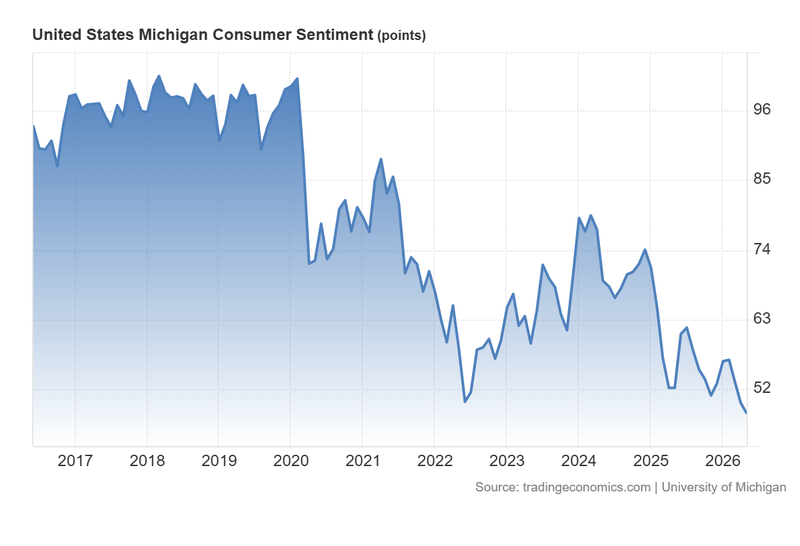
Figure 1. United States Michigan Consumer Sentiment (2016-2026). Source: Data from the University of Michigan; Figure obtained from Trading Economics.
Technical analysis of the US Dollar Index (DXY)
From a technical perspective, the US Dollar Index remains positioned within a primary long-term bearish trajectory. However, the short-term market structure indicates a period of consolidation and a lack of definitive direction:
- Trend Context: In the medium term, the index continues to trade within a descending channel pattern. Over the past year, however, the index has largely remained within a horizontal consolidation range, reflecting an absence of a predominant market driver.
- Resistance Levels: To the upside, the 99.30 level represents a formidable technical hurdle. A decisive breakout above this threshold would shift the market's focus toward the 100.50 handle. A sustained move above 100.50 would signal a major transition into a more aggressive trading range.
- Support Levels: On the downside, immediate support is identified at 97.70, which aligns closely with the 61.8% Fibonacci retracement level of the previous bullish impulse. Should this floor be breached, the next critical area of interest is 96.50, representing significant short-term structural support. A failure to hold the 96.50 level would likely facilitate a deeper bearish correction.
- Momentum Indicators: Both the Moving Average Convergence Divergence (MACD) and the Relative Strength Index (RSI) are currently trending near neutral levels, underscoring the lack of a prevailing trend. Consequently, the role of macroeconomic fundamentals is expected to be pivotal in determining the direction and sustainability of future price movements.
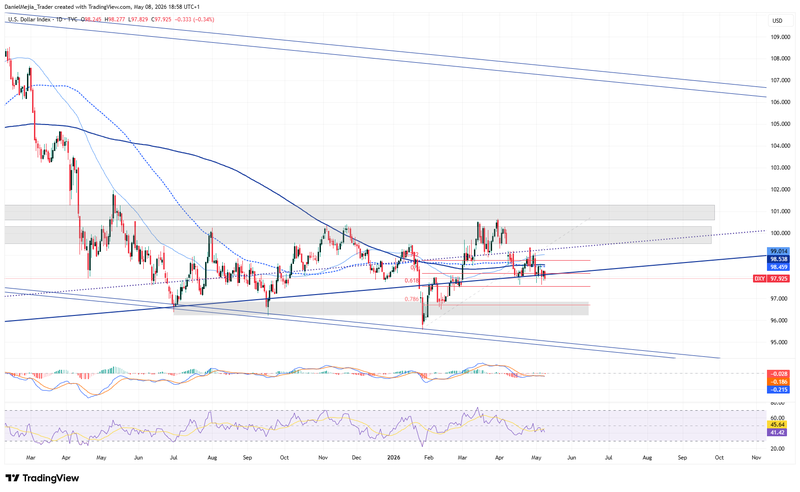
Figure 2. Dollar Index DXY (2025–2026). Source: Data from the Intercontinental Exchange (ICE); own analysis conducted via TradingView.


