Help
Help 
USD to INR: how the dollar-rupee exchange rate works
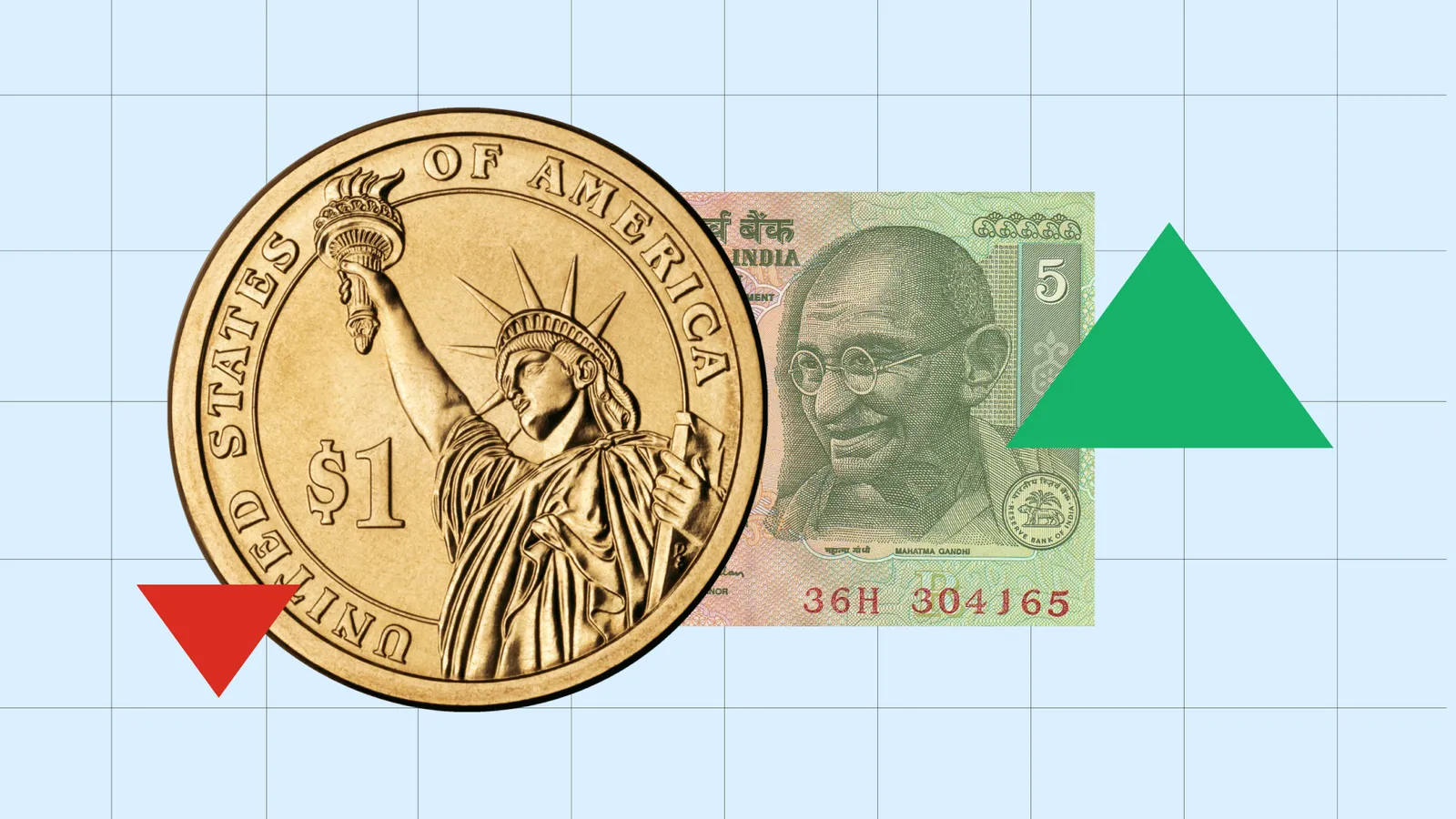
The USD to INR exchange rate measures how many Indian rupees are required to buy one US dollar.
India remains heavily dependent on imported commodities.
USD/INR is heavily influenced by India’s trade balance and investment flows.
Interest rate differences between India and the United States also play a major role in shaping USD/INR.
What is the USD to INR exchange rate
1 USD equals 95 INR, and it is one of the most closely followed currency pairs in Asia because it reflects the relationship between the world’s dominant reserve currency and one of the world’s fastest-growing major economies.
When traders say the rupee is weakening, it means more rupees are needed to purchase a dollar. When the rupee strengthens, fewer rupees are required for the same dollar amount.
The exchange rate matters far beyond forex markets alone. It influences inflation, fuel prices, import costs, overseas education expenses, tourism, foreign investment flows, and corporate profitability across India’s economy.
Because India remains heavily dependent on imported commodities, especially crude oil, movements in USD/INR can quickly affect broader economic conditions.
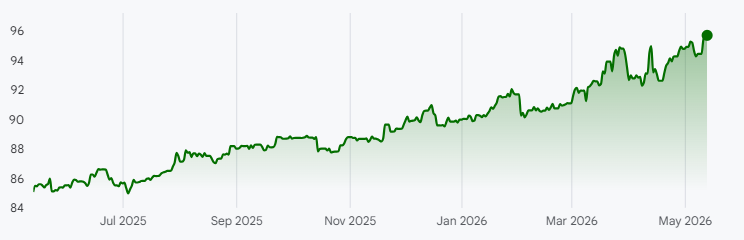
Source: Google Finance
How the USD to INR exchange rate is determined
The USD to INR exchange rate is not set manually by a single institution each day. Instead, it is continuously determined through global forex market activity where banks, corporations, investors, importers, exporters, and financial institutions buy and sell currencies based on economic needs and investment flows.
The exchange rate depends on supply and demand
Demand for the Indian rupee rises when foreign investors purchase Indian assets, multinational corporations invest in India, or overseas buyers pay Indian exporters for goods and services. In each of these situations, dollars must be converted into rupees, increasing demand for the Indian currency.
At the same time, demand for the US dollar rises when India imports products such as crude oil, machinery, electronics, industrial equipment, and raw materials. Since many global commodities are priced in dollars, Indian importers need dollars to complete international transactions.
When demand for dollars rises faster than demand for rupees, the rupee tends to weaken. When rupee demand strengthens relative to dollar demand, the currency appreciates.
India follows a managed floating currency system
India operates under a managed floating exchange rate regime. Under this structure, the market largely determines currency prices through supply and demand, but the Reserve Bank of India can intervene during periods of excessive instability.
This system differs from a completely free-floating currency where markets alone determine price without central bank involvement. It also differs from a fixed exchange rate system where the currency is tied to another currency at a predetermined level.
The RBI’s objective is generally not to maintain one exact exchange rate. Instead, the central bank aims to reduce disorderly volatility that could destabilize the broader economy.
Supply and demand remain the core driver of USD/INR
The broader direction of USD/INR is heavily influenced by India’s trade balance and investment flows. When exports rise, foreign buyers require rupees to pay Indian businesses, increasing demand for the domestic currency. Industries such as information technology, pharmaceuticals, manufacturing, and business services play an important role in supporting these inflows.
Foreign investment matters as well
When international investors buy Indian equities or bonds, they convert dollars into rupees, which can strengthen the currency.
At the same time, India imports large quantities of energy and industrial goods. These imports increase demand for dollars, placing pressure on the rupee.
The interaction between imports, exports, investment flows, and capital movement ultimately shapes the long-term direction of the exchange rate.
Crude oil prices strongly influence the rupee
India imports a large share of its energy requirements, and global oil transactions are typically settled in US dollars. When oil prices rise, Indian companies must purchase more dollars to pay for energy imports. Higher oil prices can also worsen inflation conditions inside India because energy costs feed into transportation, manufacturing, logistics, and consumer prices across the economy.
Interest rates and Federal Reserve policy matter heavily
Interest rate differences between India and the United States also play a major role in shaping USD/INR.
Higher interest rates in India can attract foreign capital because investors seek stronger returns from bonds and financial assets. Those inflows increase demand for rupees and can support the currency.
When US interest rates rise significantly, global investors often shift capital toward dollar-denominated assets because yields become more attractive and perceived risk remains lower.
Inflation affects long-term currency value
Inflation has a major long-term impact on exchange rates because it influences purchasing power.
Countries with lower and more stable inflation generally maintain stronger currencies over time. If inflation remains persistently higher in India relative to the United States, the rupee may gradually lose value against the dollar as purchasing power weakens.
High inflation can also reduce investor confidence and increase pressure on policymakers to tighten monetary policy.
This is why inflation data from both India and the US is closely watched by economists, traders, and global investors.
RBI market intervention
The RBI frequently intervenes during periods of excessive currency volatility.
If the rupee weakens too rapidly, the central bank may sell dollars from its foreign exchange reserves into the market to increase dollar supply and stabilize the exchange rate.
If the rupee strengthens too aggressively, the RBI may buy dollars instead to prevent export competitiveness from weakening. The goal is usually not to fully control market direction but to maintain orderly market conditions.
RBI reference rate
The Reserve Bank of India publishes an official daily reference rate for the rupee against major global currencies.
This benchmark rate is widely used across banking, corporate transactions, settlements, and financial reporting.
Although the market continues trading dynamically throughout the day, the reference rate provides a standardized benchmark across India’s financial system.
Why USD/INR matters globally
Global investors monitor the pair closely because it reflects broader emerging market sentiment, commodity conditions, global liquidity, and international capital flows.
The rupee can provide insight into the health of India’s economy, external balances, and investment environment.
Exchange rate movements also affect multinational companies involved in exports, imports, outsourcing, manufacturing, and international trade.
For businesses operating inside India, currency stability plays a major role in long-term planning and profitability.
FAQs
What determines the USD to INR exchange rate
The USD to INR exchange rate is mainly determined by supply and demand, influenced by trade flows, foreign investment, interest rates, inflation, oil prices, and central bank actions.
Why does crude oil affect the Indian rupee
India imports large amounts of crude oil and pays for it in US dollars. Rising oil prices increase dollar demand, which often weakens the rupee.
Does the RBI control the rupee exchange rate
India follows a managed floating system where the market determines the exchange rate, but the Reserve Bank of India may intervene to reduce excessive volatility.
Why does the rupee weaken when the Federal Reserve raises rates
Higher US interest rates attract global capital into dollar assets, increasing dollar demand and often putting pressure on emerging market currencies like the rupee.
Is USD/INR a free-floating currency pair
Not completely. USD/INR operates under a managed float system where market forces determine the exchange rate most of the time, but the RBI may intervene when necessary.