
 Support
 Wall Street advances on US-Iran optimism; Nvidia tops forecasts, UK inflation eases
Global markets rallied on mounting optimism surrounding potential final-stage negotiations between the United States and Iran, supplemented by strong corporate earnings data such as the Nvidia report. Concurrently, UK headline inflation rate eased beyond than expected by analysts.

US President Trump noted that negotiations with Tehran have entered their final stages, while Iran signalled cooperation regarding shipping safety, precipitating a drop in crude oil prices and a broad equity market recovery.
US benchmarks gained 1.35% on average, while European indices jumped sharply—led by Spain’s IBEX 35 at 2.16% and France’s CAC 40 at 1.70%—on heightened resolution hopes.
British headline inflation eased to 2.8% in April, undershooting the 3.0% market forecast and alleviating immediate restrictive monetary policy pressures on the Bank of England.
Nvidia exceeded Q1 2026 consensus forecasts, posting $81.61 billion in revenue and a 123% surge in earnings per share (EPS); however, shares dipped 1.5% in after-hours trading despite an $80 billion buyback announcement.
Markets rally on hopes of US–Iran resolution
Global equity benchmarks rose in tandem amid renewed optimism regarding a potential resolution to the geopolitical conflict involving the United States, Israel, and Iran. According to Reuters reports, US President Donald Trump stated that negotiations with Iran had reached their final stages. Concurrently, Iranian Foreign Ministry spokesperson Esmaeil Baghaei remarked that “Iran was ready to develop protocols for safe shipping traffic in cooperation with other coastal states,” which market participants have interpreted as a sign of potential bilateral efforts toward a diplomatic settlement.
Consequently, US equity indices advanced by an average of 1.35%. In Europe, the French CAC 40 rose by 1.70%, the UK’s FTSE 100 increased by 0.99%, Spain’s IBEX 35 surged by 2.16%, and the German DAX 40 appreciated by 1.38%.
In fixed income and commodities, the yield on 10-year US Government bonds declined by 8.2 basis points to 4.58%, while the Brent crude futures contract (BRNN6) depreciated by 5.63% to settle at $105.02 per barrel.
Nevertheless, while a conflict resolution in the Middle East could drive energy prices lower in the short term, global central banks continue to navigate persistent inflationary pressures. This underlying macroeconomic environment may necessitate higher interest rates or a prolonged "higher-for-longer" monetary policy stance, which could negatively impact global markets if economic complexities endure or deteriorate.
UK inflation decelerates beyond market expectations
According to data released by the UK Office for National Statistics (ONS), the headline consumer price inflation rate decelerated from 3.3% in March to 2.8% in April on a year-on-year (YoY) basis. This print landed below the market consensus, which had anticipated a softer decline to 3.0%. Concurrently, core inflation—which excludes the volatile components of energy and unprocessed food—decelerated considerably from 3.1% to 2.5% YoY.
An analysis by Trading Economics suggests that this disinflationary progress was primarily driven by a sharp slowdown in housing and household services, which fell from 5.3% in March to 1.4% in April. Furthermore, price growth eased across food and non-alcoholic beverages, healthcare, recreation, and culture.
These better-than-expected economic releases alleviate the immediate pressure on the Bank of England (BoE) to implement further restrictive monetary policy measures, providing policymakers with more scope to exercise caution. Following the data release, the British pound appreciated against the US dollar by 0.29% to $1.3434, reflecting growing market optimism regarding the UK economic outlook under moderating inflationary pressures.
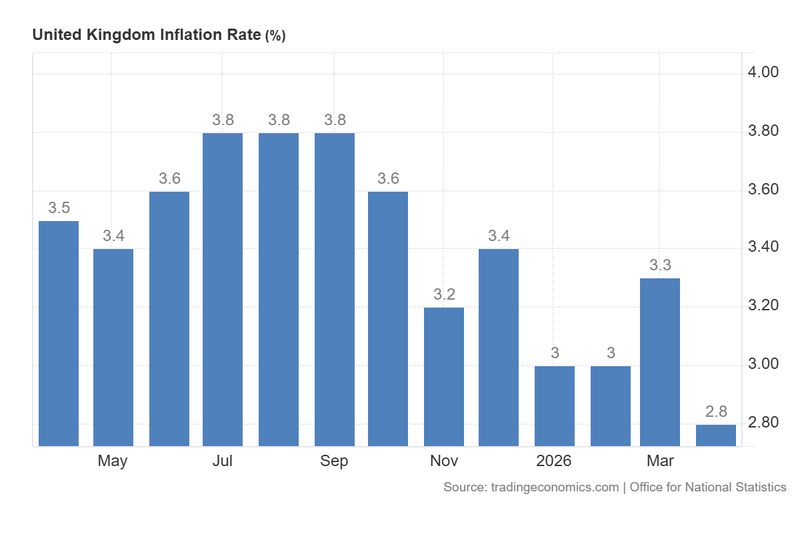
Figure 1. United Kingdom Unemployment Rate (2025–2026). Source: Data from the Office for National Statistics of the UK; Figure obtained from Trading Economics.
Nvidia Corporation reports revenue and EPS above analysts’ expectations
Nvidia Corporation surpassed market consensus for both total revenue and earnings per share (EPS) in its Q1 2026 financial results. The semiconductor pioneer recorded revenue of $81.61 billion, higher than the Wall Street forecast of $78.91 billion. Additionally, the company reported adjusted earnings per share of $1.87, beating the estimate of $1.75. These results represent an impressive year-on-year growth rate of 85% in total revenue and a 123% YoY surge in EPS.
Alongside the robust earnings report, Nvidia guided second-quarter revenue above analyst consensus and announced an authorised $80 billion share repurchase programme, according to Reuters. Despite the positive fundamental data, the company's share price recorded a marginal depreciation of 1.5% during the post-market trading session.
