
 Help
Help Bitcoin falls amid CME lawsuit against US CFTC over perpetual futures
Bitcoin fell 2.37% to $62,902, driven by a restrictive Federal Reserve outlook and a CME lawsuit against the CFTC. The legal battle about Kalshi and Coinbase's perpetual futures could reshape retail participation.

CME sued the CFTC over allowing Kalshi and Coinbase to offer perpetual futures, arguing they should be regulated as swaps under Dodd-Frank Act.
The legal outcome could impact crypto markets; open access could boost retail liquidity, while tighter rules could restrict capital inflows.
Bitcoin trades beneath its 50, 100, and 200-day SMAs, reinforcing a macro downtrend as price nears the critical $60,000 structural support level.
Bitcoin slips as CME takes legal action against CFTC on perpetual futures linked to Kalshi and Coinbase
Bitcoin prices softened amid mounting expectations that the Federal Reserve may transition toward a more restrictive monetary policy stance, compounded by a federal lawsuit filed by the Chicago Mercantile Exchange (CME) against the US Commodity Futures Trading Commission (CFTC) regarding cryptocurrency perpetual futures.
According to a Reuters report, the CME filed a complaint against the CFTC and its Chairman, Michael Selig, challenging a recent regulatory decision that permits the prediction market platform Kalshi and cryptocurrency exchange Coinbase to offer perpetual futures contracts. The CME contends that under the Dodd-Frank Act of 2010, these continuous derivatives are legally defined as swaps rather than futures contracts. Consequently, classifying them as swaps would subject these platforms to considerably more stringent clearing, reporting, and margin requirements.
The resolution of this legal dispute could carry significant long-term consequences for the digital asset ecosystem. The continued availability of regulated, onshore perpetual cryptocurrency futures within the United States could encourage broader retail investor participation, enhance market liquidity, and stimulate further capital inflows into the sector. Conversely, a judicial decision imposing stricter regulatory limitations or reclassifying these products could hinder trading velocity and constrain institutional investment growth.
By the market close, Bitcoin depreciated by 2.37% to settle at $62,902, drawing closer to the pivotal psychological and technical support level of $60,000.
Technical analysis of Bitcoin
From a technical perspective, Bitcoin remains locked in a downward trajectory that reflects persistent distribution and selling pressure. A closer inspection of the current market architecture reveals several key technical nuances:
- Trend Context: On daily timeframes, Bitcoin continues to trade beneath its 50-day, 100-day, and 200-day Simple Moving Averages (SMAs). This sustained positioning beneath major moving averages reinforces a prevailing long-term bearish bias.
- Resistance Levels: Should immediate short-term resistance near $66,000 be reclaimed, the next major technical ceiling is identified at $75,000—a key psychological level that roughly converges with the descending 200-day SMA. A decisive close above the $75,000 zone would effectively invalidate the current macro downtrend and signal the potential for a broader structural recovery.
- Support Levels: If the primary structural support at $60,000 is compromised, the next critical floor is situated at the $55,000 mark, which has historically served as a prominent long-term structural pivot. A sustained breach below $55,000 would significantly heighten the probability of a more profound market correction.
- Momentum Indicators: In contrast to the bearish price action, the Moving Average Convergence Divergence (MACD) is currently signalling a potential bullish crossover on the daily timeframe, hinting at localized short-term price stabilization. Simultaneously, the Relative Strength Index (RSI) is recovering from near-oversold territory, suggesting that immediate selling pressure may be losing its underlying momentum.
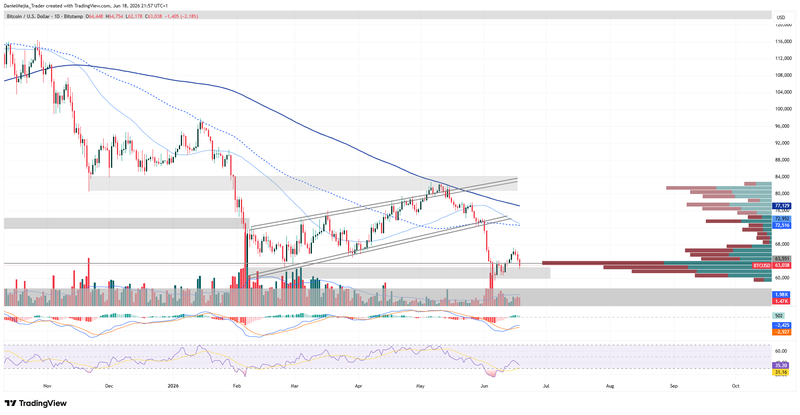
Figure 1. Bitcoin Prices (2025–2026). Source: Own analysis conducted via TradingView.


