Help
Help 
How to trade and invest in gold in the UAE: A beginner’s guide
Gold is widely known as a safe-haven asset and store of value during economic uncertainty. In the UAE, investors can access gold through physical bullion, exchange-traded funds (ETFs), contracts for difference (CFDs) and futures.
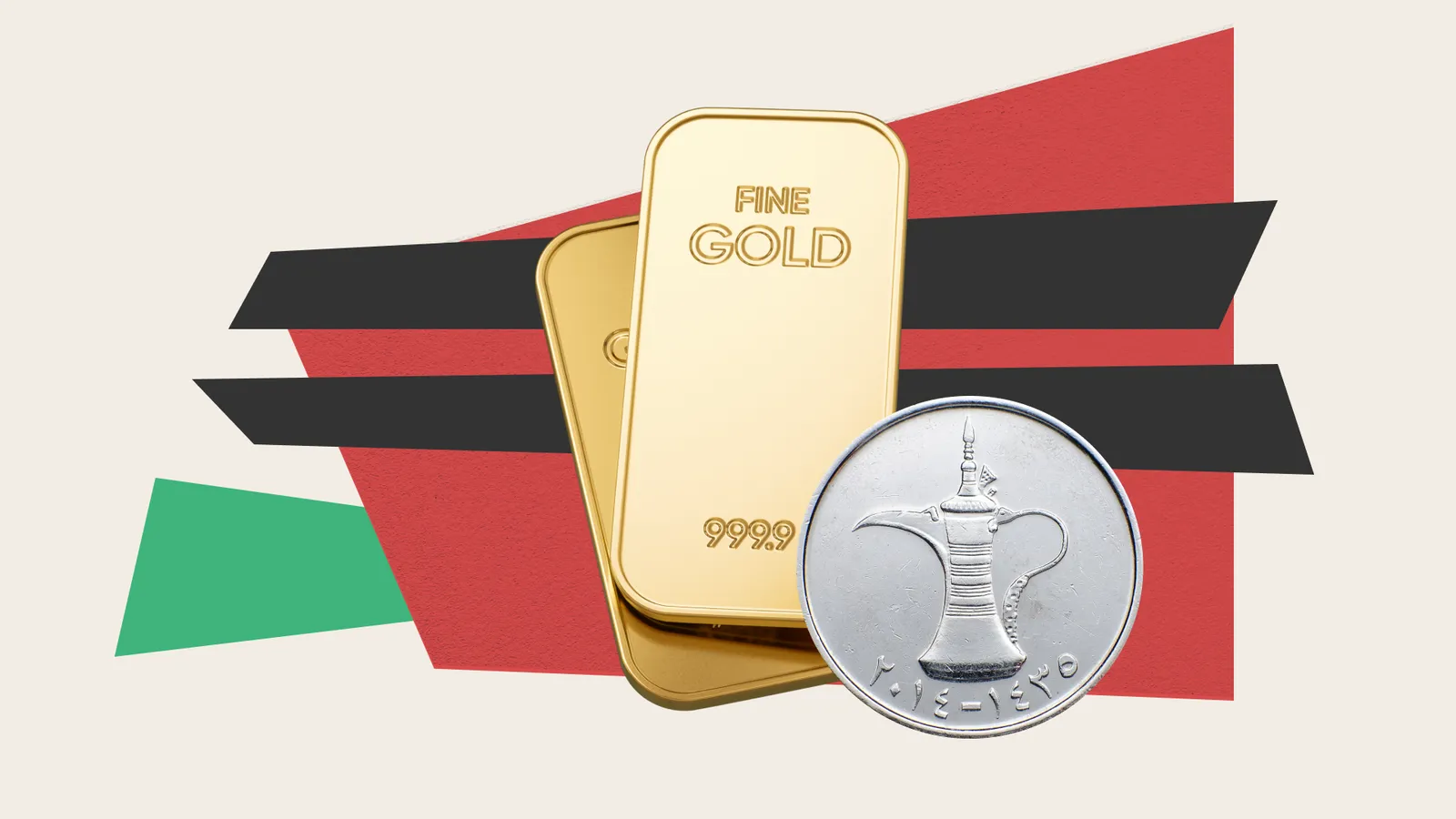
Gold exposure in the UAE is available through physical bullion, ETFs, mining shares, CFDs and futures.
Gold investing focuses on long-term value and diversification, while gold trading aims to profit from short-term price movements.
Gold prices are influenced by factors such as interest rates, inflation, the US dollar and geopolitical developments.
Different gold instruments involve different costs and risks, including spreads, storage fees and leverage-related trading risks.
Gold trading vs gold investing
Before exploring how gold trading and investing work, it’s helpful to first understand the key differences between these two closely related but distinct approaches.
Investing involves buying gold or taking ownership of gold or other assets linked to gold, such as gold futures, options, contracts for differences (CFDs) and exchange-traded funds (ETFs). What sets investing apart from trading is not the asset class, but the approach, with investors typically buying and holding for the long term.
To invest in gold in the UAE, you typically buy and hold gold or gold-linked assets over a long period, waiting for their value to rise and then earning capital gains when you sell at a higher price. Some assets may also generate income through dividends.
Gold trading, on the other hand, involves speculating on price movements by opening positions based on whether the price is expected to rise or fall, as well as how far and how quickly it may move. Traders profit when the price moves in line with their expectations.
Traders can buy and sell the same instruments as investors, including physical gold and gold-linked assets, but they primarily use CFDs, futures and options. Gold investing always involves taking a long position, meaning you buy with the expectation that prices will rise over time. By contrast, gold trading allows both long and short positions, depending on whether you expect prices to rise or fall.
Key differences between gold investing and gold trading at a glance
- Time horizon: Investing is long-term; trading focuses on shorter-term opportunities.
- Objective: Investors seek value growth or diversification, while traders aim to profit from price movements.
- Risk tolerance: Trading often involves higher risk, particularly when leverage is used.
In simple terms, investing focuses on long-term portfolio goals, while trading focuses on short-term market opportunities.
How to invest in gold in the UAE
Check out five ways you can trade and invest in gold below:
1. Buying and selling physical gold
To buy physical gold in Dubai, you typically need to open a gold investment account in the UAE. This allows you to access the gold market through a regulated platform and purchase bullion securely.
Equiti, licensed by the Dubai Multi Commodities Centre (DMCC), offers a mobile trading app that allows investors to buy and manage physical gold holdings. Opening an account is free and requires providing basic information such as your contact details and identification (passport or resident ID) for verification.
The price of physical gold is usually based on the global spot price, which reflects the current market value of gold. When purchasing bullion, investors typically pay the ask price, which may include a small premium above the spot price to cover minting, logistics and operational costs. When selling gold, dealers buy it back at the bid price, which is slightly lower than the ask price. The difference between these two prices is known as the spread.
Storage and delivery options
There’s no limit to how much gold you can buy with the Equiti app, although a minimum purchase of 0.1 grams applies. You can choose to store your gold securely in your Equiti app. If you would like your gold delivered to your home or sent as a gift, a minimum purchase of 10 grams is required.
Delivery times vary by order size and location, but shipments within the UAE are usually completed within a few working days.
2. Buying and selling shares in gold supply chain companies
You can gain exposure to gold price movements by investing in upstream, midstream and downstream gold companies. In this case, you purchase shares in businesses whose revenues are linked to gold production, processing or sales.
These companies generally fall into three parts of the supply chain:
- Upstream: gold exploration and mining entities
- Midstream: gold smelting, refining, purifying, and processing companies
- Downstream: jewellery brands, distributors
Buying shares in gold mining companies provides indirect exposure to gold prices. When gold prices rise, these companies may become more profitable, supporting higher share prices. However, mining stocks can also be influenced by company performance and operating costs, so they often behave more like traditional equities than the gold price itself.
3. Buying and selling gold ETF shares
Exchange-traded funds are funds that track the market price movements of particular assets, such as particular commodities, an index like the S&P 500, or a mix of assets.
A gold ETF may own physical gold, shares in gold mining companies, gold futures, gold options and gold contracts for difference. The structure of a gold ETF affects how closely it tracks the gold price. ETFs backed by physical gold usually follow the price more directly, while those using derivatives or mining shares may behave differently.
When you invest in or trade gold ETFs, you obtain shares in the fund but don’t gain ownership of the fund’s gold and gold-linked assets. Gold ETFs typically track gold prices more closely than mining stocks, although performance can vary slightly due to fees or tracking error. They may suit investors seeking gold price exposure without storing physical bullion or taking on mining company risks.
4. Buying and selling gold CFDs
Buying and selling gold CFDs is a trading strategy rather than an investment approach, as it is primarily speculative.
Gold CFDs are commonly traded through the XAU/USD pair, which represents the price of one troy ounce of gold quoted in US dollars. When traders talk about the gold price in financial markets, they are typically referring to this benchmark.
Traders open gold CFD positions based on their expectations of price movements, going long (buying) if they anticipate prices will rise or short (selling) if they expect them to fall. If your prediction comes true and the price does increase, you can close your position, and your CFD broker will pay you the difference between the contract’s entry and exit prices. However, if your prediction does not come true, you’ll pay the broker the difference in these opening and closing prices.
Gold CFDs allow you to open larger positions with a smaller initial deposit, which can amplify potential profits. For example, at a leverage of 1:10, AED 1,000 allows you to control a position of AED 10,000.
However, leverage also increases risk. If the market moves against your position and your balance falls below margin requirements, you may receive a margin call or the broker may automatically close the position to limit losses. For this reason, gold CFD trading is generally better suited to traders who understand margin, leverage and short-term market volatility.
Traders may also incur overnight financing (swap) fees when holding leveraged CFD positions beyond the trading day.
Gold CFDs are typically traded nearly 24 hours during the week, with the highest liquidity during the London and New York market sessions.
5. Buying and selling gold futures and options
Futures and options are instruments traded on commodities exchanges. Like CFDs, they may be leveraged.
Gold futures are contracts that specify the exchange of a specific quantity of a particular quality of gold between the buyer and the seller. They designate an expiry date and a settlement price.
Prices in futures markets move in small increments called ticks, each representing a monetary value depending on the contract size and helping determine how profits and losses are calculated as prices change.
Futures bind the parties to the agreement. They settle in the buyer’s or seller’s favour, depending on price movements, although positions can be closed before expiry. Some futures contracts allow physical delivery, while others are cash-settled, meaning traders receive or pay the price difference without taking ownership of the metal.
If a position remains open as expiry approaches, traders may roll over the contract by closing it and opening a later-dated one. Futures prices can also reflect market conditions such as contango (longer-dated contracts priced higher) or backwardation (near-term contracts priced higher), which may affect rollover costs.
Gold options are contracts, too, but they just provide the right, not the obligation, to buy or sell gold at a specified price. A call option gives the buyer the right to buy gold at a set price before expiry, while a put option gives the right to sell. Unlike futures, options do not obligate the buyer to execute the trade, although the seller may have obligations if the option is exercised.
What moves gold prices? Key drivers UAE investors should watch
Before trading or investing in gold, it helps to understand what drives its price. Unlike shares or bonds, gold does not generate income, so its value is mainly influenced by macroeconomic conditions, currency movements and investor sentiment.
Gold is priced globally in US dollars through the XAU/USD pair and often moves inversely to the US dollar (DXY). When the dollar strengthens, gold may become more expensive for international buyers, while a weaker dollar can increase demand.
Real yields, or interest rates adjusted for inflation, also affect gold prices. Rising real yields can make income-generating assets such as bonds more attractive, while falling or negative yields can increase gold’s appeal as a store of value.
Gold is also used as a hedge against inflation and economic uncertainty. Traders often monitor indicators such as Federal Reserve interest rate decisions, inflation data (CPI), US labour market reports, US dollar movements and geopolitical developments to understand changes in the gold market.
Costs you’ll face: spreads, premiums, swaps and storage fees
Before trading or investing in gold, it is important to understand the costs involved. Whether buying physical bullion or trading financial products, fees and pricing structures can affect overall returns.
Costs associated with physical gold
When buying physical gold, investors typically pay a premium above the spot price. The spot price reflects the current global market price of gold, while the premium covers refining, minting, distribution and dealer margins.
Additional costs may include:
- Delivery fees if the gold is shipped
- Insurance costs during transport or storage
- Storage fees if the bullion is held in a professional vault
Costs associated with gold trading
Financial gold instruments such as CFDs, futures, options and ETFs have a different cost structure.
Common costs include:
- Spreads or commissions charged by brokers when executing trades
- Overnight financing (swap fees) for leveraged products such as CFDs held beyond the trading day
- Contract rollover or expiry costs for futures positions maintained over time
A simple cost checklist before trading gold
Before choosing a gold instrument, it may help to consider:
- What premium or spread applies to the transaction?
- Are there any broker commissions or trading fees?
- Will the position incur overnight financing charges?
- Are there storage, insurance or delivery costs for physical gold?
- Do futures contracts involve rollover or expiry-related costs?
Understanding these costs can help traders and investors compare gold products more effectively and choose the option that best matches with their strategy and time horizon.
UAE-specific considerations when trading or investing in gold
The UAE is one of the world’s leading gold trading hubs, particularly in Dubai. However, investors should still consider regulation, authenticity and tax treatment when trading or investing locally.
Regulation and safety
When trading gold or gold-linked products, it is advisable to work with regulated brokers or licensed dealers to ensure transparency and proper handling of client funds. Investors should also be aware of counterparty risk, particularly when dealing with unregulated entities. Leveraged products such as CFDs or futures may carry higher risks and may not be suitable for all investors.
Physical gold considerations
When purchasing bullion, verify purity, certification and sourcing. Investment-grade gold typically includes recognised hallmarks or assay certificates, and many UAE refineries follow standards such as the UAE Good Delivery (UAEGD) framework.
Taxes and fees
The UAE generally offers a favourable tax environment for precious metals, although VAT may apply to certain products, particularly jewellery. Because tax treatment can vary depending on the transaction, it’s recommended to seek professional advice before making large purchases.
Risk management for gold traders
Gold trading may provide profit opportunities, but it also carries risks, particularly when using leveraged instruments such as CFDs, futures or options. Understanding risk management principles such as position sizing, leverage and disciplined trade planning can help traders protect capital and manage market volatility.
Key risk management tools for gold trading
Position sizing determines how much capital is allocated to a trade. Many traders risk only a small percentage of their account balance to limit potential losses.
Diversification can also play a role in risk management, as spreading capital across different assets or markets may reduce reliance on a single position or price movement.
Stop-loss and take-profit orders help manage risk by automatically closing trades when predefined price levels are reached. Because gold prices can react sharply to economic data or geopolitical events, traders often adjust risk limits based on market volatility.
Common gold trading mistakes
Even with a defined strategy, weak risk management can lead to avoidable losses.
Common mistakes include:
- Using excessive leverage, particularly during major news events
- Overlooking trading costs such as spreads or rollover fees, which can impact overall returns
- Trading during low-liquidity periods, when price movements may be less predictable
Recognising and avoiding these pitfalls is an important part of maintaining disciplined risk control.
Practical gold trading approaches
Different trading approaches can influence how risk is managed. Traders often use:
- Trend-following: trading in the direction of sustained price movements, often requiring disciplined stop-loss placement to protect against reversals
- Mean reversion: expecting prices to return to historical averages or key levels, which may involve tighter risk controls if trends persist
- Event-driven trading: reacting to economic announcements such as inflation or interest rate decisions, where volatility can increase significantly
- Portfolio hedging: holding gold to diversify portfolios or offset broader market risks
Each approach comes with its own risk profile and require careful risk management, so traders typically adjust position sizing, time horizon and risk limits accordingly.
How to choose the right gold instrument for your goals
With several ways to gain exposure to gold, it helps to match the instrument to your investment objective, time horizon and risk tolerance.
For long-term investment or diversification, investors often choose physical gold or gold ETFs. Physical bullion provides direct ownership, while ETFs offer exposure to gold prices without storing the metal.
For short-term trading, traders commonly use gold CFDs, futures or options, which allow speculation on rising or falling prices.
Another option is shares in gold mining companies, which provide indirect exposure to gold prices but are also influenced by company performance and stock market conditions.
Before choosing a gold instrument, consider a few practical questions:
- Do you want direct ownership of gold?
- Do you want simple exposure to gold prices through financial markets?
- Do you want the ability to trade both rising and falling prices?
Matching the instrument to your goals and risk tolerance can help ensure your gold exposure fits your broader investment strategy.
Trade and invest in gold in the UAE
Gold is widely used as a store of value and may help diversify a portfolio or provide exposure to commodity markets. In addition to long-term investment, gold can also be traded to speculate on price movements in either direction.
With the Equiti app, you can access both physical gold and gold CFDs in one place, allowing you to buy bullion or trade based on price movements.
Once your Equiti account is set up and funded, you can purchase investment-grade gold bars with 999.9 purity, stamped by refineries certified under the UAE Good Delivery (UAEGD) framework or approved by LBMA, ensuring recognised quality and authenticity.
FAQs
How to trade gold for beginners?
Beginners can trade gold by opening an account with a regulated broker or gold trading platform and choosing an instrument that suits their goals. Common options include gold ETFs, gold CFDs and gold futures or options.
The typical process involves opening and verifying an account, funding it, analysing gold market drivers such as inflation, interest rates or the US dollar, and placing a trade while using risk management tools like stop-loss orders. Many beginners start with gold ETFs or small CFD trades before moving to more complex instruments.
Is gold trading legal in Dubai?
Yes, gold trading is legal in Dubai and throughout the UAE. Dubai is one of the world’s major gold trading hubs, supported by infrastructure such as the Dubai Multi Commodities Centre (DMCC) and the Dubai Gold Souk. Gold can be traded through licensed bullion dealers, regulated brokers, commodity exchanges and investment platforms offering gold products.
However, investors and traders should ensure they deal with regulated providers and understand the risks associated with leveraged products such as CFDs or futures.
What are the costs of buying physical gold in the UAE?
Costs vary depending on the gold product. When buying physical gold, investors typically pay a premium above the spot price, with additional costs such as delivery, insurance and vault storage fees.
What are the costs of trading gold CFDs?
Gold CFD trading has a different cost structure, usually including trading spreads, broker commissions and overnight financing (swap) fees for leveraged positions. Traders must also maintain margin to support leveraged trades. In general, physical gold has higher upfront ownership costs, while CFDs tend to have lower entry costs but ongoing trading and financing fees.
What should I know about local regulation when buying gold or trading gold CFDs in the UAE?
When trading gold in the UAE, investors are typically required to complete Know Your Customer (KYC) verification as part of regulatory requirements. This usually involves confirming their identity with a passport or Emirates ID, providing proof of address and linking a bank account to the trading platform.
Investors should also ensure they are using a licensed and regulated provider, as financial services in the UAE are overseen by authorities such as the Securities and Commodities Authority (SCA) and the Dubai Financial Services Authority (DFSA).
How is gold trading and gold investing taxed in the UAE for residents and expats?
The UAE generally has a favourable tax environment for gold investments. Individuals typically do not pay personal capital gains tax on investment profits and there is generally no personal income tax for UAE residents.
However, VAT may apply to certain gold products, particularly jewellery, while investment-grade bullion may receive different VAT treatment depending on its purity and the structure of the transaction. Because tax treatment can vary depending on the product and circumstances, investors should seek professional financial or tax advice before making significant purchases or trades.
What are the key risks and common mistakes first-time UAE traders make?
Trading Gold CFDs involves risk, particularly when leverage is used. Leverage can amplify gains and losses, and traders may face margin calls or automatic closures if margin requirements are not met.
Gold prices can become volatile during major economic announcements. Common mistakes include using excessive leverage, ignoring trading costs and failing to use stop-loss orders. Risk can be managed through disciplined position sizing and monitoring key economic indicators.
What should I check before buying gold?
When buying physical gold in Dubai, you should verify purity and authenticity by checking the hallmark stamped on the bar, which should indicate the purity (typically 999.9, meaning 99.99% gold), the refinery name, weight and a unique serial number.
Investment-grade bullion is often produced by refineries certified under recognised standards such as UAE Good Delivery (UAEGD). Reputable sellers should also provide an assay certificate confirming the bar’s purity and weight, and the certificate should match the serial number on the bar.
Which gold instrument option is best for investing or trading in the UAE?
The best gold instrument depends on your investment objective. For long-term hedging or diversification, investors often choose physical gold or gold ETFs. Those seeking exposure to the gold sector may consider mining shares. For short-term trading, traders commonly use gold CFDs, futures or options. Matching the instrument to your time horizon, risk tolerance and investment goals helps ensure your gold exposure fits your overall strategy.