
 Help
Help 
What is a bull trap and how do traders avoid it in trading?
A bull trap is a type of false breakout, where price briefly moves beyond a key level but fails to continue in that direction. Understanding this broader concept helps traders recognise that not every breakout signals a new trend.
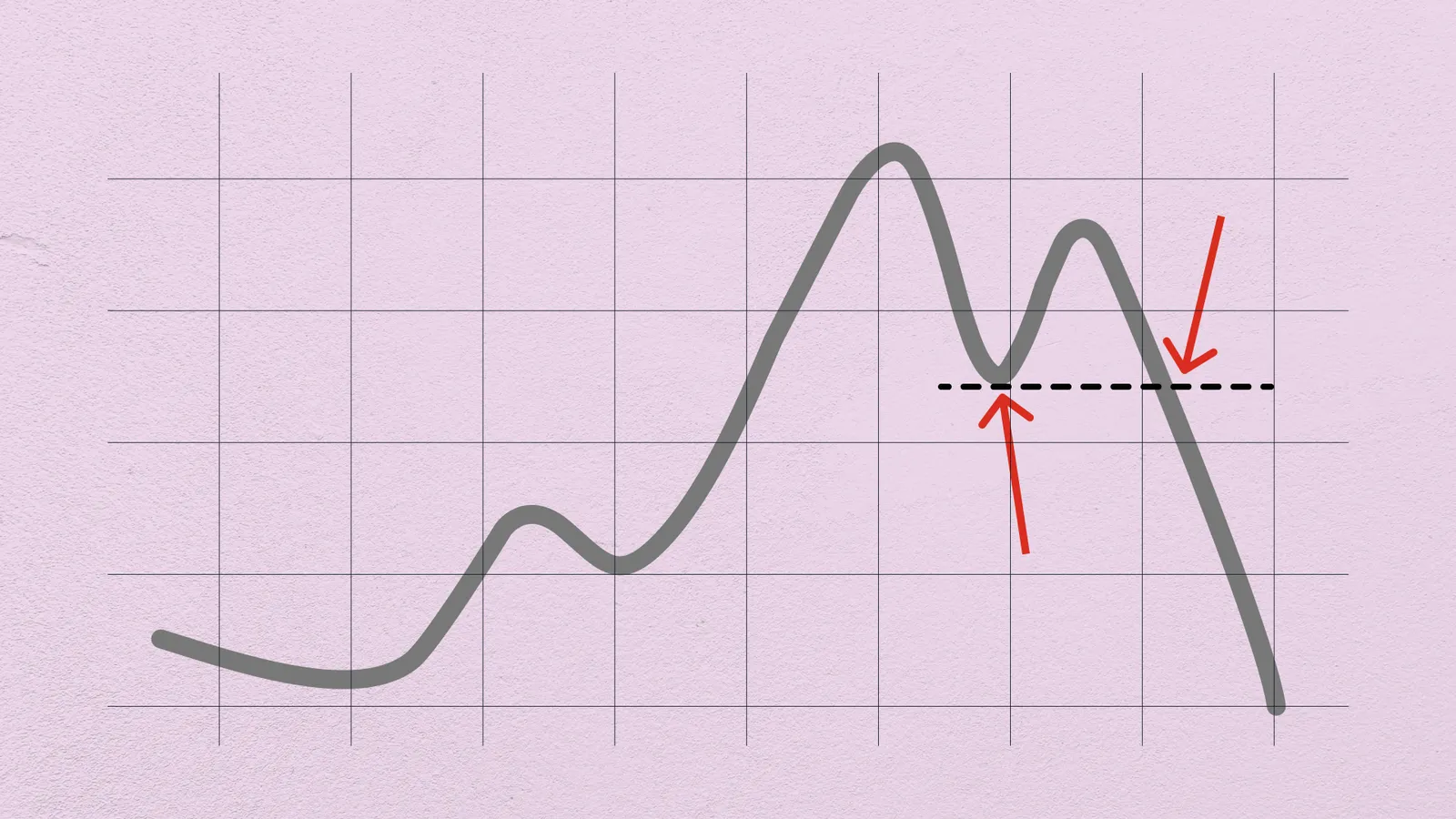
A bull trap is a false breakout above resistance that quickly reverses lower.
They often occur due to liquidity moves, news events or short-covering rallies.
Common warning signs include weak volume, momentum divergence and failed retests.
Traders can reduce risk by waiting for confirmation, scaling in and using clear stop levels.
How a bull trap forms: breakout, reversal and the trapping mechanism
A bull trap begins the moment price pushes through a widely watched resistance line or prints a fresh yearly high. That fleeting surge convinces many traders a new up-leg has started, yet within hours, or even minutes, sellers reclaim control and drive price back below the breakout level. Anyone who chased the move is now holding a losing long, often forced to exit at a loss, which adds downside momentum and deepens the reversal.
Traps typically form for one of three reasons. First, large players may push prices beyond resistance levels to trigger buy-stop liquidity, before selling stock or contracts into that wave of eager buyers. Second, knee-jerk reactions to headlines, such as a surprise CPI print or an unexpected rate decision, can create sharp but low-conviction spikes that fade once traders have fully digested the news. Third, in established downtrends, an oversold market can spark a “bear-market rally”, where short positions are covered, prices rise quickly and momentum fades once that covering subsides.
Bull trap vs bear trap: key differences traders must know
A bull trap occurs when price breaks above resistance and then reverses lower, trapping buyers. A bear trap is the opposite: price breaks below support and then quickly moves higher, trapping sellers.
The main difference is direction, but both involve false breakouts that catch traders on the wrong side of the market. In simple terms, a bull trap is a type of false breakout, where price briefly moves beyond a key level but fails to continue in that direction.
Misidentifying a trap as a genuine breakout can lead to poor decisions, such as buying too early in a bull trap or selling just before prices rise in a bear trap. This can also affect stop placement and overall trade bias.
How to trade a bull trap: entry triggers, targets and risk controls
Some traders look to trade a bull trap once a false breakout is confirmed. A common approach is to wait for price to close back below resistance, followed by a failed retest of that level.
- Entry: After price moves back below resistance and shows rejection
- Targets: Prior range levels or key averages
- Invalidation: A move back above the breakout level
Because these setups often form in volatile conditions, they are typically traded with smaller positions, tight stops and a strong focus on risk control.
Where bull traps happen most: assets and sessions
Bull traps can appear across all markets, but their behaviour often depends on the asset being traded. In indices and large stocks, traps tend to form around key levels and are often driven by institutional activity. In forex, they frequently occur around major news releases or session opens, where short-term volatility is higher. In crypto, lower liquidity and continuous trading can lead to sharper and faster false breakouts, especially during quieter periods.
Timing also matters. Breakouts that happen during market opens, closes or low-liquidity periods, such as holidays or late Fridays, often require extra confirmation, as price moves can be less stable.
Market conditions also play an important role. In downtrends, range-bound markets or periods of high-impact news, breakouts are less likely to follow through cleanly and often require stronger confirmation before traders act.
Extra care is often needed around major economic events such as interest rate decisions, inflation data or employment reports. During these periods, price can move quickly in both directions before settling, so some traders wait for the initial reaction to pass before acting.
Bull trap examples in the Nasdaq-100 and Dow Jones
In April 2025, the Nasdaq-100 gapped up by more than twelve percent in what appeared to be a decisive breakout. However, breadth indicators remained anaemic and volume failed to expand. Ten trading days later, the index had surrendered eight percent of those gains.
This move can be broken down as follows:
Setup: Apparent breakout following a sharp gap higher
Trigger: Price moved above resistance without broad market participation
What was missing: Volume expansion and strong breadth confirmation
Invalidation/stop level: Below the breakout level or gap support
Lesson: Breakouts driven by speed rather than participation are vulnerable to failure
Also in February 2026, the Dow Jones closed above the psychological 50,000 mark for the first time ever, then declined to 45,200 from the record price.
This move can be broken down as follows:
Setup: Break above the key psychological 50,000 level
Trigger: Close above resistance with Fed kept the rates unchanged in January
What was missing: Fundamental confirmation and sustained momentum
Invalidation/stop level: A move back below the 50,000 breakout zone
Lesson: Macro context matters; technical breakouts can fail when fundamentals do not support the move
How to confirm a real breakout: volume, retests and momentum
Traders can apply a simple confirmation framework to distinguish genuine breakouts from false moves.
1. Close beyond the key level
A genuine breakout is more reliable when price closes above (or below) a key support or resistance level, rather than merely wicking through it intraday. False breakouts often occur when price briefly pierces a level but fails to hold beyond it by the close, indicating a lack of conviction.
2. Volume expansion relative to average
Volume is one of the most reliable tests of any breakout. When committed buyers step in, trading activity typically increases; if price breaks through resistance on low volume, caution is warranted.
Strong breakouts are usually supported by rising volume relative to recent averages, signalling broad market participation. By contrast, weak volume may indicate a lack of conviction and increase the risk of a reversal.
3. Successful retest of the breakout level
The retest is also important. After a breakout, price often pulls back to the former resistance level, which may act as support, before moving higher again. If the price fails to hold this level, it can signal a false breakout.
Traders may also look at momentum indicators. If indicators such as RSI, MACD or on-balance volume diverge while price continues to rise, it can suggest the move lacks underlying strength.
4. Higher timeframe alignment
Stepping back to a higher time frame, a minor higher high inside a weekly down-trend is noise; what matters is the sequence of higher lows that confirms a broader shift.
Common bull trap mistakes and how to prevent them
One of the most common mistakes is entering strong upward moves without a clear plan, buying into “green candles” just as momentum starts to slow. When price moves against the trade, some traders adjust their stops or add to the position, increasing exposure instead of managing risk.
Another common issue is overlooking the wider context, as breakouts near higher-timeframe resistance or ahead of major economic releases often need extra confirmation.
Simple rules can help prevent these mistakes:
- Define entry and exit levels in advance, including a clear invalidation point
- Set a maximum risk per trade, such as a small percentage of account equity, and stick to it
- Avoid adjusting stops emotionally once the trade is live
- Keep a basic trading journal, noting why you entered, whether confirmation was present and the outcome of the trade
By replacing impulsive decisions with structured rules, traders reduce the likelihood of being caught in bull traps and improve consistency over time.
Key tactics to avoid bull traps
Avoiding bull traps is less about prediction and more about managing risk and waiting for confirmation.
One simple approach is to start with a smaller position on the initial break above resistance, rather than committing full size straight away. Additional size can be added only if the retest holds.
It also helps to wait for a full session close, or a four-hour candle depending on your timeframe, above the breakout level before acting. Wicks that fade before the close can signal a failed breakout. When order book data is available, thinning depth or the presence of iceberg sellers just beyond resistance may also point to a liquidity-driven move.
Clear stop placement is essential. A logical stop should sit just below the breakout level, adjusted for average true range. If the trade fails, the loss remains controlled and manageable.
Many traders also reduce position size, or avoid breakout strategies altogether, ahead of major events such as central bank decisions, where volatility can increase the risk of false moves.
These tactics can be adapted depending on trading style and time horizon:
Day traders (intraday): Focus on 15-minute to 1-hour closes, with retests often occurring within the same session.
Swing traders: Typically rely on 4-hour or daily closes, with retests unfolding over one to three sessions.
Position traders: Use daily or weekly closes, where retests may take several days or longer and broader trend alignment is key.
Bull trap checklist: how to identify and manage false breakouts
These principles can be applied as a simple checklist to help structure breakout trades, from initial entry to managing the position if the move begins to fail.
Identifying the trap
Identify the key resistance zone that is likely to attract attention. Wait for a daily or, at minimum, four-hour candle to close firmly above it, supported by rising volume and confirming momentum.
On the pullback, assess whether price holds the breakout level. If it does, continuation becomes more likely and fresh long positions may be considered. If it slips back into the prior range, it is often a warning sign of a potential bull trap, in which case stepping aside, or even considering a tactical short, may be appropriate.
Managing the trap
If already positioned in a breakout that begins to fail, the priority shifts to capital preservation rather than recovery. Exit if price closes back inside the prior range with momentum against the position, as this often confirms the trap.
If price is hovering near the breakout level, some traders wait for a failed retest before exiting, but this should be planned in advance rather than reactive.
Avoid revenge trading. Re-enter only if a new, valid setup forms with proper confirmation, not simply to recover losses. This may involve waiting for a clean reclaim of the level with volume support or a structured trend continuation pattern.
Managing the psychology of FOMO
Bull traps often thrive on fear of missing out. The best defence is preparation. Define your entry levels and stop distances in advance, ideally when the market is closed, so decisions are made with a clear head rather than in the moment.
It is also important to accept that missing a move carries no cost, whereas entering a trade out of impatience often does. Keeping records can help reinforce this discipline. Track how often you enter unconfirmed breakouts and the outcome of those trades. Reviewing these patterns over time can be a powerful deterrent to impulsive behaviour.
Microstructure and regulatory context
Since 2020, the trading landscape has changed, with liquidity conditions playing a more central role in how breakouts behave than specific regional rules. Increasingly fragmented liquidity has made breakouts more prone to abrupt reversals, particularly during late Friday sessions or holiday periods when order books are thin.
For retail traders, the risks are more universal across markets: spread widening, slippage and inconsistent execution during low-liquidity periods or around major session transitions, such as the London–New York overlap or the market close.
It is also important to distinguish between market types. Exchange-traded instruments, such as indices, may be subject to trading halts or circuit breakers during extreme moves. By contrast, over-the-counter (OTC) markets like forex (FX) and contract for difference (CFDs) remain open, but can experience sharp pricing gaps and reduced depth.
Recognising when the market is structurally fragile, and adjusting position size accordingly, adds another layer of protection against being caught in a trap.
Bull traps are as old as speculation itself, but electronic trading and social media have made them faster and more convincing. Traders who demand volume confirmation, respect retests, align signals across timeframes and size positions conservatively are better placed to avoid them, and in some cases even benefit from fading failed breakouts. As ever, capital preservation comes before capital growth; avoiding traps is a prerequisite for long-term success.
FAQs
How do I tell if it’s a bull trap or just a normal pullback?
A bull trap tends to move back below the level quickly and struggle to reclaim it. On lower timeframes, it helps to wait for a candle close and look for confirmation rather than reacting to short-term price spikes.
A normal pullback, by contrast, usually holds above the breakout level and shows support on a retest, often with steady volume and aligned momentum.
What stop loss mistakes do traders make in bull traps and how can I avoid them?
A common issue is placing stops too tight to the breakout level, where normal price movement can trigger them. Another mistake is adjusting stops after entering a trade. A more balanced approach is to place stops just beyond the key level while allowing for typical volatility, and to define this level before entering the trade.
Do bull traps work differently in forex indices and crypto?
The core pattern is the same, but behaviour varies by market. In forex, traps often form around news events and session opens. In indices, they tend to appear near key levels and are influenced by broader market sentiment. In crypto, lower liquidity can lead to sharper and faster moves. The confirmation process remains similar, but traders may need to allow for different levels of volatility.
How do news events create bull traps and how should traders prepare?
Major events can cause rapid price swings in both directions, making false breakouts more likely. Some traders wait for the initial reaction to settle before entering, while others reduce position size or avoid trading during these periods. Planning around the economic calendar can help avoid reacting to short-term volatility.
Can options flow or positioning data help spot a bull trap?
Positioning data can provide useful context by showing how traders are positioned in the market. For example, crowded positioning or extreme sentiment may signal that a move is less sustainable. However, these tools are typically used alongside price action rather than as standalone signals.
How do you trade a bull trap and manage risk properly?
A common approach is to define a clear invalidation level just above the failed breakout and aim for targets within the prior range. This helps maintain a balanced risk-to-reward profile. However, it may be better to stay out if the setup lacks confirmation, occurs during high-impact news or shows unstable price behaviour.


