
 Help
Help German economic sentiment weakens as inflation accelerates; DAX slips
The German DAX index declined as economic sentiment reached -10.2, weighed down by escalating Middle East tensions. Inflation rose to 2.9% due to a surge in energy costs, heightening stagflationary concerns alongside a marginal 0.3% growth rate.
ZEW economic sentiment deteriorated to -10.2, primarily due to geopolitical risks in the Middle East, though the figure outperformed the dismal -19.8 forecast.
Headline inflation increased to 2.9% in April as energy prices spiked, threatening a stagflationary scenario given Germany's modest 0.3% Q1 expansion.
The DAX maintains its long-term bullish trend; however, momentum indicators and consolidative price action suggest a current absence of clear directional momentum.
German ZEW Economic Sentiment deteriorates while inflation levels increase
The DAX 40, Germany’s equity benchmark, fell 1.62% to 23,954 points following a series of lacklustre economic releases. Data from the Centre for European Economic Research (ZEW) revealed that economic sentiment dropped to -10.2, reflecting mounting concerns regarding the potential economic fallout from the US-Israel-Iran conflict in the Middle East. Despite the negative reading, the index showed relative resilience by exceeding the anticipated -19.8 forecast and improving upon the previous print of -17.2.
Concurrently, German inflation accelerated from 2.7% in March to 2.9% in April. This increase was largely attributed to rising energy prices, a direct consequence of regional instability in the Middle East. The German economy now faces a potential stagflationary scenario should inflation maintain its upward trajectory while economic growth stagnates; GDP rose by a mere 0.3% in the first quarter of 2026.
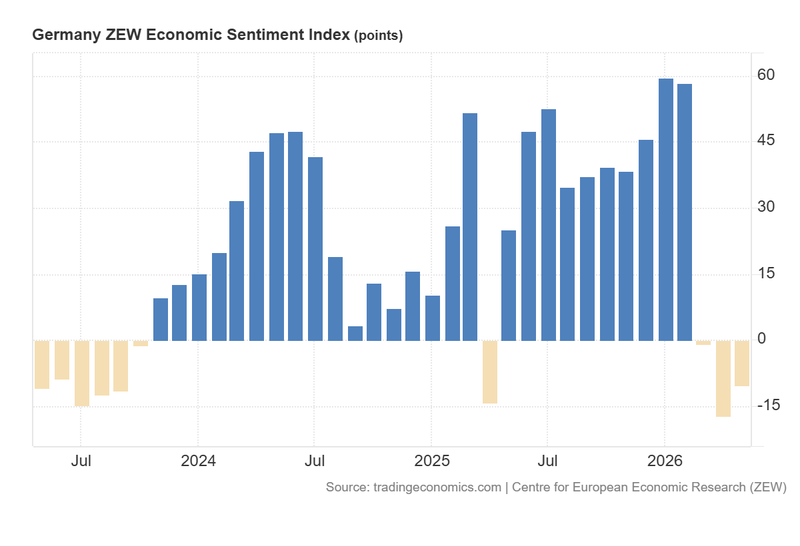
Figure 1. Germany ZEW Economic Sentiment Index (2023–2026). Source: Data from the Centre for European Economic Research; Figure obtained from Trading Economics.
Technical analysis of the DAX index
From a technical perspective, the DAX remains within a robust long-term bullish trajectory, although it is currently oscillating within a consolidative range. The following observations detail the current market structure:
- Trend Context: The index remains entrenched in a long-term uptrend, characterised by a structural sequence of "higher highs" and "higher lows". However, price action is currently testing the 50, 100, and 200-day Simple Moving Averages (SMAs) to the downside. In the short term, the index is navigating a consolidation pattern, suggesting a lack of clear market conviction.
- Resistance Levels: Should the current resistance at 24,700 be decisively breached, the next significant technical ceiling is the historical peak of 25,400. A sustained move above this threshold would signal a potential extension of the bull market into uncharted territory.
- Support Levels: In the event of a technical pullback, 23,300 serves as immediate support. If this level is breached, the next major structural floor is located at 22,000—a prominent psychological zone and a significant technical support. A decisive break below this area would notably increase the probability of a more pronounced market correction.
- Momentum Indicators: Both the Moving Average Convergence Divergence (MACD) and the Relative Strength Index (RSI) are currently trading near neutral levels, reinforcing the view that the market lacks a predominant directional impulse in the short term.
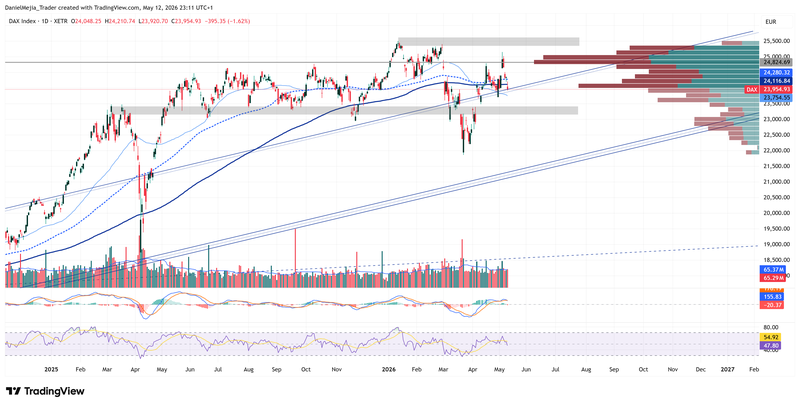
Figure 2. DAX index (2025–2026). Source: Data from the Xetra Stock Exchange; Own analysis conducted via TradingView.


