Support
Gold and oil lead in crisis
A sharp escalation in Middle East tensions following Israel's airstrikes on Iran rattled global markets, sending equities lower while oil and traditional safe-haven assets surged.

Israel’s strike on Iranian nuclear facilities sends oil prices up nearly 9%.
Gold, Swiss franc, and yen rally as investors seek safety amid rising geopolitical risk.
Asia-Pacific equities decline, with risk-sensitive currencies like the kiwi and Aussie under pressure.
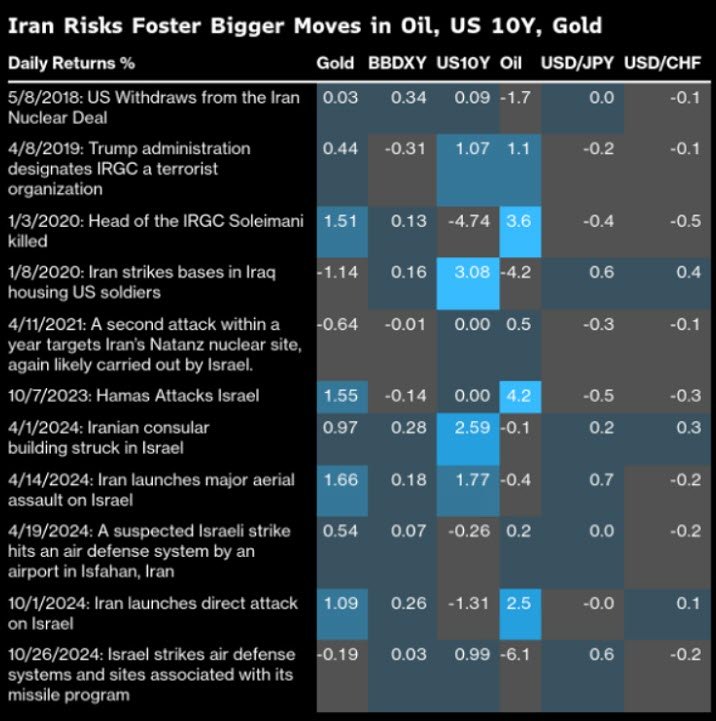
Historical data shows consistent one-day rallies in oil and gold during Iran-related conflicts.
Geopolitical shock reverberates across global markets
A wave of risk aversion gripped global markets today as Israel launched military strikes on Iran, reportedly targeting nuclear and missile infrastructure. The attack was quickly followed by a vow of retaliation from Tehran, raising fears of a broader regional conflict and disrupting investor sentiment across asset classes.
The immediate market reaction was swift and severe. Oil prices surged nearly 9%, with WTI crude climbing above $78 per barrel—over 30% higher than its April lows. Gold spiked as well, gaining on its reputation as a hedge during geopolitical crises. At the same time, global equities tumbled, particularly in Asia-Pacific markets, as risk appetite evaporated.
Oil spikes on supply fears, but technical hurdles remain
WTI crude’s rally reflects the market’s acute sensitivity to potential supply disruptions out of the Middle East, a region responsible for a substantial portion of global oil exports. The Israeli strikes on Iran’s Natanz enrichment facility and missile program are seen as escalating a simmering conflict into direct confrontation, raising the prospect of retaliatory actions that could target oil transport routes or infrastructure.
Despite the sharp move, resistance looms near the $78 level, a key technical barrier that traders will watch closely. A sustained break above this level could trigger further upside momentum if tensions continue to escalate.
Safe-haven flows buoy gold, franc, and yen
As expected, classic safe havens were among the biggest beneficiaries. Gold rose sharply, reflecting its consistent performance in times of geopolitical stress. Data from past Iran-related flashpoints show gold, oil, and Treasuries typically exhibit the strongest gains in the immediate aftermath of conflict headlines.
The Swiss franc and Japanese yen also saw inflows, though the yen’s performance was more mixed compared to previous episodes. Analysts note that while CHF/USD often strengthens during such events, the yen has shown less consistency—likely due to Japan’s own regional proximity and energy import reliance.
The Dollar Index also edged higher, reversing earlier weakness triggered by dovish expectations for the Federal Reserve. Despite a softer inflation reading earlier this week, investors temporarily favored the dollar amid heightened global risk.
Risk currencies retreat as sentiment sours
Risk-sensitive currencies bore the brunt of the selloff. The New Zealand dollar led declines after a sharp drop in domestic manufacturing data amplified the broader flight from risk. The Australian dollar and British pound followed suit, reflecting their high beta to global growth sentiment.
The Canadian dollar managed to stay relatively stable, supported by the oil price surge, while the euro remained calm, helped by recent ECB communications that suggested the end of the easing cycle may be near.
Historical pattern repeats: Gold and oil lead in crisis
A review of 11 geopolitical incidents involving Iran since 2018 highlights a reliable market pattern. Gold and oil tend to see the strongest initial reactions, with one-day moves in Brent crude often exceeding 2%. U.S. 10-year Treasury yields also typically drop as investors flock to safety.
By the end of the week, oil and bond yields have historically shown the largest cumulative shifts, underlining the lasting impact of perceived supply and security risks. In contrast, currency responses are more nuanced, with the dollar and Swiss franc generally gaining while the yen’s reaction remains inconsistent.