Help
Help 
Gold is being pulled in two directions
Gold enters Q2 in a more complex environment than initially expected. What looked set to be a quarter driven primarily by safe-haven demand has evolved into a broader interplay between geopolitics, energy prices, inflation expectations and rate sensitivity.
New York Fed President John Williams warned that the conflict could push inflation higher this year.
If uncertainty around the Strait of Hormuz and broader regional stability persists, gold is unlikely to lose its strategic role.
The outlook has shifted from a purely geopolitical upside narrative to a more balanced phase of volatile consolidation.
Caught between support and pressure
The announcement of a two-week US-Iran ceasefire, tied to the partial reopening of the Strait of Hormuz has eased immediate fears of a severe energy shock and prompted markets to reassess the inflation outlook and the monetary policy path that had recently moved against gold. In recent weeks, gold has traded less like a pure crisis hedge and more like a macro-sensitive asset, pulled between two opposing forces.
On one side, structural support remains intact. Ongoing geopolitical fragmentation continued reserve diversification and a still-fragile global confidence backdrop all support demand for gold. On the other, the war-driven surge in oil prices revived inflation concerns and strengthened the case for a more cautious Federal Reserve. This has increased pressure from higher real yields, limiting gold’s upside.
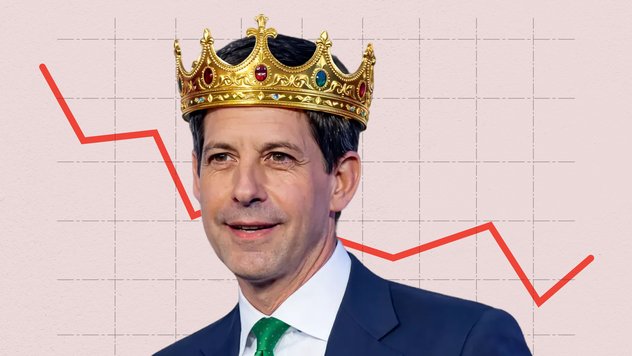
New York Fed President John Williams warned that the conflict could push inflation higher this year, while Fed Vice Chair Philip Jefferson also flagged rising energy costs as a risk to both inflation and employment.
Ceasefire shifts the near-term outlook
The ceasefire temporarily eased this pressure. As oil prices fell back below $100, markets began to scale back the more aggressive inflation expectations that had built up during the peak of the Hormuz disruption.
This does not remove gold’s underlying support, but it does change the shape of the outlook. The near-term story is no longer one of crisis-driven acceleration, but of consolidation within a still constructive longer-term trend.
That said, the current relief should not be mistaken for resolution. The ceasefire remains fragile, and Iran has already indicated that any path to lasting peace will be conditional and politically complex.
If uncertainty around the Strait of Hormuz and broader regional stability persists, gold is unlikely to lose its strategic role. The recent shift has softened the urgency of the bullish case, but it has not undermined it.
What this means for Q2
Gold is best viewed as an asset that is likely to remain reactive in the short term, while continuing to serve as a hedge against renewed geopolitical risk and policy uncertainty.
The outlook has shifted from a purely geopolitical upside narrative to a more balanced phase of volatile consolidation. While the long-term case remains intact, the near-term path will depend more closely on three factors: whether oil prices stay lower, whether US rate expectations begin to ease and whether the ceasefire holds.
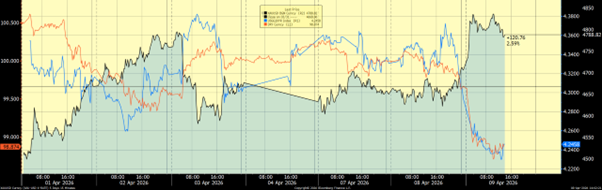
Gold vs. US real yields and the dollar before and after the April 7 ceasefire